
What is the optimal humidity in a flat and how do you measure it?
Humidity in a flat has a significant effect on our health. An optimal air humidity of 40 to 60% is generally recommended. However, it also depends on the type of room and how it is used.
The short answer. In a flat or a house, keep the relative humidity of the air between 40 and 60%, ideally around 45 to 50%. This range is where the recommendations of the Czech National Institute of Public Health (Státní zdravotní ústav, SZÚ) and the US EPA overlap. Much drier air dries out the mucous membranes, while above 60% mould and dust mites thrive.
When humidity is higher, condensation starts to form on the windows in winter. So measure it with an indoor hygrometer placed in the middle of the room, away from the window, the heating and the bathroom.
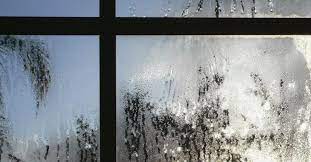
The most important factors affecting humidity in a flat
The welcome optimal air humidity results from several factors. Besides everyday household activities that fill the air with water vapour, for example cooking in the kitchen, showering, bathing or drying laundry, it is also affected by the condition of the building.
Identifying the specific defects through which water can get into a building can also be tricky. Most often these are damaged foundations or walls, a damaged roof or leaks in the water pipes.
The current season is another factor. In winter, especially in the heating season, air humidity in a flat tends to be lower. The age of the building also plays a role, as does the construction method in new builds.
Why is humidity higher in a new build?
In a new house or flat, water that got into the concrete, masonry, plaster and screeds during construction keeps evaporating for a long time after completion. This is known as construction moisture. The structures dry out gradually, so keep the closest eye on humidity during the first heating season.
New builds also have airtight windows and doors. The National Institute of Public Health points out that perfectly sealed windows, mostly uPVC ones, come with certain drawbacks, because moisture has no way to escape on its own. So ventilate more often and for short periods, do not heat much less than usual, and keep an eye on the hygrometer. If humidity stays above 60% for a long time and the windows mist up in the morning, an electric dehumidifier will help until the building has dried out.
A house with controlled ventilation, for example with heat recovery, copes with humidity better, but in the first season the unit’s output needs to be fine-tuned to how the household actually lives. In a house without controlled ventilation, regular short bursts of airing through the windows remain the main tool.
Watch out for the opposite problem. In winter, heat recovery ventilation often dries the air, because it removes humid indoor air and brings in dry outdoor air. Reducing the ventilation output can help, or a unit with an enthalpy heat exchanger, which according to Roman Šubrt of the TZB-info portal returns part of the moisture to the house as well as heat.
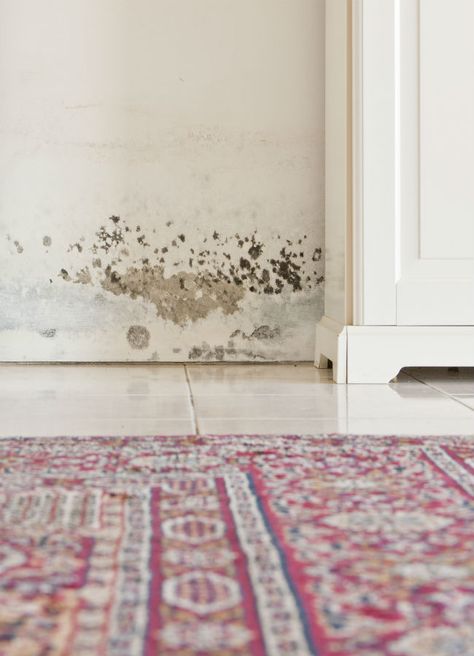
How do you measure humidity in a flat?
To find out the current humidity in your flat, you need a hygrometer. It is true that some indoor thermometers have one built in, but if yours does not, consider buying one.
You will then know what the humidity in your flat is, and you can regulate and improve it.
How to choose a hygrometer for your flat
For a household, a digital indoor thermometer with a hygrometer is enough. It shows both temperature and relative humidity at once, which is useful, because the risk of condensation and mould depends on both together. Relative humidity tells you what percentage of water vapour the air contains compared with the maximum amount it could hold at a given temperature.
When choosing one, look at the accuracy the manufacturer states as a percentage with a ± sign, and at the memory for the lowest and highest values. This shows you how high humidity jumps at night or after a shower. A moisture meter for wood, floors or masonry is a different device: it measures the moisture of the material, not the air, and is not suitable for monitoring humidity in a flat.
You can check the accuracy with a salt test. Pour some table salt into a lid, moisten it with a few drops of water to make a thick paste, and seal it in a bag or box together with the hygrometer.
In an enclosed space, a saturated salt solution keeps the relative humidity at approximately 75%, which is why instrument manufacturers use it for calibration. Leave everything sealed until the next day, then subtract or add the difference from 75% when you take readings.
Where to place the hygrometer
The hygrometer belongs in the middle of the room or on an internal wall, at roughly the height at which you sit or sleep. Do not put it on the windowsill, next to a radiator, in direct sunlight or beside the hob or the bathroom door. In such places it only shows local fluctuations, not the humidity of the air you breathe in the room.
If you only have one device, start in the bedroom, where you spend the most time, and after a few days move it to the room where the windows mist up or mould has appeared. Take readings in the morning and in the evening. A one-off measurement straight after cooking or showering tells you nothing about the usual state of the flat.
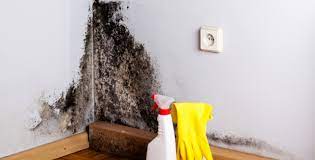
Ideal humidity in a flat?
As we have already mentioned, you need to take the season into account. According to the National Institute of Public Health’s sleep hygiene advice, humidity in the bedroom should be 45 to 65% in winter and slightly lower in summer, 40 to 55%. Above 60%, however, the risk of mould increases, so we recommend keeping humidity at no more than 60% even in winter. If your values are lower or higher, this can lead to various health problems, so keep humidity within the recommended range.
These are recommended values, not what you will actually measure in a flat. In a heated flat, humidity in winter usually falls below the recommended range instead, so monitor it most closely during the heating season. Higher humidity in winter is more typical of new builds and of flats where a lot of cooking is done and laundry is dried without ventilation.
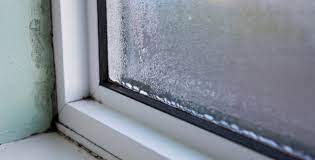
What values do regulations and health experts recommend?
Ministry of Health Decree No. 43/2025 Coll. (vyhláška Ministerstva zdravotnictví č. 43/2025 Sb.), which replaced the older Decree No. 6/2003 Coll. (vyhláška č. 6/2003 Sb.) from March 2025, sets a relative humidity of 30 to 65%. However, it only applies to occupied rooms in selected buildings, for example schools, healthcare facilities, hotels or shops. It does not cover ordinary flats, but it serves well as a guide.
Builders work with a different value. The ČSN 73 0540-2 standard on the thermal protection of buildings does not recommend anything to residents, but when designing residential buildings it assumes an indoor humidity of 50% and requires walls and corners to be warm enough that the humidity of the air at their surface does not exceed 80%. Above this threshold, mould starts to grow. For windows, the standard ensures that water does not condense on their inner side.
Both limits apply at the same time. When the air in a room at 20 °C has a humidity of 60%, it reaches exactly 80% at a surface colder than about 15.4 °C, which is the threshold at which mould becomes a risk.
Health recommendations tend to be more specific. The National Institute of Public Health (Státní zdravotní ústav) states on its website that the optimum is 35 to 50% at a temperature of 20 to 22 °C. Bohumil Kotlík, head of the National Reference Centre for Outdoor and Indoor Air at the NIPH (SZÚ), said in 2022 that humidity should ideally range between 45 and 55%.
The US Environmental Protection Agency (EPA) advises keeping humidity below 60%, ideally between 30 and 50%. A review study by Arundel and colleagues, published in 1986 in the journal Environmental Health Perspectives, concluded that most of the adverse health effects of humidity can be minimised at 40 to 60%.
| Source | Value | Applies to |
|---|---|---|
| Ministry of Health Decree No. 43/2025 Coll. | 30 to 65% | schools, healthcare facilities, hotels, shops |
| ČSN 73 0540-2 | 50% (design assumption, not a recommendation) | design of residential buildings |
| National Institute of Public Health (website) | 35 to 50% | indoor environments in general |
| Bohumil Kotlík, National Institute of Public Health (SZÚ), 2022 | 45 to 55% | flats, mould prevention |
| SZÚ, sleep hygiene advice | winter 45 to 65%, summer 40 to 55% | bedroom (above 60% the risk of mould increases) |
| EPA (USA) | below 60%, ideally 30 to 50% | households, mould prevention |
| Arundel et al., 1986 | 40 to 60% | prevention of infections and allergies |
Health recommendations overlap at around 45 to 50%, and the building standard also uses 50% for design. If you stay within this range, the air is pleasant to breathe and there is no risk of mould in a well-built and well-insulated building. Temperature is also linked to humidity, and we cover it in more detail in our article on the ideal home temperature.
What should humidity be in the bedroom, the children’s room and the bathroom?
You spend a third of the day in the bedroom, so it matters most. According to the National Institute of Public Health’s sleep hygiene advice, the bedroom should be 16 to 18 °C during sleep, no more than 21 °C, with humidity of 45 to 65% in winter and 40 to 55% in summer.
Above 60%, however, the risk of mould increases, so keep humidity in the bedroom at no more than 60% even in winter. In a cooler room, the relative humidity is also higher for the same amount of water in the air, and the windows mist up sooner, so air the room before going to bed.
The same figures apply to a children’s room as to the bedroom. If your child is allergic to dust mites, it is better to keep humidity below 50%. According to the study by Arundel and colleagues mentioned above, dust mite populations are smallest below 50% and largest at 80%. Only switch on a humidifier in a child’s room when the hygrometer really shows dry air, and clean it regularly.
In the bathroom and kitchen, humidity briefly jumps high, and that is fine. What matters is how quickly it drops again. Turn on the extractor fan or open a window when you shower, as the EPA also advises, and switch on the cooker hood when you cook. If bathroom humidity stays high long after a bath and black spots appear on the ceiling or in the grout, the fan is not powerful enough or is clogged.
In the living room, study and hallway, the general range of 40 to 60% is enough. The National Institute of Public Health (Státní zdravotní ústav) states that these rooms need less frequent ventilation than the bathroom, kitchen or bedroom.
Effects on health
When air humidity is lower than recommended, the risk of inflammation of the nose and throat and other upper and lower respiratory illnesses rises, because the airways dry out in drier air. Low humidity can also show itself through stinging eyes, for example.
On the other hand, much higher air humidity encourages mould growth, for example in winter. Mould is a serious allergen and releases volatile organic compounds as it grows. These irritate the mucous membranes of the airways, eyes, nose and throat. They also cause headaches and skin irritation.
The link between damp, mould and health is well documented. In 2007, a team led by William Fisk at the US Lawrence Berkeley National Laboratory reviewed earlier studies in the journal Indoor Air. According to the review, damp and mould at home are linked to roughly 30 to 50% more cases of coughing, wheezing, asthma and other breathing problems.
When it published its guidelines on dampness and mould in 2009, the World Health Organization gave an upper estimate that people in damp or mouldy buildings have up to a 75% higher risk of breathing problems and asthma.
Air that is too dry is also harmful. The National Institute of Public Health points out that indoor humidity more often falls to dry or even extremely dry levels, sometimes below 20%, than rises above 60%. Dry air in a flat shows up mainly during the heating season, typically as a dry nose and stinging eyes.
The last two sections of this article explain step by step what to do when humidity is high and when it is low.
Why do windows steam up and what is the dew point?
The dew point is the temperature at which air can no longer hold water vapour, so the vapour starts to condense into droplets. The more water there is in the air, the higher the dew point. At a room temperature of 20 °C and 50% humidity, the dew point is 9.3 °C; at 60% it is already 12 °C. Any surface colder than the dew point will collect condensation.
| Humidity at 20 °C | Dew point (water droplets) | Mould risk on surfaces colder than |
|---|---|---|
| 40 % | 6.0 °C | 9.3 °C |
| 50 % | 9.3 °C | 12.6 °C |
| 60 % | 12.0 °C | 15.4 °C |
| 70 % | 14.4 °C | 17.9 °C |
That is why windows are the first to steam up in winter, especially the bottom edge of the glass and frame, where the surface is coldest. Mould does not even need water droplets. According to the ČSN 73 0540-2 standard, it starts to grow wherever the air humidity at the surface stays above 80% for long periods. At 20 °C and 50% humidity, this happens on any wall colder than about 12.6 °C, typically in corners, behind a wardrobe against an external wall or on window reveals.
A steamed-up window is therefore a useful warning sign. If it only steams up in the morning and dries after airing, ventilating more often is enough. If there is water on the glass all day or it runs down onto the windowsill, the humidity is too high for your flat, or the window or reveal is cold. In that case it is most likely a thermal bridge, a spot where more heat escapes than through the surrounding structure, and a specialist with a thermal imaging camera will help more than extra ventilation.
The most typical places where mould thrives are uPVC windows and the reveals around them. Mould also likes the upper corners of cooler rooms, such as an entrance porch.
What to do when humidity in your flat is 70% or more?
Humidity of around 70% is too high during the heating season. At 20 °C the dew point is above 14 °C, so windows and cold corners steam up. According to a study by Arundel and colleagues, most types of mould do not grow until humidity exceeds 60%, so above this level you are giving them a chance. A short spike after cooking or showering is not a problem. The problem is when the hygrometer shows 70% in the morning or all day long.
Keeping your flat at the ideal humidity usually needs no investment at all. Regular airing is enough. Also remember that wherever you cook, wash or dry laundry, you need to air the room even more often.
Work from the simplest step up to calling in a specialist.
- Air in short bursts, with windows wide open for a few minutes. The National Institute of Public Health recommends 4 to 6 minutes each time in winter and advises against using tilted windows or micro-ventilation at all in winter. You will find a detailed guide in our article on proper ventilation to prevent mould.
- Cook with lids on, switch on the cooker hood, and run the extractor fan when showering.
- Dry laundry outdoors, on the balcony or in a tumble dryer. If that is not possible, dry it in a room with the door closed that you air more often, and never in the bedroom.
- Move furniture a few centimetres away from external walls so that warm air can reach them.
- Do not underheat. In a cold room, relative humidity rises.
If your flat has more persistent problems, it is time to invest. Start with a hygrometer and learn to keep an eye on it. If you still cannot reach the ideal humidity in your flat or house by airing or using simple radiator evaporators, buy a dehumidifier or, if needed, a humidifier to suit your budget. Set the dehumidifier to about 50%.
If humidity still does not drop, look for the cause in the building itself. It is often water leaking in, leaky pipes, rising damp in the masonry or a thermal bridge, and home remedies are no longer enough here. You will find more tips in the article how to reduce humidity in your flat and, if mould has already appeared, in the article home remedies for mould on walls.
How to raise low humidity in winter?
Outdoor air in winter contains little water, even when it seems damp outside. If you let in air at 0 °C and 80% humidity by airing and warm it to 20 °C, its relative humidity drops to about 20%. That is why the hygrometer often shows 30% or less when the heating is on full.
Before you buy a humidifier, try cheaper steps. Do not overheat: according to the National Institute of Public Health, the temperature in flats is on average 1 to 2 °C higher than the recommended range of 20 to 22 °C. Leave the bathroom door open after a bath; houseplants or radiator evaporators also help. Keep airing, but briefly, as long airing in freezing weather dries the flat out the most.
A humidifier makes sense when humidity stays below 40% for long periods. Do not keep humidifying above 50%, as the risk of condensation on cold spots increases.
The National Institute of Public Health points out that humidifiers only help if they are maintained regularly. Arundel and colleagues recommended evaporative or steam humidifiers, because cool-mist devices can spread an aerosol containing allergens into the air. You will find more ideas in the article how to increase humidity in your flat.
Once you have read the article, take a look at, for example, 10 interesting garden decorations, 7 most beautiful Tuscan gardens or the article how to insulate window reveals properly.
Leave a Reply