
Dipladenia, everything about growing and overwintering
As soon as the weather turns cold in autumn, dipladenia has to come in from the balcony, as it cannot tolerate frost and long spells of cold harm it. It comes from tropical America, and the species Dipladenia sanderi, which we describe below, comes from Brazil. In its native habitat it grows in conditions with high humidity and a steady temperature.
The short answer. Move dipladenia indoors before night temperatures outside drop below 10 to 15 °C. Over winter, give it the brightest spot you can where the temperature stays above 10 °C, ideally above 15 °C. Water only enough to stop the compost drying out completely, and do not feed.
Before moving it, check it for spider mites and whitefly, and cut it back to suit the space you have for it. Prune it at the end of winter, start feeding once it begins to sprout, and put it back outside when the nights are warm too.
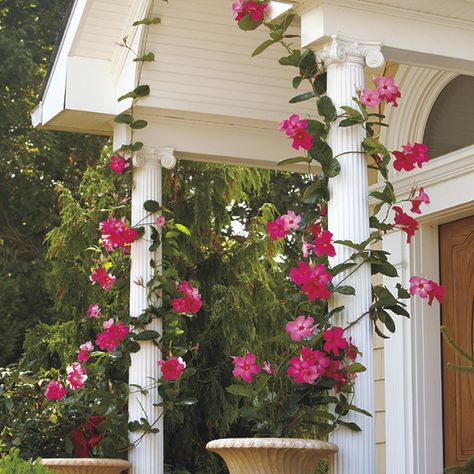
It loves light
Indoors, dipladenia needs a bright spot out of direct midday sun. It likes normal room temperature, so in winter the temperature should not drop below 10 °C, and ideally not below 15 °C. Otherwise, in a spot that is too cold, it will start to turn yellow and lose its leaves. Also protect it from wind, which is certainly no friend of this plant. Wind can very quickly break and tear its flowers and leaves. Watch out for long periods of drought too, as it may not like them either, although it can cope with some dryness.
If you have a Victorian glasshouse, that is probably the best place for it over winter, as long as it is heated and the temperature does not fall below 10 °C at night. You will be happy with the results if you plant it in suitable containers that are large and self-watering. In winter, however, leave the reservoir of a self-watering pot empty and water from the top, otherwise the compost will stay permanently wet.
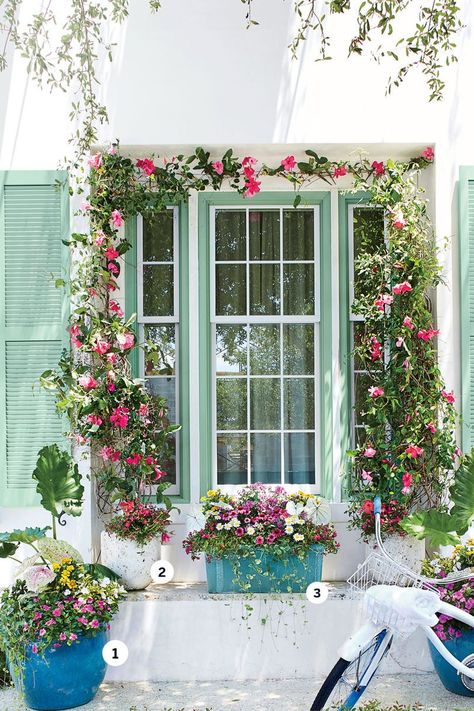
Be sure to feed it regularly. This helps it develop a strong root ball and sturdy, free-flowering shoots. Choose liquid fertilisers with a higher phosphorus content or complete liquid fertilisers for balcony plants. If it flowers poorly, it is usually short of light, warmth or nutrients. Repotting helps once the roots have filled the pot.
Why is my dipladenia not flowering? According to the RHS, low temperatures are often to blame, especially in spring, and Mississippi State University Extension points out that sunshine encourages flowering. The RHS advises repotting in February or early March into peat-free, loam-based compost. A mature plant needs a container 25 to 30 cm wide.
How often should you feed it? Clemson University recommends feeding every two weeks in spring and summer with a fertiliser higher in phosphorus, for example one with an N-P-K ratio of 10-20-10. The RHS recommends a general-purpose liquid fertiliser once a month from spring, and in summer a high-potassium fertiliser of the kind used for tomatoes. Both phosphorus and potassium fertilisers encourage flowering, so choose just one.
Do not feed from autumn until the end of winter. Start feeding once the plant begins to sprout after its February pruning.
You can also lightly pinch out or trim dipladenia, as it is a very vigorous grower. While it overwinters, reduce watering so that it can go through its dormant period. Do not panic if it drops its leaves. In spring, when you have to cut it back anyway, everything will recover and it will grow new foliage.
How do you overwinter dipladenia?
Dipladenia is a tropical plant and will not survive frost. According to Mississippi State University, many growers therefore treat it as an annual and throw it away in autumn. If you want to keep it for next year, it has to come indoors for the winter. There are three options: warm overwintering as a houseplant, cool overwintering in a bright spot, and storage somewhere cool and dark.
The same rule applies to all three. Dipladenia barely grows in winter, so it needs less water and no fertiliser. Above all, watch out for waterlogged compost and for pests, which thrive in the warm, dry air of a home.
When should you bring dipladenia indoors?
Go by night temperatures, not the calendar. The RHS advises bringing mandevillas and dipladenias indoors before night temperatures drop below 10 to 15 °C. Once the forecast shows nights below 10 °C, it is high time. Do not wait for the first light frost, as it will certainly kill the plant.
Before moving the plant, inspect it thoroughly, especially the undersides of the leaves and the leaf axils. Spider mites multiply quickly in the warm, dry air of a home and easily spread to other houseplants. We explain how to cut it back before moving it in the section on pruning.
Warm or cool overwintering?
With warm overwintering, you keep growing dipladenia as a houseplant. The RHS recommends that night temperatures should not drop below 15 °C, and the New York Botanical Garden (NYBG) advises the brightest window possible. In these conditions the plant keeps its leaves and quickly resumes growth in spring.
Cool overwintering suits a bright hallway or stairwell. The NYBG gives around 10 °C as ideal, and the RHS adds that some plants will survive cooler overwintering above 10 °C but may drop their leaves. A conservatory also works well, as long as the temperature does not fall below 10 °C at night.
The third option, storage somewhere cool and dark, is described by the University of Illinois. The plant is cut back to about 15 cm and stored in a cellar or garage where the temperature does not exceed about 13 °C or drop below freezing, and it is left to rest without leaves. A month before the last frosts, it is moved into the light. This is the riskiest option, and the RHS gives 10 °C as the safe minimum.
Watering and feeding in winter
Water less in winter. The RHS advises keeping the compost only slightly moist, but not letting it dry out completely. According to the University of Illinois, plants stored somewhere cool and dark need only a light watering once every few weeks at most. In a warm room, water more often, but always wait until the top layer of compost has dried out. Never leave water standing in the saucer.
Do not feed from autumn until the end of winter. The NYBG advises trimming the plant in February and, once it starts to sprout, feeding it again once a month. When the first new shoots appear, move it closer to the light and gradually increase watering.
Spider mites and whitefly during overwintering
In the warmth of a heated home, spider mites can easily multiply over winter. These tiny mites thrive in warm, dry conditions, according to the RHS. Signs include fine pale speckling on the upper side of the leaves and tiny yellowish-green mites on the underside, and fine webbing in heavy infestations. The leaves then dry out and drop.
As prevention, the RHS recommends regular misting and higher humidity. You will find tips on how to do this at home in our article how to increase humidity at home. Clemson University lists whitefly, mealybugs and scale insects as mandevilla pests alongside spider mites. You can spot whitefly by the tiny white flies that fly up when you shake the plant.
Remove badly infested leaves and rinse the plant under a lukewarm shower. Yellow sticky traps help against whitefly. If the pests do not go away, use a plant protection product intended for houseplants and follow the dosage on the label.
When and how should you prune dipladenia?
Mandevillas, including dipladenias, flower on new shoots. A gardening column from Mississippi State University Extension therefore points out that they tolerate pruning well and harder pruning will not cost you flowers. Clemson University even states that a mandevilla cut back almost to the ground will flower on new shoots the same year.
For the first, formative pruning of a young plant, the RHS advises choosing three to five strong young shoots and removing the rest. On climbing types, you then tie these to a support. Annual pruning is done at the end of winter or in early spring, when you shorten the side shoots to three or four buds. Bushy dipladenias only need trimming and pinching out to make them branch.
In autumn, cut it back to fit the space, and quite hard for cool overwintering, to 15 to 30 cm. These figures are based on the methods of the NYBG and the University of Illinois. Wear gloves, as the cuts ooze a milky sap which, according to the RHS, can irritate the skin.
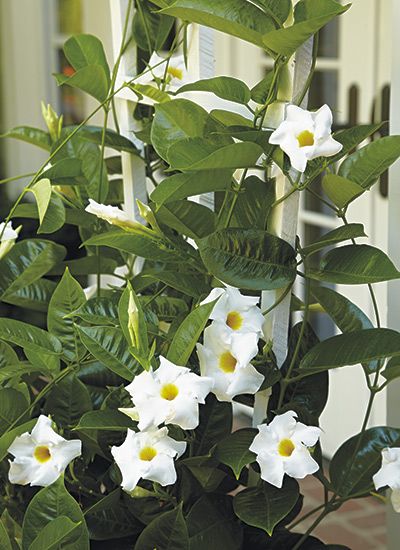
How do you propagate dipladenia?
Choose stem cuttings from this year’s shoots that are not yet woody. The best time is from spring to early summer, when you are shaping the plant anyway. After cutting, trim the cutting to about 8 centimetres and place it in lukewarm water so the milky sap washes out of the cut. Then dip the cut end in rooting hormone and insert the cuttings into clean perlite, or alternatively peat or sand.
The RHS recommends taking softwood cuttings in early summer and rooting them in warmth at 20 to 25 °C. Wear gloves while working, as according to the RHS the milky sap irritates the skin. Keep the compost slightly moist at all times, but not wet.
Dipladenia is not entirely resistant to fungal diseases. For mandevillas, Clemson University mentions anthracnose, which causes light brown to brown spots on the leaves. Pests can also be a problem. Whitefly and aphids are particularly fond of it, but you can keep them under control with a spray. Mealybugs and soft scale may also appear.
Why are my dipladenia’s leaves turning yellow?
Dipladenia owners mostly deal with yellow leaves in autumn, when the plant moves indoors and its light, temperature and watering all change. There are usually several causes, and they often combine.
- Cold. The RHS warns that the plant drops its leaves in conditions that are too cold. Keep an eye on night temperatures and draughts near the window.
- Overwatering. In cold, wet compost the roots suffer and may rot. Let the top layer dry out before watering again, and empty any water from the saucer.
- Drought. Compost that stays dry for a long time also causes yellowing, especially in summer in small pots on a sunny balcony.
- Spider mites. Fine pale speckling on the leaves and webbing on their undersides give away the mites. See the section on overwintering for more.
- Too little light. In a dark corner of a room, the plant produces weak, leggy shoots and drops its lower leaves.
- Hunger. If mainly the older leaves turn yellow in summer and the plant stops flowering, it lacks nutrients or needs a bigger pot.
If only a few lower leaves turn yellow after a move, it is usually nothing serious. Adjust the watering, give the plant light and let it settle in. It is a warning sign if young leaves at the tips of the shoots fall off too.
Is dipladenia poisonous to dogs and cats?
There is no clear answer. The American ASPCA, which keeps an extensive list of toxic and non-toxic plants for dogs, cats and horses, lists neither dipladenia nor mandevilla as toxic or as safe. However, the same organisation warns that eating any plant can cause vomiting and digestive upset in dogs and cats.
Caution is also wise because dipladenia belongs to the dogbane family (Apocynaceae), which also includes oleander, a plant the ASPCA classes as toxic. The RHS also states that dipladenia’s milky sap can irritate the skin. So keep the plant out of reach of pets that like to nibble leaves, and wear gloves when pruning.
If your dog or cat has chewed a dipladenia and is vomiting, drooling or lethargic, call a vet. You will find other plants worth being careful with in our article on poisonous trees, plants and shrubs.
Dipladenia on the balcony and in pots
From spring to autumn, dipladenia is in its element on a balcony or terrace. A gardening column from Mississippi State University Extension states that it needs at least six hours of direct sun a day, because sunlight encourages flowering. In a very hot spot, such as by a south-facing wall, partial shade will help to stop the leaves from scorching. The advice to keep it out of direct midday sun, mentioned at the start of this article, applies mainly behind glass, where the plant easily overheats.
Move it outside once night temperatures stay above 10 to 15 °C, the same threshold the RHS gives for moving it indoors in autumn. The NYBG puts it back outside in May or June, but night temperatures matter more than the date. According to the RHS, it needs at least 21 °C during the day and 18 °C at night to grow, so in a cool spring it tends to stall outdoors.
Bushy dipladenias are best for window boxes and hanging baskets, as they need no support and, according to Mississippi State University, work well as fillers in mixed containers. Climbing mandevillas need a trellis or support, much like climbing plants for fences.
The container must have drainage holes. The compost should stay slightly moist but drain well, so that water does not sit around the roots. If you are short of space, one larger pot in a corner is enough. For ideas on arranging plants in a small area, see our article how to furnish a small balcony or terrace.
Dipladenia or mandevilla?
Under current botanical convention, they are one genus. Dipladenia is a former botanical name, and since 1933 these plants have been placed in the genus Mandevilla. That genus was described by the English botanist John Lindley as early as 1840, while Alphonse de Candolle described the genus Dipladenia only in 1844, and the older name takes priority.
Clemson University states that the genus includes around 100 species of tropical American woody climbers, and the RHS adds that mandevillas are still often sold under the original name Dipladenia. One example is the species described below, which William Hemsley named Dipladenia sanderi in 1896 and Robert Woodson moved to the genus Mandevilla in 1933.
In shops, the two names tend to be used according to appearance. Compact, bushy, non-climbing plants with smaller leaves and flowers are usually sold as dipladenias, while climbing vines with larger flowers are sold as mandevillas. A 2022 gardening column from Mississippi State University Extension points out that the label is often inaccurate, because the two types are crossed with each other.
For care, the difference hardly matters. Light, temperature, watering and overwintering are the same for both. The main difference is that a climbing mandevilla needs support and more space.
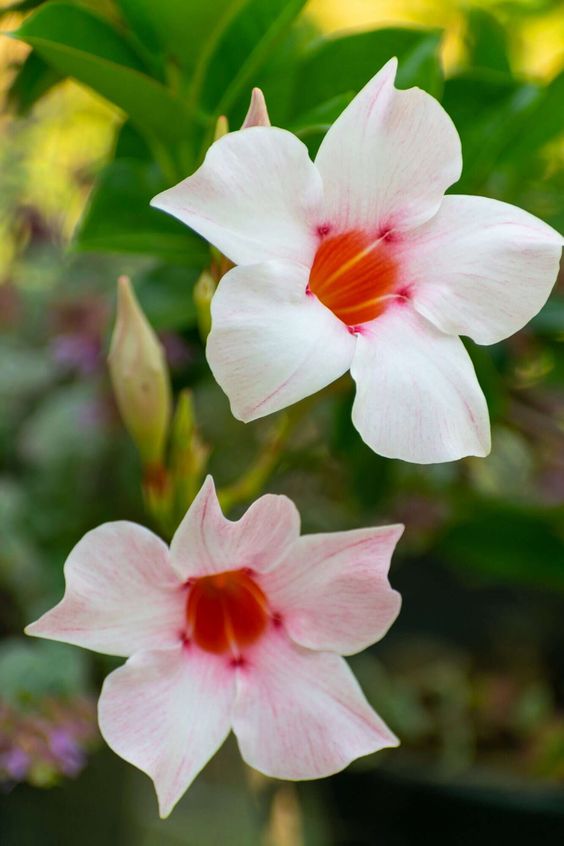
Types of dipladenia
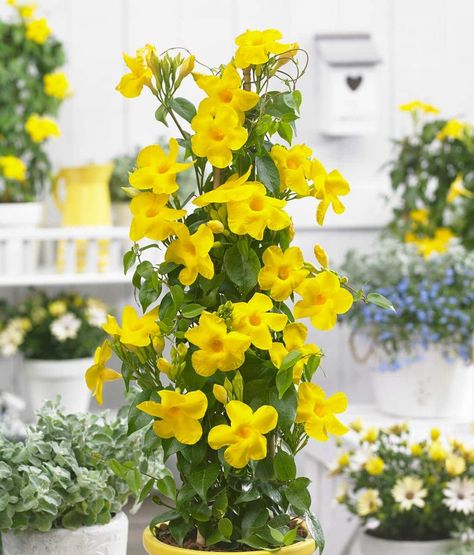
Yellow dipladenia
Yellow dipladenia is a trade name, not a botanical species. The University of Florida (UF/IFAS) points out that botanically different plants, such as Pentalinon luteum, are often sold as yellow mandevilla. So check the Latin name on the label before you buy.
You can keep it bushy by pruning it. It flowers from May to October. You can grow it indoors, but in the summer months it is fine to put it outside. Water it regularly, otherwise it will start to turn yellow.
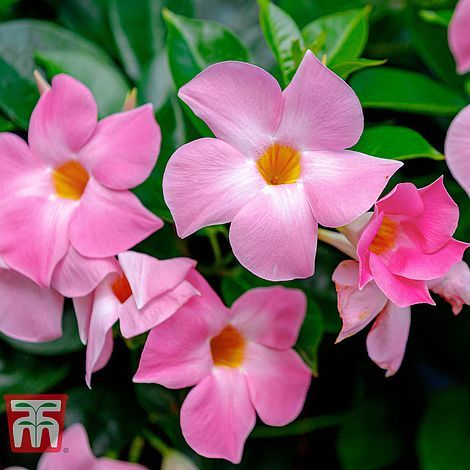
Dipladenia sanderi
It has trumpet-shaped flowers in white, red or pink. Grow it in a movable container and give it high humidity. It can be trained up a support as a climbing vine.
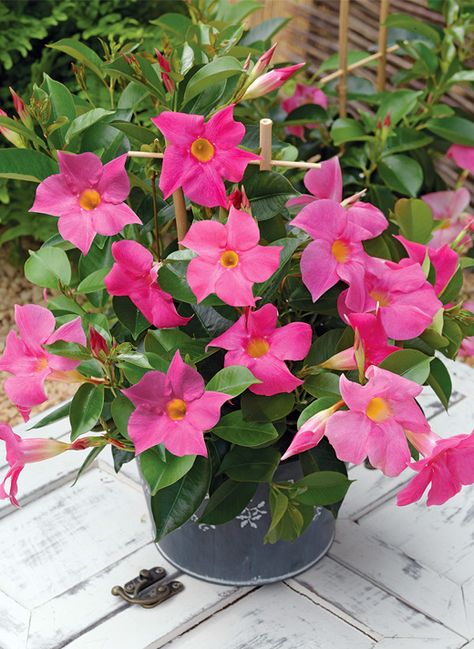
Dipladenia hybrid Rio
It is not a separate botanical species but a commercial series of modern cultivated hybrids. The breeder describes them as compact, early-flowering, non-climbing plants. They flower in white, pink and several shades of red.
It is a rewarding compact plant that flowers all summer. It rests in winter and you can only buy it in flower in spring, but a voucher for one can make a great Christmas gift for a woman.
Leave a Reply