
Key principles for painting a flat
Painting a flat tends to be tedious. All the furniture has to be moved out of the way or carefully covered, houseplants are best moved to the next room, and you need plenty of patience. The result, however, is always worth it. Everything is clean and smells fresh and new. That is why it pays to repaint your flat from time to time. And it is actually very simple, as long as you follow a few rules.
Good preparation
This is the foundation. Sometimes the preparation phase can even take longer than the painting itself. First, prepare the area you want to paint. As we have already mentioned, move the furniture to the middle of the room so that you have easy access to the walls and ceiling. Cover it with plastic sheeting, of course, so that it is still usable after your efforts.
Lay protective board or cardboard on the floor so that you do not slip. Use masking tape to cover all light switches, sockets, door frames and window frames, which will save you a lot of tedious cleaning.
Wear comfortable clothes when painting your flat. Ideally, this means a long-sleeved T-shirt (or an old shirt) and gloves, and protect your hair with an old baseball cap. Many paints are very difficult to clean off.
How to choose the right paint
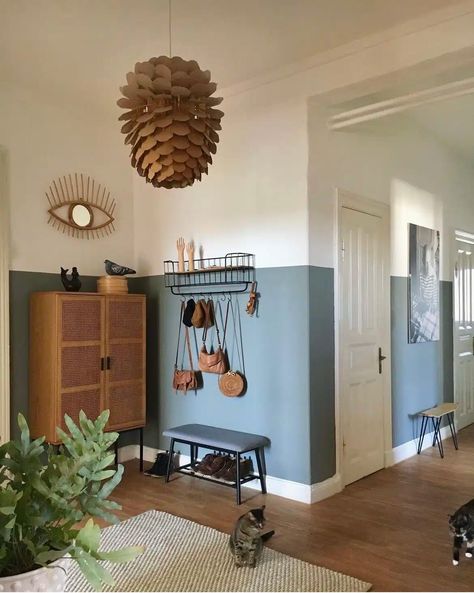
There is a whole range of cool and warm colours on the market. They also have different properties. When choosing, it is best to focus on the colour shade of the walls. The properties of the paint are an important consideration. You may think a standard paint will be enough, as you are the only one who looks at it. But over time, and believe us on this, various marks on the walls will annoy you no end.
If you have higher demands, you will have to pay more. For example, with a very deep shade, it is worth choosing a paint with high opacity. Do you want to paint a child’s bedroom? You will certainly appreciate a writable top coat that your children can draw on with markers.
There are also paints that can prevent various types of mould.
In recent years, washable paint has become very popular. It is definitely worth investing in. This is especially true for walls that get dirty or often come into contact with water. You will particularly appreciate these paints in the kitchen, hallway or bathroom. Washable paints are also divided into classes according to their durability.
The right tools
The right tools are just as important as the choice of paint. The best option is a combination of a paint roller and a brush. However, be careful when choosing, as some paints specify which brush works best with them. A roller lets you paint large areas very easily, while a flat brush is handy for corners and around windows and doors.
When choosing a roller, consider the roughness of the surface and the finish you want to achieve by combining the surface, the paint and a roller with a finer or coarser texture. It is also worth knowing that a larger roller covers a large area, but it is physically very tiring to use.
Do not forget a special bucket or paint tray with a grid, which helps the roller absorb the paint evenly. A telescopic or extension pole can also be useful.
The condition of your walls
Always prepare the walls before painting. They must be clean, even and dry, otherwise your efforts will be wasted. Check what condition the walls are in. This means checking for damaged plaster, peeling paint and so on. If your walls are dirty, you must wash them first.
Do not forget the primer
Once you have repaired the walls, apply a primer. Its main purpose is to strengthen the surface and even out its absorbency. New plaster and skim coats must always be primed before painting. Is it also necessary when renovating? You can find out easily: run a roller with paint over one spot several times. If the original paint comes off onto the roller, you should definitely prime. Otherwise, the new paint will peel and you will see visible patches. For older, weathered plaster, it is better to use a deep-penetrating primer, and for walls with mould, a special fungicidal primer is available.
A few final tips…
- Do not forget to stir the paint thoroughly before painting. Poorly mixed paint is usually the reason a paint job fails. Keep stirring it while you work, too.
- Start by painting the corners and details, then move on to the larger areas. Roller strokes should partly overlap.
- Our main rule is this: for smaller rooms, choose colours with softer tones, such as light yellow, light green, white, ivory, beige and so on. Otherwise, your room could look even smaller, which you certainly do not want.
Painting a flat is often full of arguments and conflict. Try not to provoke anger, and you will save yourself a lot of work and stress. The work will then go much more smoothly.
Leave a Reply