
7 steps to choosing the right infrared sauna
Do you love the sauna? Would you like to spend more time in one? No problem. Treat yourself to some rest after a demanding day right in your own home. Relax your body and clear your mind. Let your worries go and enjoy yourself. It is time to relax.
In this article, we explain how to choose an infrared sauna that meets your requirements, what to watch out for when choosing one and what to check. We also look at what a reasonable price for an infrared sauna is.
How does an infrared sauna work?
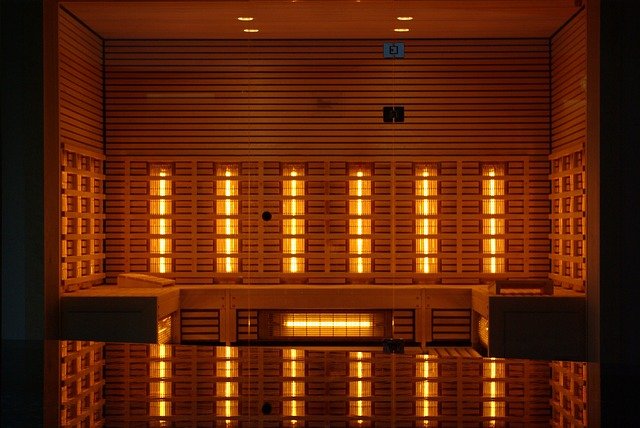
An infrared sauna is heated by special infrared panels that produce infrared radiation, which penetrates deep into muscle tissue. This infrared light warms the tissue to a depth of 4 centimetres. Thanks to this process, the body is not put under strain, and the muscles regenerate and relax. This warms our body more effectively.
People with breathing difficulties and those who prefer lower temperatures will appreciate that the air temperature ranges from 40°C to 60°C. In these cases, it is therefore more suitable than a Finnish sauna or a steam room. You sweat up to three times more intensely in an infrared sauna.
Thanks to its low temperatures, an infrared sauna is suitable for people with cardiovascular problems and people with breathing difficulties. It should be avoided by pregnant women, women with breast implants and people with metal joint replacements.
Before you buy an infrared sauna, make sure you properly test whether you will actually enjoy using a sauna. Some people buy an infrared sauna and after 2 or 3 uses it just gets in the way.
Benefits of an infrared sauna
- Strengthens the immune system,
- treats yeast infections, eczema and psoriasis,
- supports weight loss,
- relieves joint and muscle pain,
- heals skin conditions,
- helps with insomnia,
- helps strained muscles recover,
- supports mental wellbeing,
- detoxifies the body,
- helps fight cellulite,
- cleanses the skin.
A good time for a sauna is in the morning, when our body is just waking up, but people more often enjoy a sauna in the afternoon, after work and in the evening.
How to choose an infrared sauna
Now let’s look at how to choose an infrared sauna. A few key tips will help us better understand how to choose an infrared sauna that will serve us for relaxation and rest for many years.
Quality is essential
When choosing an infrared sauna, it pays to invest in a custom-made one. A specialist company will design, build and install the sauna to our requirements. A common benefit is an extended warranty and servicing for the lifetime of the sauna. They can also make a made-to-measure infrared sauna for us, for example for narrow spaces or under a sloping ceiling.
If we still decide to buy a ready-made cabin from a wholesaler, we will pay close attention to the quality of the product. Cheap cabins come with disadvantages, such as:
- Price versus quality,
- a lifespan that only lasts as long as the warranty,
- poor-quality cheap infrared panels,
- uncomfortable benches,
- too little space,
- cheap materials.
Tip: Try visiting a sauna showroom to compare a custom-made sauna with an off-the-shelf product. You will see the difference immediately.
Quality infrared heaters
These are the most important element, because many panels only emit a narrow spectrum of rays. This means they do not let infrared radiation penetrate under the skin (deep into the tissue), but only act on its surface (warming it). This is not enough to get the full benefit from it. The highest-quality infrared panels run at full power as soon as they are switched on. Ordinary ones, on the other hand, take several long minutes to warm up. This affects energy savings.
- Ceramic infrared heaters: these heat up to a temperature of 250°C to 300°C and reach the optimum temperature quickly. The advantage of ceramic infrared heaters lies in their affordable purchase price and long lifespan (8,000 operating hours). To give you an idea, if used 3 times a week for 45 minutes, they will last up to 60 years. Their disadvantage is higher energy consumption compared with carbon heaters.
- Light-emitting ceramic infrared heaters: these heat up to a temperature of 300°C to 500°C. As well as strong heat, they also emit light, because they are made of tubes of quartz glass. Their therapeutic effects are therefore even stronger.
- Carbon infrared heaters: these heat up to the lowest temperature, 70°C to 170°C. They take longer to warm up than other heaters. Their manufacturing process is more demanding, which is reflected in the price.
- Vitae infrared halogen lamps: the most modern, the best, but also the most expensive type. Their lifespan is unlimited and they take only 1 second to warm up.
Heater wavelength
When choosing, we will take care to compare the wavelength of the heaters (known as the radiation spectrum).
3 basic spectra:
- IR-C, only warms the surface of the skin and does not penetrate deeper,
- IR-B, is absorbed into the upper layer of the skin,
- IR-A, penetrates into the subcutaneous tissue.
Only broad-spectrum infrared radiation can be absorbed deep into the tissues, so that it not only warms the skin but also has a healing and regenerating effect on our body.
Which wood?
The wood used to make saunas varies in grain, shade and knottiness. It is up to us which wood we choose for our infrared sauna, so that spending time in it is as pleasant as possible.
Wood used in sauna making:
- Hemlock (Canadian hemlock): a light, soft and durable wood, distinctive for having no knots and no resin pockets. Its colour ranges from light brown to pinkish, with a visible grain. It contains no resin. Canadian hemlock conducts heat well. This means it is unsuitable for making sauna benches and backrests.
- Scandinavian spruce: a pale, dense wood with small knots, suitable for both indoor and outdoor cladding. Scandinavian spruce is the most widely used material for making saunas because of its high durability, light natural look and affordable purchase price.
- Aspen: a pale, smooth wood with a fine grain, suitable for making sauna floorboards. Aspen has excellent absorption properties and a very long lifespan. Aspen is often used in combination with very dark tones (cedar), which give the sauna an original look.
- Abachi (African whitewood): a very pale, smooth, knot-free wood with low heat conductivity. This makes it perfect for making backrests, benches and floorboards. Abachi is a soft and very light material that works well in combination with dark tones (cedar), which give it an elegant and pleasant look.
- Cedar: a rich, dark wood that withstands high temperatures and sudden changes in humidity. It contains essential oils that are released at high temperatures. As a result, a pleasant scent is released during sauna sessions, creating the perfect atmosphere for relaxation. Thanks to its low heat conductivity, it is a suitable material for making benches, backrests and floorboards.
Why is cedar the most popular choice in the USA?
Western red cedar (WRCC) wood is often used in the USA for the following reasons:
- Above all, cedar is a fairly easy wood to get hold of in the USA.
- Cedar is a softwood that resists the cracking and splitting caused by heating and cooling in a sauna. No sauna wood lasts longer than cedar.
- Cedar contains aromatic oils known for their healing and cleansing properties, which help with detoxification during a sauna session.
- Thanks to the unique properties of cedar oil, cedar is naturally antifungal and antibacterial. This is especially important in a sauna, where bodies, moisture and heat combine to create an ideal environment for mould and bacteria.
- Cedar is one of the most beautiful woods available, ranging from a very light honey colour to a dark walnut shade.
- Cedar smells wonderful and gives you a true sauna experience. WRCC is considered a non-aromatic cedar, has a very subtle scent and pleases the senses.
- Cedar inside a sauna can easily be sanded down to remove any sweat stains and restore the fresh cedar scent.
- Sauna users who are very sensitive to smells (multiple chemical sensitivity) may want to consider a sauna made from a white wood, such as basswood. These woods have less of a smell than WRCC and may be more pleasant for people with MCS.
Freestanding or built-in?
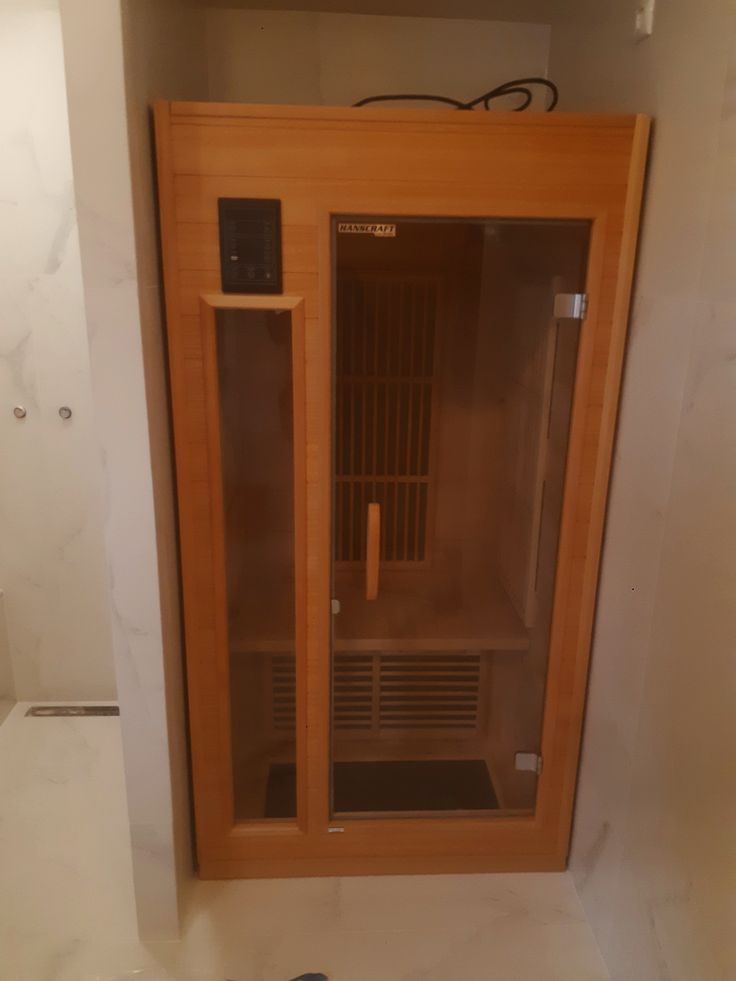
Infrared saunas are available in a range of sizes and designs. With a little free space, it is easy to get a freestanding infrared sauna that will fit in your home.
If we want an infrared sauna for a particular space, the ideal solution is a made-to-measure infrared sauna. Non-standard options include saunas in an alcove, under a sloping ceiling or in a very narrow space. The smallest size is 90 x 90 cm, which is for one person.
Think carefully about how many people will use the sauna. We definitely do not recommend buying a sauna for three just in case someone comes to visit. With infrared saunas, it is better to go for a smaller one. Alternatively, you can take turns.
What do we expect from an infrared sauna?
If we are happy to spend just a few moments in an infrared sauna each month, we will not need any special gadgets.
However, if we want to spend almost every free moment in the sauna, we need to adapt the environment so that it is as comfortable as possible for us. The basics are backrests, for comfort. Ionisers for clean air and coloured lighting for a more pleasant atmosphere. Let us also not forget the overall design, because an infrared sauna is a prominent feature of our home.
Some saunas also come with extras such as light therapy with various light tones, ionisers, a radio, a reading lamp, a newspaper rack, a drinks holder, a towel hook, a remote control, backrests, a heated floor, roof ventilation or an input for an audio player.
And how about an infrared sauna placed right in the bedroom? For perfect relaxation, we can slip into bed after the sauna and rest. There are many options. From cheap and tasteless saunas made of cheap varnished wood in the cellar to designer gems made of quality wood that will become the pride of your interior.
Price
Apart from the important tips on how to choose an infrared sauna that we listed above, our budget plays an important role. The price is affected by the size (how many people it is designed for), the number of infrared panels, the type of infrared panels, accessories, the type of lighting (LED, halogen), the material and more. The price range runs from 15,000 CZK (about 690 USD) to several tens of thousands of CZK.
The cheapest infrared saunas (up to 20,000 CZK (about 920 USD)) are usually designed for 1 to 2 people. In terms of equipment, these options are rather modest, without many extras.
A very popular price range is 20,000 to 30,000 CZK (about 920 to 1,400 USD). This happy medium offers richer equipment, including underfloor heating, light therapy or a radio. In size, they are usually designed for 2 to 3 people.
Infrared saunas in the 30,000 to 50,000 CZK (about 1,400 to 2,300 USD) price range are sized for the whole family. A wider range of equipment (including a drinks shelf or a remote control) and more expensive materials (e.g. cedar) are standard.
The highest price category (over 50,000 CZK (about 2,300 USD)) is intended mainly for commercial use (hotels, wellness centres) or for luxury flats. In terms of capacity, they are designed for 6 or more people and include very high-quality and expensive extras.
Advantages of an infrared sauna
- Easy maintenance,
- bearable temperature,
- temperature can be adjusted freely,
- simple operation,
- quick heating (within 15 to 30 minutes, depending on the type of sauna),
- suitable for small spaces,
- connects to a standard 220 V socket,
- natural air circulation is sufficient.
DIY assembly
Assembling an infrared cabin is a fairly simple matter. You just need to be a little handy and have one helper with you. Simply unpack the sauna from the box and assemble it according to the enclosed instructions. Be careful. Not all instructions are very detailed, so we may need to use a little imagination. However, there is no need to worry. An infrared sauna consists of ready-made panels that have all the necessary details built into them. In the final stage, we connect the connectors, plug it into the socket and can start using the sauna.
Get to know the infrared sauna in detail before you buy
Infrared saunas often reach temperatures of around 40 to 60 degrees Celsius (105 to 140F) combined with lower humidity. That is a big difference compared with a traditional sauna.
They use light in the infrared range to warm the body (hence the name infrared sauna). In an infrared sauna, you sweat just as much (if not more) as in a traditional sauna, even though the air temperature is much lower.
You do not need to worry that an infrared sauna will increase the humidity in your flat or house. The advantage for home users is that infrared saunas do not need special ventilation for excess heat, nor do they have problems with moisture build-up (because they also have low humidity). In addition, these saunas are much cheaper to build (and therefore also to buy), and finally you can stay inside an infrared sauna for longer, because the air temperature is not as stressful for the body as in dry saunas (but you still get the amazing benefits of sweating and heat therapy). Thanks to these advantages, more households will choose to install an infrared sauna.
Given these reasons, it is clear why infrared saunas are becoming very popular with health-conscious people and with those looking for a home sauna at a great price.
More tips
- The recommended height of an infrared sauna is at least 2 metres, so that we can stand up comfortably in it.
- Count how many people will use the sauna with you, plus 1, so that there is enough space for everyone.
- The size of the infrared sauna needs careful consideration. It determines not only the overall price of the product, but in the case of larger saunas we must also allow for a longer heating time and higher energy consumption.
- A home sauna has its advantages, such as complete privacy, no need to travel anywhere, and we can use the sauna whenever we want.
- An infrared sauna can be placed in the bathroom, the bedroom, on the terrace, in the cellar or in a conservatory.
Also read our article on suitable plants around a pond and what, on the other hand, is suitable around an above-ground pool.
USD amounts are approximate, converted at the Czech National Bank rate of 21.75 CZK per USD on 9 October 2026.
Leave a Reply