
How to build a polycarbonate greenhouse
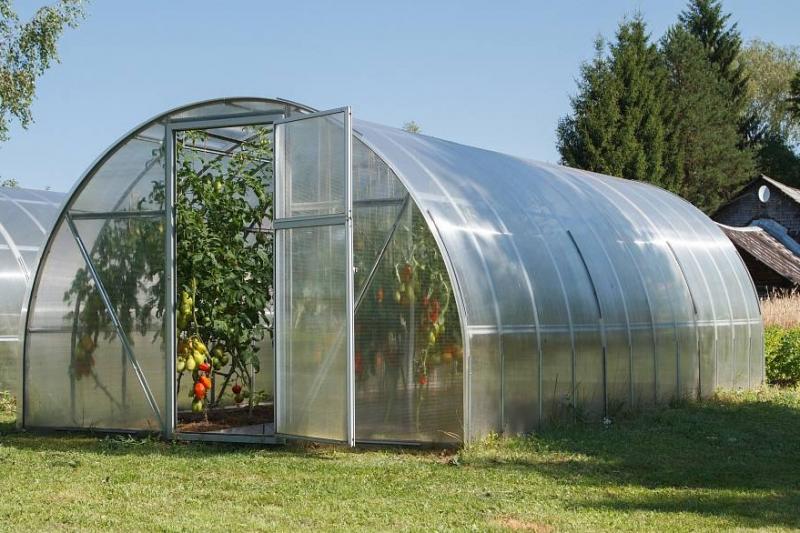
Are you planning to build a polycarbonate greenhouse with your own hands? Before you start, it is a good idea to choose a design. That way you will make the most of the main advantage of this material, which is its ability to bend.
The ridge of the greenhouse should run from south to north, so that the sun shines on the longer side of the greenhouse in both the morning and the afternoon. You will certainly want to use solar energy for as long as possible. Flat ground is ideal, of course, but if there is no other option, you can also build the greenhouse on a slope; however, you will need to level the ground.
Nothing should get in the greenhouse’s way, so avoid shade (trees, buildings). At the same time, choose a sheltered spot to protect it from strong wind. It should also not stand near a place where children play, as they could get hurt. Place your polycarbonate greenhouse close to a water source; you will appreciate this when watering.
Don’t be afraid of the material
For small greenhouses, use a beam. The cross-section of the batten depends on the size of the greenhouse and the snow and wind loads in your region. The most common size is 50 x 50 mm. Place these supports in the central aisle. To be on the safe side, the corner posts can be made of 100 x 100 mm timber.
If you are building a polycarbonate greenhouse on a timber frame, all boards and timber must be treated and impregnated with antiseptics. Treat the ends buried in the ground with products designed for direct ground contact. Without this treatment, the timber will firstly deteriorate quickly and secondly may become a source of plant diseases.
When attaching the posts to the base frame (the bottom rail), use steel-reinforced mounting brackets for greater rigidity and reliability. They are widely available in hardware shops. Additional crossbeams are installed to increase the load-bearing capacity of the roof.
Glass or polycarbonate?
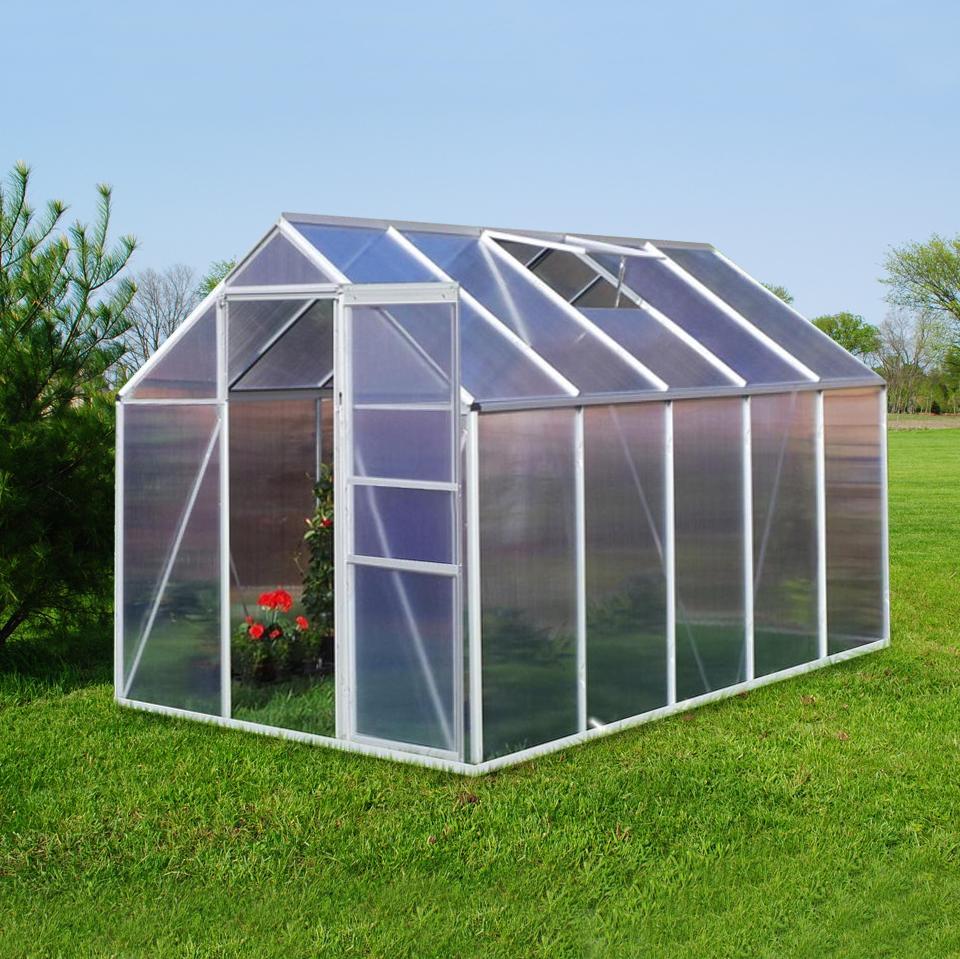
As polycarbonate sheets are much lighter than glass, you can build the whole greenhouse structure from thinner profiled sheet metal. Polycarbonate can also be bent, so you can get greenhouses with an interesting design. Thicker polycarbonate sheets have better thermal insulation properties, but they require a stronger structure.
Also try our article on how to choose a greenhouse for your garden or on how to arrange a greenhouse.
Galvanised frames
They are good in areas with little winter snow and without strong winds. The advantage of this option when building a polycarbonate greenhouse is that no welding is needed. The downside is that the load-bearing capacity is not the highest. The technology is standard, used both for building walls and for plasterboard partitions. The only difference is that the frame is clad on one side only, with polycarbonate attached.
We also recommend doubling the uprights. Join two load-bearing profiles, placing them back to back, and fasten them together with self-tapping screws. For a stiffer frame, add bracing and connect neighbouring uprights with diagonal braces.
What about the foundation?
Greenhouses can fly away very easily when the wind is really strong, so it is better to anchor your greenhouse firmly. If you plan to use the greenhouse all year round, the foundation should go deeper, to just below the frost line. For seasonal use, concrete blocks or simply a timber beam will do.
A greenhouse made of glass panels needs a foundation. A concrete base is ideal, as it not only keeps the greenhouse stable but also keeps out unwelcome visitors such as moles and voles. Technically, polycarbonate greenhouses do not usually need a concrete foundation, so it is up to you.
Final tips
- Never build a greenhouse in windy weather, rain, a storm or other bad weather.
- Unpack all the greenhouse parts and sort them into groups.
- Once assembled, insulate the whole greenhouse; it will pay off.
- Fit the windows and doors last.
If you are thinking about building a polycarbonate greenhouse, have a look at our other articles too, such as what active relaxation is or how to grow herbs on a balcony.
Leave a Reply