
What are Canadian houses and what makes them stand out?
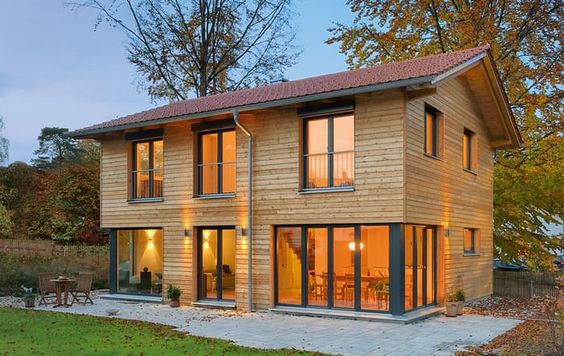
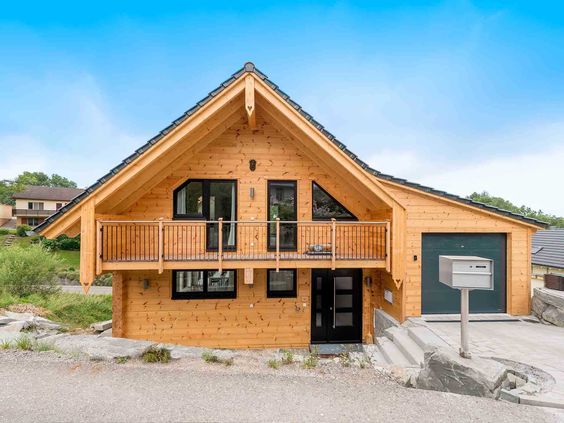
Until recently, most of us looked at timber-frame houses with a certain mistrust. Looking abroad also encourages us to build such homes, for example in Austria, where they are very popular. Timber-frame buildings make up a 30% share of all family houses. There is even a view that these Canadian-style houses are the way of the future. But what makes such buildings stand out? Do they only last one or two generations? You will find out in the following paragraphs.
Material quality
The most important thing is the building material. It is not true that Canadian-style houses only last a few years. For example, whole districts of London have been built the same way since the First World War. These houses are still standing, lived in and maintained. The market value of the property is even high. The whole idea of this kind of timber-frame house comes from Scandinavia, where the climate is much harsher than ours.
The problem is that, unlike buildings made of various types of bricks or blocks, we have much less experience with building frame structures. Almost all our neighbours would be able to build a house the traditional way themselves, but hardly anyone would dare to take on so-called frame construction, also known as the Canadian method. Yet there is nothing complicated about it. It is simply another way of building a house using a different building material.
What to pay attention to
The most important things, where mistakes are also often made during construction, are the right choice of timber and insulation.
Canadian-style houses are built from timber. First you build the frame, and only then do you insulate it. Remember that the timber must be of really high quality, without major cracks or knots. It should be kiln-dried to about 15% moisture, impregnated, planed on all 4 sides and have bevelled edges. What is more, to minimise attack by fungi and wood-boring insects, it is a good idea to reduce the moisture content of the timber to below 12%. For the basic frame, we recommend using C24 grade pine.
Canadian-style houses and moisture
Remember that the biggest enemy of Canadian-style houses is moisture. To stop moisture getting into the house, we recommend using special membranes. On the inside of the house, place a vapour barrier in front of the insulation. It stops the water vapour that is normally produced in a household from getting into the wall. On the outer side of the insulation, use a vapour-permeable windproof membrane, which seals the wall without preventing water vapour from passing through. Never leave out these membranes or replace them with anything else.
They cannot be replaced (and this applies especially to the external ones) with other materials either, such as garden sheeting or roofing felt. They must be laid carefully, making sure that the required overlaps between the individual strips are kept. Any mistake, which is very easy to make, especially if you do not fully understand how they work, can cause serious trouble. After a few years of living in the house, the wall may be completely damp. This can cause serious problems and even threaten the structure of the house. For the same reason, it is also very important to keep the gap between the individual layers of insulation.
Are Canadian-style houses complicated?
You may feel that building such houses is a complicated matter. However, we are here to set you straight. A Czech builder should also be able to cope with it well. You just need to pay attention to the quality of the materials, careful workmanship and the order of the individual layers.
From the inside of the house outwards, the layers should follow this order:
- wall paint
- plasterboard
- vapour barrier
- stone wool insulation filling the load-bearing frame
- board sheathing (most often OSB)
- breathable membrane
- ventilated cavity
- second layer of stone wool insulation
- and finally the facade cladding.
All you need is to follow this sequence of work and have basic building knowledge, for example about thermal insulation and foundation insulation.
Once you have read our article, take a look at our others, for example how to set up a home power plant, where to get an energy performance certificate or what the most expensive house in the world is.
Leave a Reply