
Planting garlic, when and how to do it
Deciding correctly when to plant garlic is the greatest skill of all, and together with quality planting stock and a well-prepared bed, it forms the basis of a good harvest. Planting garlic is not simple at all, quite the opposite.
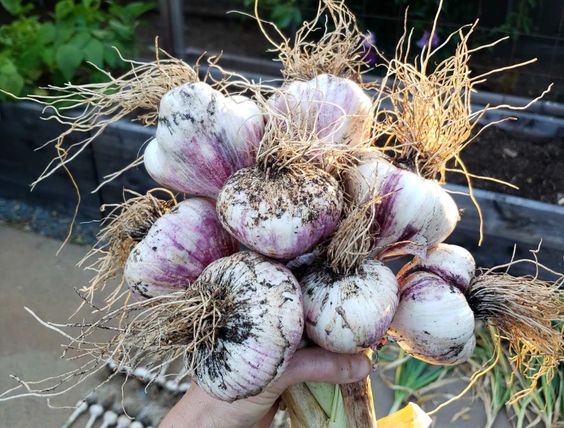
The bed needs very good preparation
Our first tip is to stick to the most important and essential rule: the soil temperature must drop below 9 degrees Celsius!
In general, garlic needs a sunny, warm and airy spot, so don’t underestimate planting it. The soil must contain enough humus and lime. It does best in both sandy and heavy soils. Before planting, enrich the soil with compost, well-rotted manure or liquid manure. You can also choose green manure. Be especially careful to avoid organic fertilisers.
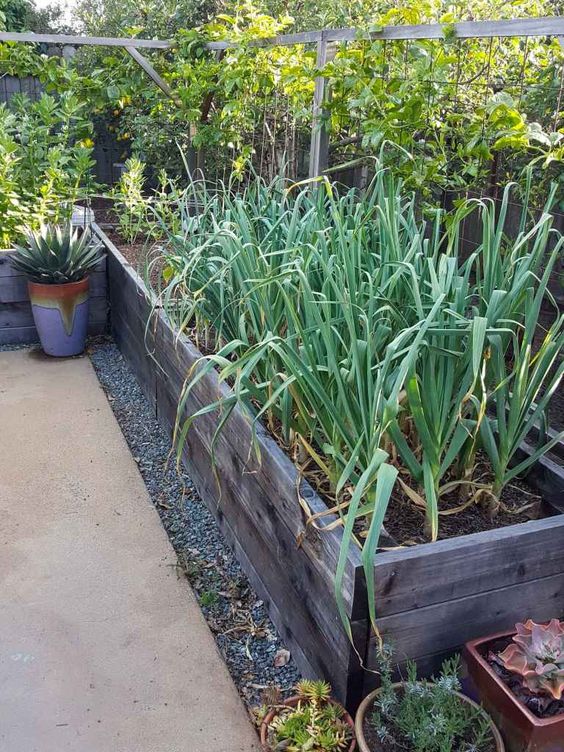
Garlic, like other bulb vegetables, is temperamental and needs special care. Do not plant it in the same place again for at least five years. And if it has been attacked by white rot, you should allow for a break of up to ten years.
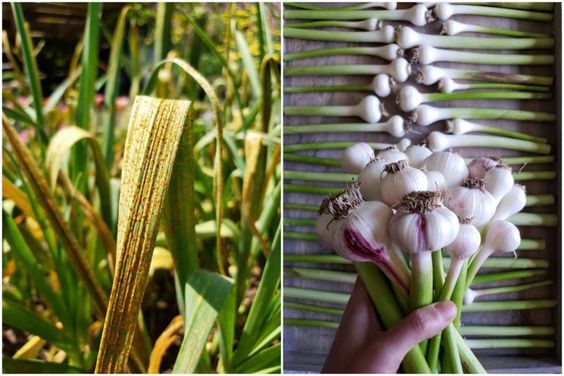
How far apart should you plant garlic?
Rows are usually around 25 to 50 centimetres apart. Plant the cloves about 8 to 15 centimetres apart and deep enough. They should be hidden in the bed, with a 10-centimetre layer of soil above them. The later you plant garlic, the shallower you can plant it. Deeper planting protects the plant from swings in temperature and moisture.
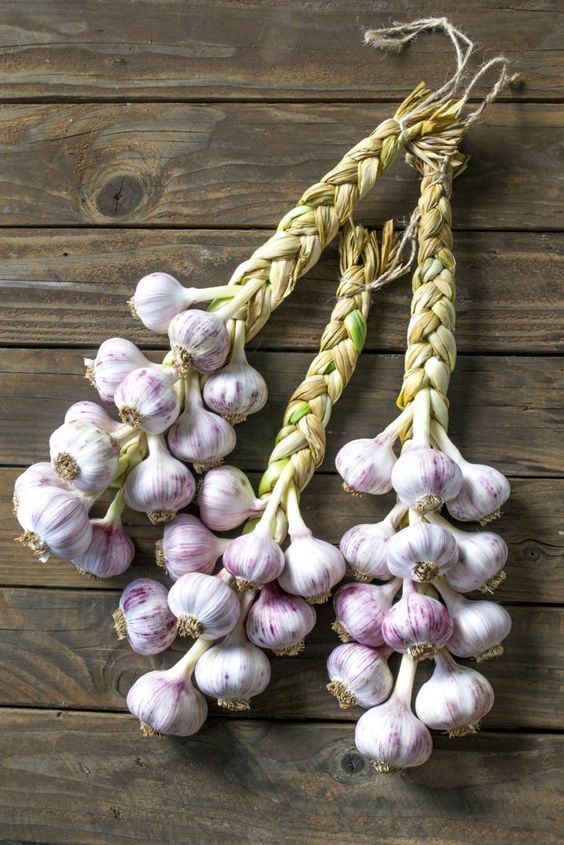
How to stop your garlic rotting
Rot is the biggest threat to the harvest you are hoping for. That is why you should treat the cloves with a fungicide before planting. The seed treatment works as a preventive measure. If you prefer not to use chemicals, do it the old-fashioned way.
Never plant garlic in the same place, give it a new bed every time. Never grow it after leeks, onions or peas. To keep pests away, try planting French marigolds around it.
And what garlic varieties are there?
- Lukan – the highest-yielding Czech variety
- Jovan – also keeps for a long time in the pantry
- Vekan – resistant to viruses
- Anton – keeps for a long time in storage
- Benátčan – does not fall apart if harvested late
- Matin – ideal for dry summers
You have probably also heard that there are only two types of garlic:
- Hardneck (paličák) – has a stalk in the middle of the bulb
- Softneck (nepaličák) – has leaves only
Both are equally good, and each has some mutations, yet they are grown in the same way. They differ in harvesting, however. Softneck garlic is harvested when the leaves turn yellow and flop over. Hardneck garlic is harvested when its leaves start to yellow and the curled end of the stalk straightens up.
A few final tips
- Do not use a dibber, because the clove is then left without direct contact with the soil, so it roots less easily.
- If you are planting a smaller amount, oriented planting is recommended. What does that mean? Do not place the cloves in the bed at random, but with the basal plate facing down, as this is where the roots will grow from, and the tip of the clove facing up, so that they root quickly and yields are not reduced.
Once you have read our article, take a look at growing rhododendrons, how to arrange a greenhouse or how to follow a gluten-free diet.
Leave a Reply