
Why build a garden pond?
Are you planning to create a pond in your garden? Ponds and natural biotopes can give your garden a perfect look, and if you add a lawn, there will be nothing left to fault in your garden.
Natural pond or swimming pond?
Is it your dream to create a swimming pond or a natural pond? With a garden pond, you also need to think about its location. In general, it is not suited to an open area, and you must not forget the necessary water maintenance. To look natural, your garden pond should have an irregular shape and dense planting around its edge. It cleans itself naturally through a suitable depth and well-chosen plants or fish, but for a better effect we recommend choosing a suitable pump and filters.
A swimming pond, on the other hand, is a little different. Its area should be at least 30 square metres, and at least a third of this area must reach a depth of up to 2 metres. Remember that a swimming pond is linked with relaxation and with the comfort of home, so the water is kept clean without technical equipment. For an even better effect, try adding waterfalls, streams or fountains.
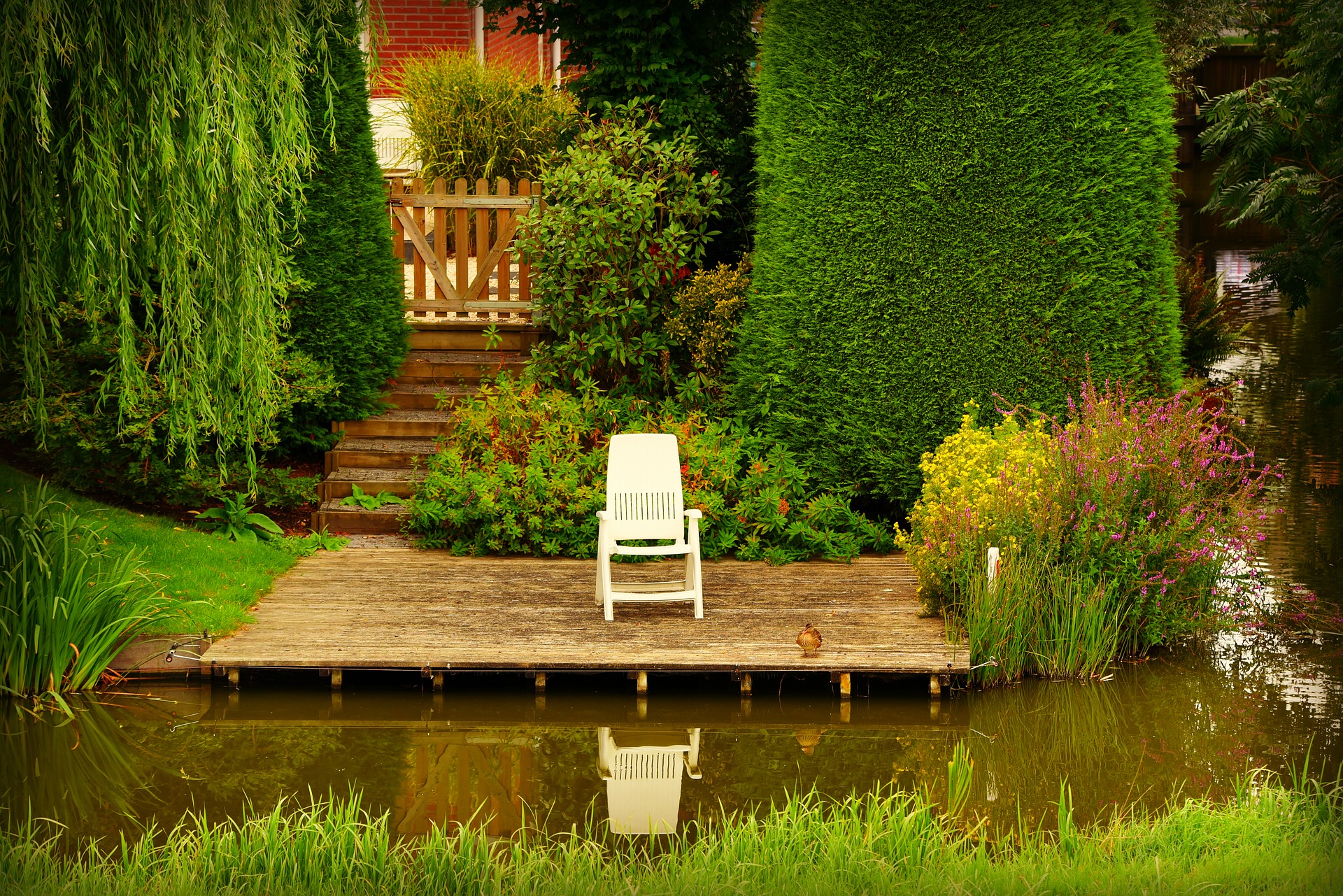
How should you access the pond?
We must not forget such an important element as access to the water. If you have the option of linking the water with the house by means of an attached terrace, a jetty or steps, do not hesitate. It will only make the space more pleasant. Access into the water itself should be built as artificial steps covered with geotextile and liner.
You can also finish the surroundings of swimming ponds with paving, wood or stone. The only limit is your imagination.
Waterproofing is essential
Waterproof liners are used to hold the water in. Most are made of PVC, either single-layer or double-layer. The liners are unrolled and the individual strips are welded to each other. This creates a watertight surface that stops water leaking from your pond. However, take great care to avoid any damage to the liner. To protect against this, it is better to lay geotextile underneath it, and geotextile is also useful on top of the liner before you place substrate in the shallow edge zone of the pond.
Most liners are usually 4 metres wide and 0.5 to 1.2 mm thick. The price is around 250 CZK (about 11 USD). Remember that for a swimming pond it is better to use a thicker, though more expensive, liner to prevent it from tearing.
Plants that clean the water
There are many kinds of aquatic plants that can clean dirt from your pond. Marginal bog plants, for example, clean the water with their roots and rhizomes, so they are a very good choice. In general, plants draw off and absorb excess nutrients and pollutants, which they use for their growth. They limit the growth of unwanted algae and blue-green algae and oxygenate the water.
You can plant aquatic plants in ponds in spring or at the beginning of summer. Before you plant them, however, draw up a plan including zones based on the depth of the pond, and mark the planting on this plan. Try to choose a varied mix of species with interesting colours. If the depth of your pond allows it, do not hesitate to use flowering water lilies as the basis. You can plant aquatic plants directly into the pond in baskets filled with substrate, or in bags or nets.
Choose plants that do not grow too vigorously, such as bogbean or marsh marigolds. If your garden pond is mostly shallow water, excellent choices are common reed, reedmace, galingale, sea club-rush and common spike-rush. To make your pond flower nicely, also try flowering rush, pickerelweed, water plantain and greater spearwort.
Don’t be afraid to create a waterfall
Creating a waterfall in your pond is more demanding and more expensive, but you will not regret it. Babbling water has a major effect on the garden’s microclimate and brings it to life. You will appreciate it especially on hot summer days, so try to build a smaller waterfall near a fire pit or outdoor fireplace.
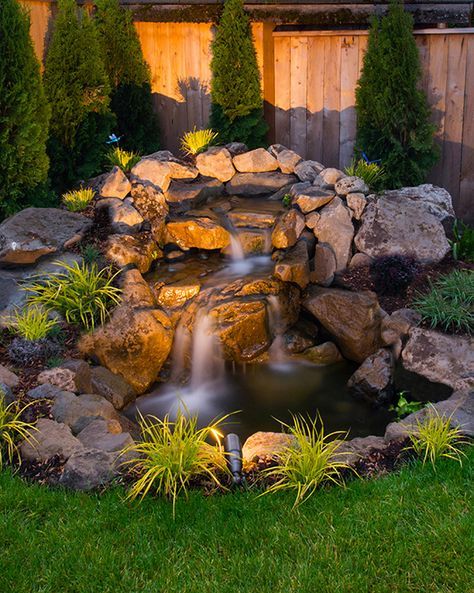
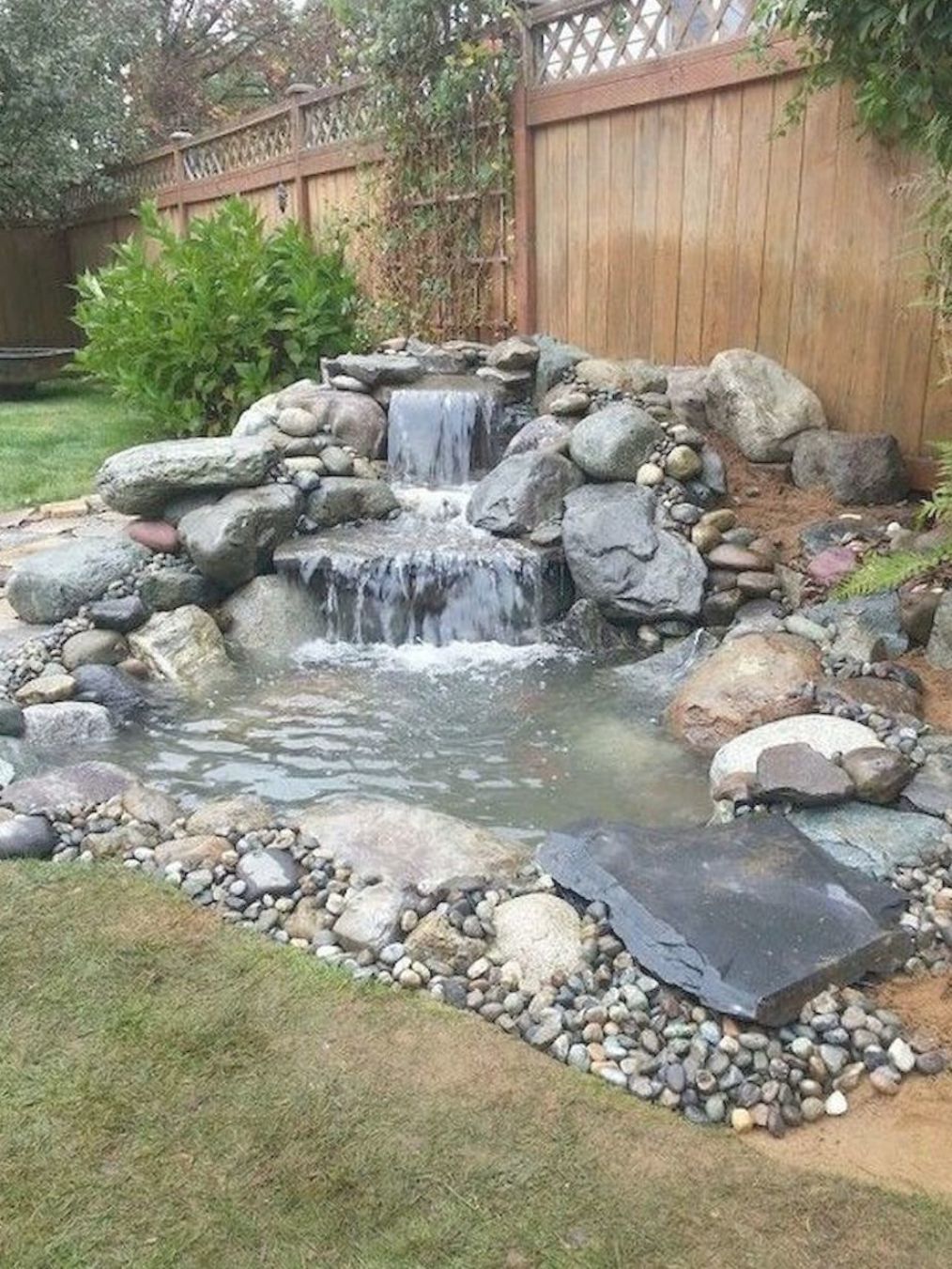
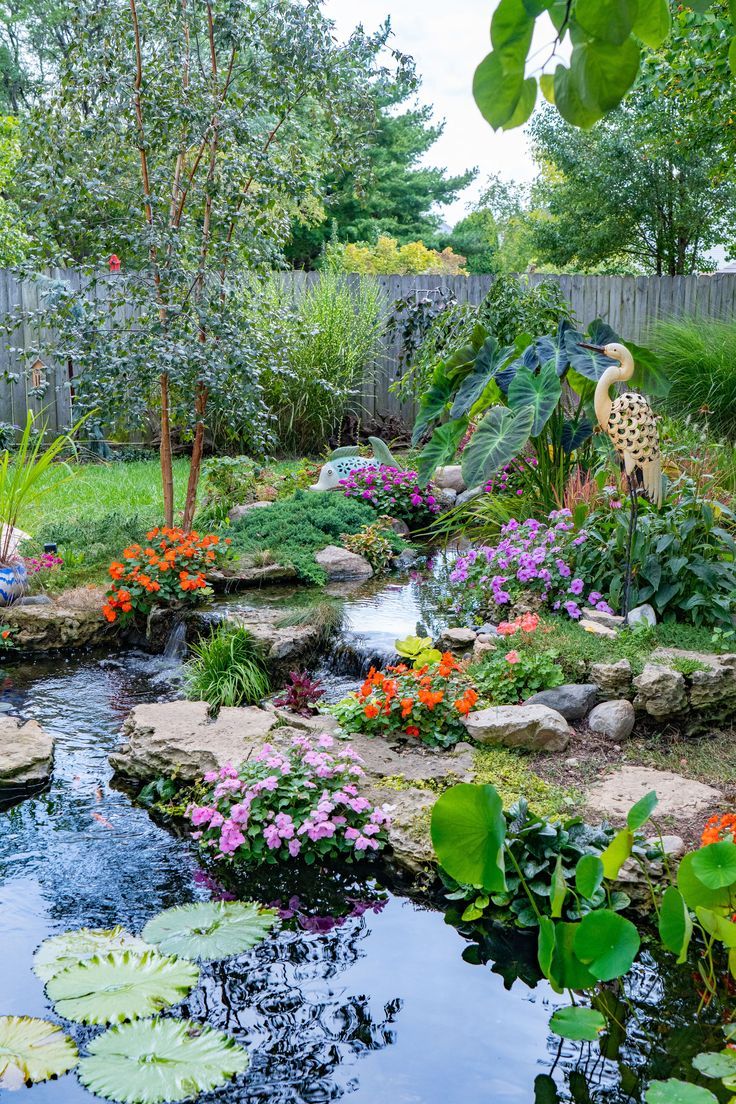
In most cases, waterfalls are divided into two categories:
- Formal waterfalls: these are built from regularly shaped stones, bricks or concrete. Their main feature is regular geometry. They suit modern houses best.
- Informal waterfalls: these have a more natural character. Their beauty lies in their irregularity.
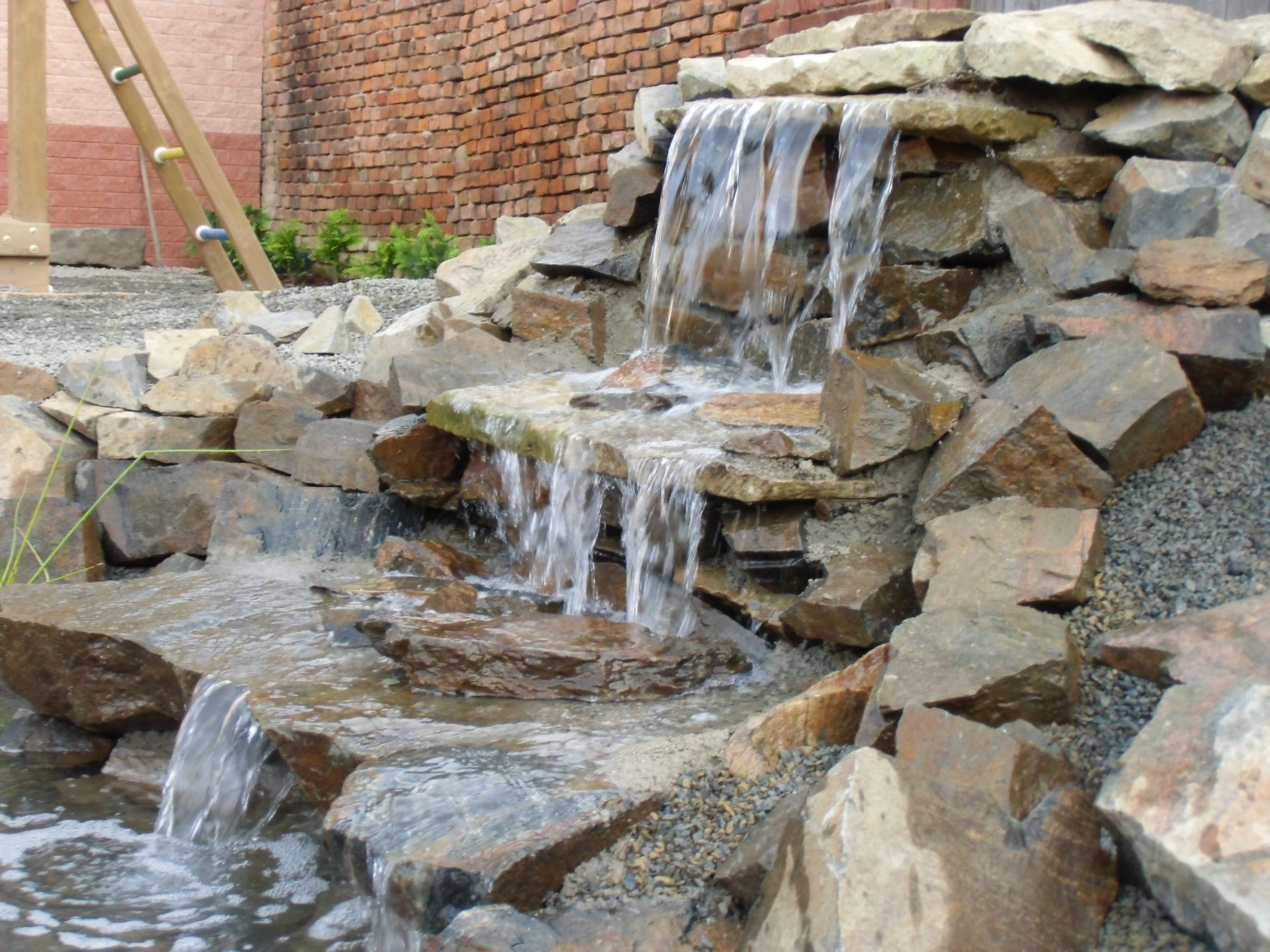
Tips for the perfect garden pond
- If you want the waterfall to look as natural as possible, its size should be in proportion to the size of the pond.
- Sloping ground is often a problem. You do not want to mow it or look after it in any other way (even sheep do not want to graze on it). That is not the case with waterfalls, though. Here you will appreciate a slope, because a cascade, for example, looks most natural on one.
- Remember that the pond should not be shaded by large trees, because moss could form on the stones and other materials.
- Don’t be afraid to turn to an expert. Not only will they give you advice, but with their help you will also avoid unnecessary mistakes.
More tips for your garden pond
To successfully create a garden pond that looks natural, it helps to follow a few basic principles that make building and maintaining it easier.
- Level the edge of the garden pond
When digging the hole for a garden pond, remember that the water level in the pond can only be as high as the lowest point of its edge. In other words, the entire edge of the garden pond must be as close to the same height as possible. This may seem obvious from a distance, but it is often overlooked when digging the pond. Because a perfect level is not possible, allow for deviations and tolerances. For example, if you have chosen a pond depth of one metre, the edge should deviate from this height as little as possible. It is worth measuring. - Decide whether the pond will be shallow or deep
The depth of a garden pond is an important decision that affects both the cost and the final look of the pond. The deeper the pond, the less visible the bottom becomes and the stones cannot be seen. Fish may hide away and you will not see them much. Deeper ponds also require more expensive pond liner. Shallow ponds are better for displaying decorative stones on the bottom, and the fish are easier to see. On the other hand, algae usually forms more quickly in shallow ponds, because light can reach a larger part of the water with greater intensity. - Early details of the shape are often lost.
When you first shape the pond, you may add special curves and inlets that you think will give the garden pond a unique look. However, these early subtle details are often softened and blurred at each further stage of building the pond. Adding the underlay, the liner, stones on the bottom of the pond and especially stones along the bank all contribute to this softening. Think in terms of basic shapes. - Protect the bottom of the pond from burrowing animals
Burrowing pests such as groundhogs and moles can dig holes in your lawn and garden. When you have a burrowing animal in the garden, it can feel as if you are constantly filling in holes. The problem goes far beyond a nuisance, however, when the animal comes up under your garden pond and chews through its liner. The solution is to lay a metal mesh called hardware cloth as the base of the pond bottom and then spread a few centimetres of soil over it. The underlay and liner are then laid on the layer of soil. If the sides of your pond are made of soil rather than retaining walls, you should lay hardware cloth on them too. - Compare the intended size of the pond with the size of the pond liner
A garden pond can only be as big as its pond liner. So long before any spade touches the soil, you will need to work out how big the pond should be, together with the size and price of the pond liner. Quality pond liners made of ethylene propylene diene terpolymer (EPDM) are very expensive. PVC liners are expensive, but less so than EPDM. In a project that involves free or cheap materials such as rock, concrete slabs, retaining wall blocks and the cheapest item of all, water, spending hundreds of dollars on a sheet of liner can seem like a big purchase. If your budget is tight, the cost of the pond liner will always determine the size of the pond. On the other hand, you may feel it is worth putting a little extra money into a project that is highly visible and draws attention. - Add a top overflow outlet to the design
Unless you live in an arid, dry climate, your pond will inevitably overflow. Even so, this can also happen in dry areas when you are filling the pond with a hose and lose track of time. Rather than letting the pond overflow and the water rush towards the foundations of your house, create a predictable overflow point so that the water can drain to a safe place. - Avoid high vertical walls in your garden pond
The more vertical and higher the walls of your garden pond, the harder it will be to line the pond with stone. Loose natural stones are difficult to stack vertically. Not only does the stone tend to fall, but covering this area also takes more stones or larger stones. Small stones are cheaper but hard to stack. Large stones cover vertical areas more easily, but they are expensive and difficult to move. Try to keep the banks of your garden pond at an angle of 45 degrees or less wherever possible. - Install a permanent external water filter and skimmer
If you do not plan for a permanent water filter fitted in the pond wall, your only filtration options will be manual skimming or a floating filter unit.
Algae and cloudy water
This is the main problem that can spoil your mood and your enjoyment of a garden pond. Several factors can contribute to algae growth in a pond. Try to limit them. It is often a battle of trial and error. Some of the main causes are:
- Excess nutrients: Too many nutrients in the pond, especially nitrates and phosphates, can lead to excessive algae growth. These nutrients are often present in waste water and fertilisers that find their way into the pond.
- Water temperature: Pond water above 20 °C combined with direct sunlight can encourage algae growth.
- Poor water circulation: If the water in the pond is not mixed enough, algae can build up on the surface, blocking sunlight and thereby limiting photosynthesis for the plants and animals in the pond. Any pump will solve this, and it will also create a lovely atmosphere and soothing sound.
- Water pH: Algae can be sensitive to the pH of the water, and some species can only grow within a certain pH range. Water that is too acidic or too alkaline can limit the growth of some algae species.
- Presence of other organisms: Some algae species can grow faster than other plants and animals in the pond, which can upset the balance of the pond ecosystem. Some fish eat algae, so they can help you restore the balance.
USD amounts are approximate, converted at the Czech National Bank rate of 21.75 CZK per USD on 9 October 2026.
Leave a Reply