
5 tips for choosing a new greenhouse for your garden
Choosing the right greenhouse takes time and some preparation in your garden. Whether you are a beginner or an experienced gardener, choosing a garden greenhouse always needs careful thought. There are many shapes, sizes and types, which greatly widen your choice but also make it a little more difficult. So what should you look out for when buying a new greenhouse for your garden? We will explain in today’s article.
1. Greenhouse location
The location and size of a greenhouse often depend on what your garden allows. To ensure suitable growing conditions, the key factor is plenty of light. To catch as much sunlight as possible, it is best to face the greenhouse, specifically its longest side, towards the south. The greenhouse, or any part of it, must also not be in any shade, so that it can receive sunlight for as much of the day as possible. The same advice applies if you are considering a lean-to greenhouse. In this case, you can also make use of the heat radiating from the wall of the house.
2. Which shape should you choose?
Along with choosing the location, you also need to think about the shape of the greenhouse frame. The basic and most commonly used types are:
- curved (tunnel) greenhouses
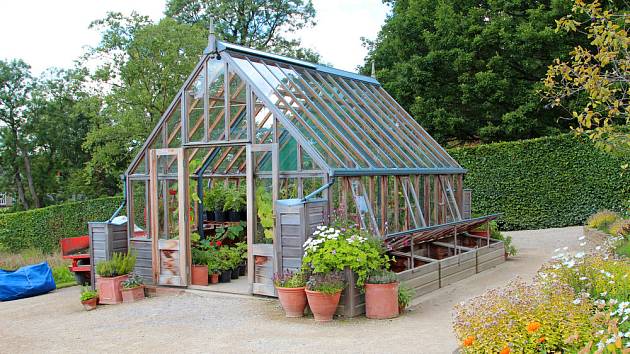
- angular greenhouses with a pitched roof (known as A-frame or triangular greenhouses)
Curved greenhouses
Thanks to their aerodynamic shape, the frame is up to 60% more resistant. The curved surface of the greenhouse is also made of whole polycarbonate sheets (6 x 2 m), which you will especially appreciate during storms and strong gusts of wind. This is why curved greenhouses also belong to the category where there is little risk of having to look for your greenhouse somewhere in a field.
A-frame greenhouses
You will appreciate it as early as assembly. Your garden greenhouse will most likely be delivered in a single box. The advantage mentioned is the greenhouse panels come already cut. With a curved greenhouse, you have to cut the parts for the end walls yourself according to the enclosed cutting plan. These parts are cut from a large sheet, but believe us, even a moderately handy greenhouse builder will manage the cutting without any problems. Sturdy shears are enough to cut the panels.
On the other hand, one of the most frequently mentioned disadvantages of greenhouses with an A-frame roof is the limited height available for plants, due to the slope of the pitched roof. That is why you need to think about what you want to grow in the greenhouse. For every type of plant, you need to keep in mind its “protective space”, which it needs above, below and beside it. Another possible disadvantage of an “A-frame” greenhouse may be poorer light refraction on its vertical walls.
There are also other, less common designs, such as L-shaped greenhouses, Victorian greenhouses or garden pavilions. With their right-angled design and features, these are similar to angular greenhouses.
3. Greenhouse size and frame
As for height, it is most often around two metres, which is enough not only for the vast majority of plants but also for the growers themselves. Remember, it is always good to have some space above your head, as it will save you bumps on the head and a sore neck.
The shape of greenhouse you choose largely determines your choice of panels. There are two types of greenhouse panels:
- polycarbonate
- glass
With classic angular greenhouses, you can choose either type of glazing. With curved greenhouses, the shape itself decides, as glass panels, unlike polycarbonate sheets, cannot be bent into a curved shape.
4. How to anchor a greenhouse in the garden?
There are two basic options:
- anchoring into the ground
This mainly means burying or screwing the greenhouse, or rather its lower parts, into the ground. With curved greenhouses, anchoring into the ground is done by burying the so-called overhanging curved profiles. A spade will help you dig the holes. You then simply fill the holes back in with soil, or you can add sand and gravel for greater stability.
- a concrete base
You can build it, for example, from hollow formwork blocks. With this type of anchoring, you need to cut off the overhanging profiles with a standard angle grinder and then attach the base profile to the concrete base using so-called angle brackets (often not included in the package). With an angular greenhouse, the situation is a little easier. Whether the greenhouse has a base or not, you anchor it with angle brackets and you are done.
5. Ask a professional
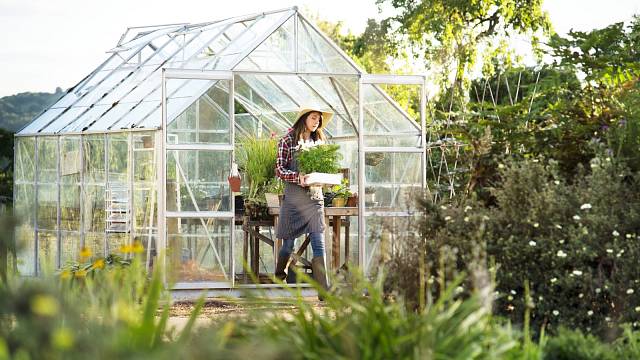
If you would rather leave building the greenhouse to someone more experienced, do not hesitate to order assembly with the greenhouse. If you plan to anchor the greenhouse into the ground, you need to buy the required anchoring kits and the greenhouse base. If you are attaching the greenhouse to a concrete base, you must have this base finished before the fitters arrive. Also check what the assembly price includes. Various types of anchoring, extra roof windows or installing shelves may be charged extra. And how much will it all cost? Expect assembly to cost you about 50 to 75% of the price of the greenhouse.
Choosing a greenhouse is not rocket science, but it is a good idea to think everything through properly and to get some advice.
Read our other articles, for example what HDO (ripple control) is or what to do if you are ashamed of your appearance.
Leave a Reply