
5 tips for getting rid of a wasp nest under the roof
A garden in full bloom always attracts all kinds of insects. Your tulips might win over the black bee, for example, which may give you a fright but is, believe us, completely harmless. Then there are various pests, such as slugs or, even worse, wasps. A wasp nest in the garden is always a problem. And if the uninvited visitor is actually putting you at risk, there is no time to wait. Acting early can make the problem much easier to solve.
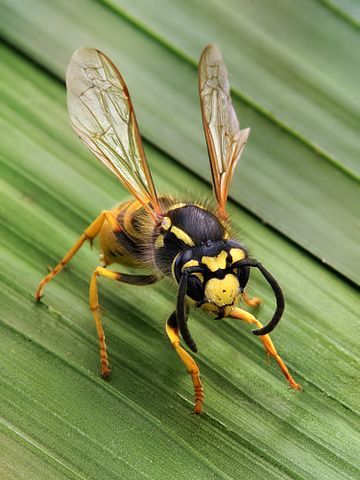
Who is your enemy?
Leaving aside some remote meadow or wood, you might find a wasp nest in a garden shed, an outbuilding or the hollow of an old tree. Wasps absolutely love places like these. Wasps can also be very useful in your garden. How? Wasps are very fond of all sorts of midges and flies. A wasp bites into its prey and, if necessary, finishes it off with its sting. It bites off the legs and wings and carries the fly back to the nest. This delicacy then becomes food for the larvae. Besides flies, wasps also like aphids. An interesting predator that can even be useful.
Otherwise, adult wasps feed mainly on nectar, fruit and honeydew, because they contain sugar. They spend their retirement, if you can call it that, in the nest. Research has shown that older workers only guard the nest. Worker wasps live for 6 to 8 months. The queen lives for 1 to 2 years.
Males have no sting. Only females, meaning workers and the queen, have one.
Another interesting fact is that only the queen survives the winter. In spring she starts building a nest and patiently laying eggs. Before choosing the ideal place to settle, she performs a special ritual flight, circling at ever greater distances.
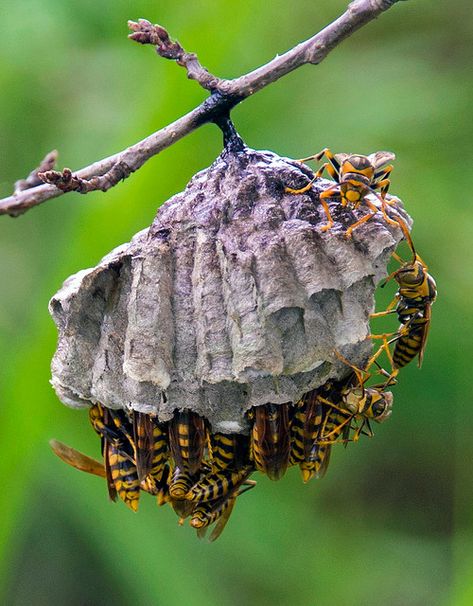
Removing the nest
We have covered the basics about wasps. It is good to know your enemy, don’t you think? But what should you do before you start removing the nest? Put on suitable protective clothing, which should include wellies, jeans, long sleeves, gloves and a face shield. Do not forget that if a wasp feels threatened, it will attack. So which removal tips work best?
1. Wasp trap
This is one option. A trap is a good choice for dealing with the nest if you are genuinely afraid of wasps. Place the trap in the garden and fill it with something sweet: the most common bait is a sweet syrup drink. This treat lures the wasps inside and does not let them out again. One trap lasts for up to 6 weeks. Then empty out the wasp graveyard.
2. Wasp spray
The most widely used way to get rid of wasps is insecticides. They are sold as sprays or powders, but remember to apply them mainly at night or early in the morning. That is when wasps tend to be inactive. Some sprays produce a foam that can reach a wasp nest from a distance of 3 metres. They work instantly and kill all the wasps.
3. Decoy wasp nest
Why not let nature itself do the work? Get a realistic decoy wasp nest. Wasps avoid other colonies’ nests, so if a fake nest like this appears in your garden, they will fly away.
4. Call in an expert
If your wasp nest is large, or you do not feel up to tackling it, do not be embarrassed to seek professional help. Experts have the knowledge and equipment needed to deal with situations like this.
5. Old wives’ remedies
And then there are the golden old wives’ remedies. Grandmothers knew how to get rid of nests like these. Strong, aromatic scents work best. So plant a herb garden. Lavender is truly priceless. Crushed cloves or lemon peel will also win the day. Chilli can help too.
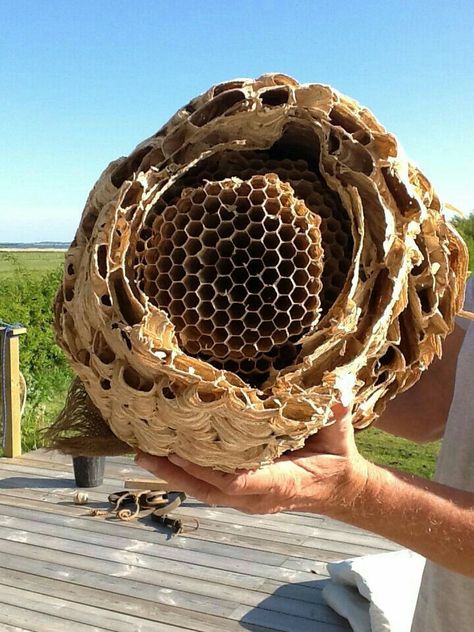
Wasps are not among the fastest animals in the world, but they can certainly cause trouble. We hope you manage to get rid of them.
Leave a Reply