
Everything you need to know about the black carpenter bee
It is not a bumblebee, nor is it a hornet, so what is it? The wrong answer is that it is not a useful and calm insect, and the right one is that it is neither a predator nor venomous. You may have heard of the black bee, which is large, has a loud and fast flight and is turning up more and more even in places where it used to be absent because of the colder climate. This is because it loves warmer weather, and given the problems with the climate, this insect has spread to areas beyond South Moravia, for example.
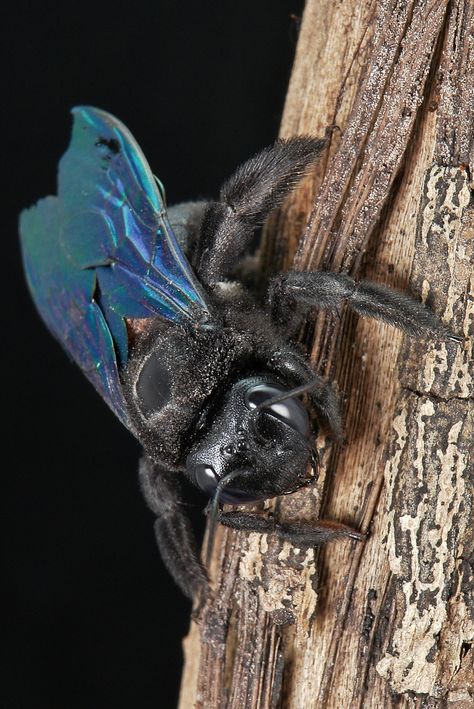
The largest member of the family
It really is the largest member of the bee family Apidae, and because of its appearance it is commonly called the black bee. Its other name is the carpenter bee. As we have already mentioned, you can come across it in South Moravia, namely the violet carpenter bee, which is the most common species here. There is also the large carpenter bee and the small carpenter bee. What is new is that it has started to appear throughout the Czech Republic, so gardeners and insect watchers see it as a threat. The opposite is true. It is harmless.
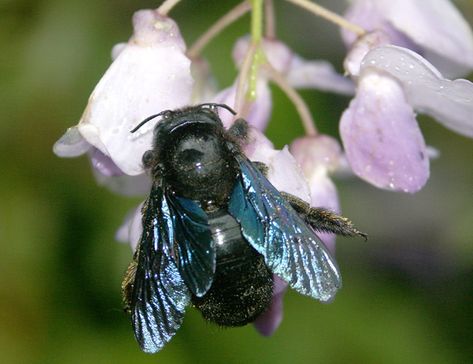
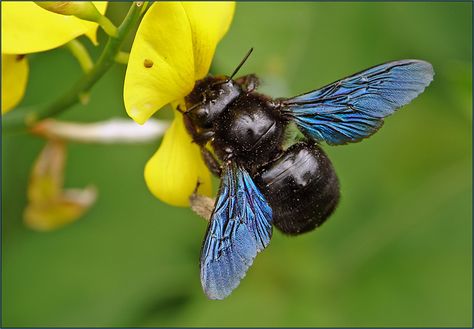
It grows up to 3 centimetres long. It has a shiny, less hairy black body and purplish or metallic bluish wings with a span of up to 4 centimetres. They mostly do not live in groups but rather in pairs. They build their nests in old or fallen trees and in beams, but you will also find them in cracks in walls. If you have a tree stump in your garden, you may also get a visit from the black bee. The females hollow out tunnels ending in a chamber, where they lay their eggs and gather pollen or nectar so that the young generation has something to draw strength from after hatching.
Adapt your garden so that it can make its home there.
Interestingly, the black bee lives longer than other bees. The flying period of newly hatched bees begins roughly at the start of August and lasts until autumn. They prefer to overwinter in sheltered places such as tree hollows, cracks in walls or dug-out holes. So when you combine coniferous trees, remember the black bee too. If the weather is warmer, you may see them as early as the end of March.
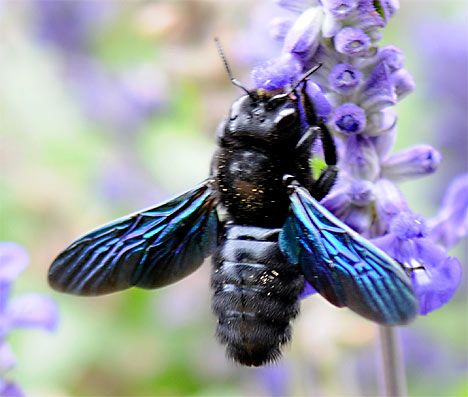
They are not fussy about food
The black bee is not fussy about food either, unlike solitary bees. On the other hand, this supports their high numbers. Thanks to their long proboscis, they can reach the nectar of many flowers and shrubs. However, if they have trouble reaching the flower they want, they have developed a very good trick: they bite through the flower from the side and suck out the nectar that way. In this they are very similar to bumblebees. Unfortunately, this means the plant does not get pollinated. If you decide to attract the black bee, plant lupin, viper’s bugloss, autumn aster, sage or wisteria on your terrace or in your garden. They will not turn their nose up at a rose either. You will see that before you know it, you will have carpenter bees everywhere.
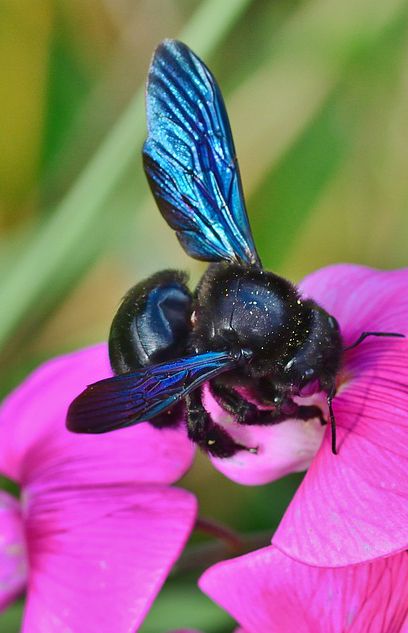
Effective nest defence
It has a whole range of different ways of defending its nests. When attacked, the female makes an intermittent or even continuous buzzing to drive away other intruding females. It will also attack if an enemy settles at the nest entrance. The males, in turn, join in with a spiralling attack flight.
If the carpenter bee still does not come to you, try to lure it with a log full of holes, which you can then place on a rockery, for example, whether a rockery on a slope or one by the house. It is not one of the popular edible insects. Instead of a garden gnome, you will have an insect house.
Leave a Reply