
The ideal garden pergola
I have to admit that I cannot imagine my summer days in the garden without a pergola. A big advantage is that ours is right next to the house, so when it rains I can shelter from the unpleasant weather and watch the deer that visit us. A garden pergola is mainly used for relaxing. It is a place where you meet up with family and hold celebrations. Larger pergolas also have room for barbecuing, a summer kitchen, an outdoor fireplace or a smoker. All you need to do is furnish it practically with garden furniture, a hanging swing, geraniums and good lighting.
How can we define a pergola? As a simple, lightweight structure that is usually open and airy on two or three sides. Pergolas generally have simple flat roofs and simple wooden walls, or climbing plants grow on them.
Where should you build a pergola?
A garden pergola should be positioned logically and practically. It depends on:
- shape
- size
- shading
- anchoring
The precise definition describes a pergola as a light ornamental structure that can be anchored to the outside wall of a house, but it can also be an arcade of the kind often seen in chateau gardens or parks. Traditional pergolas were widely used to help climbing plants grow easily. Modern pergolas can take the form of an open veranda, and they often include awnings and blinds that protect the structure on all sides. However, a pergola can also take the form of a freestanding gazebo.
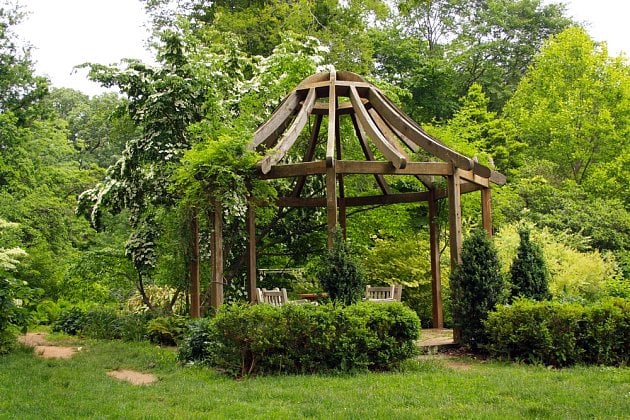
A freestanding garden pergola
An interesting option is to place the pergola on its own in open space. This gives it a special charm. The main drawbacks are having to add lighting later and the greater distance from the house, in case you want to use the pergola as a place for barbecuing or dining. A pergola like this can follow on from gazebos, which were popular in the past. These gazebos were often placed in a remote and beautiful part of the garden. If you have a large garden and want an undisturbed spot, you can choose this unconventional option.
A pergola next to the house
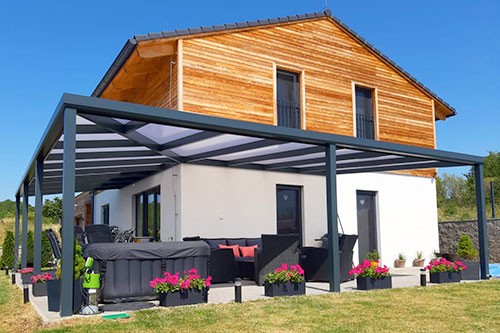
As I have already mentioned, my pergola is next to the house. A pergola can be a kind of extension of the home. It is usually a covered terrace that can be partly or fully enclosed. These pergolas are often glazed, allow one or two whole sides to be opened and are designed for year-round use. Very often you can enter the pergola directly from the kitchen or living room, which makes this space more comfortable. This increases your living space, and in the summer months you can spend almost all your time pleasantly in the garden while enjoying the comfort of the pergola.
Pergola size
The size you choose is a purely individual matter. Naturally, the size depends on the number of people in the household, what you want to have in it and how you intend to use it. Remember that it must not be larger than 250 m2, otherwise you will have to apply for a building permit.
Which material should you choose?
The material affects the purchase price, lifespan and also the appearance of a pergola. The pergola frame can be made of aluminium or wood. You have more options for the roofing material, and you can also choose the type of flooring.
Wooden frame
Wooden pergolas are popular, they stand out in family house gardens and they are especially suitable in holiday cottage areas. You can build a wooden pergola yourself, which greatly reduces its purchase price. However, commonly available types of wood need regular maintenance. Wood is prone to mould and other diseases.
Aluminium pergola
This modern material comes in many colours, which lets you match the pergola perfectly with the colour of your house. The advantages of aluminium are its long lifespan and the fact that it is maintenance-free. You should choose this material if you are considering side shading. Bioclimatic pergolas, which come with tilting louvres, also have an aluminium frame.
Are you planning to roof your pergola?
A pergola should also have a roof to protect you from both sun and rain. Roofing does not have to serve only a protective purpose. Thanks to the wide range of materials, it can turn your pergola into a designer structure.
You can also choose a sliding roof, which you can easily adjust to suit your current needs. A sliding roof usually takes the form of:
- retractable awnings
- tilting louvres
- reed
- shingles
- polycarbonate
- glass
- canopy
- PVC roofing.
What about the floor?
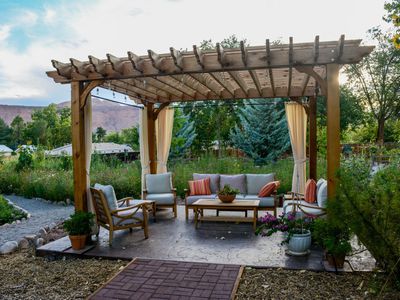
For the floor, you can choose from several options:
- Paving : the most popular material. It is also easy to lay and frost-resistant.
- Wood: the best choice for wooden frames. Pine, spruce and larch are used for it. Its big advantages are durability and stability. But you have to look after this material constantly, painting and treating it.
- Wood-plastic composite : it stands up very well to sun, pests and moisture. In addition, it does not need as much care.
- Stone : its advantage is a long lifespan, and you will appreciate it if you plan to build a pergola in a damp environment. The price and more difficult laying might put you off.
How much does a pergola cost?
Prices are easiest to find for commonly available aluminium pergolas. Depending on size and options, the price ranges from 10,000 to 100,000 CZK (about 460 to 4,600 USD) or more. Wooden pergolas certainly come at a similar price. However, the manufacturer will tell you the exact final budget.
Read our other articles, such as Tips for a garden shed or whether a credit card or an overdraft is better value.
USD amounts are approximate, converted at the Czech National Bank rate of 21.75 CZK per USD on 9 October 2026.
Leave a Reply