
How to create a rock garden
Whether your garden is completely flat or has natural changes in level, there is always a suitable spot for a rockery. But what exactly is a garden rockery? It is a bed that imitates a mountain environment. On a rockery you will find not only small and larger stones but also particular kinds of plants. A garden rockery can be tiny or large. It depends on how much time you want to give it and how much space you can find for it in your garden.
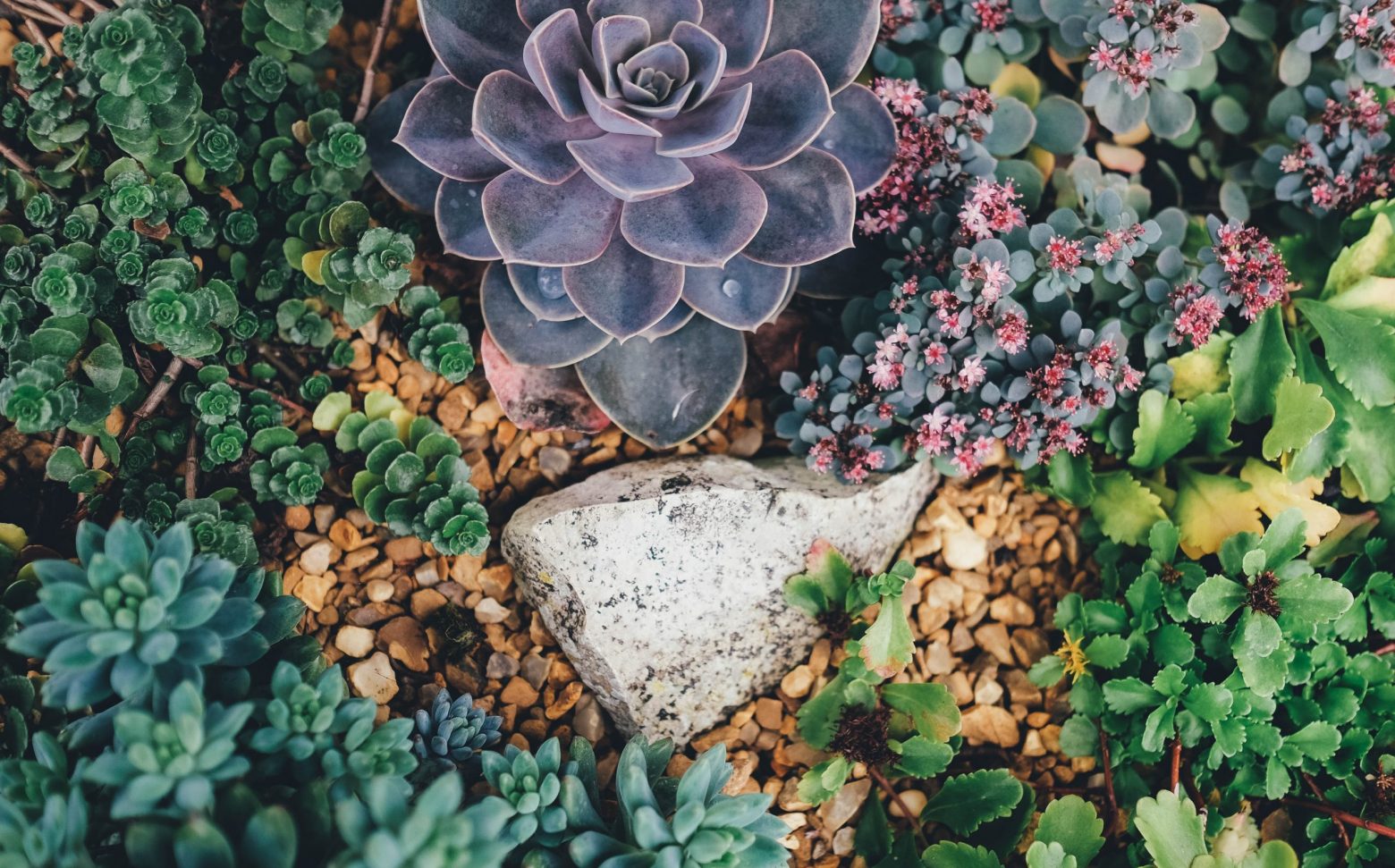
Positioning the rockery and its features
These garden focal points can be found in many different locations: there are rockeries in front of the house and behind the house, and a rockery can also sit by a pond, a gazebo or a terrace… The exact choice of location also depends to a large extent on which plants you want to grow on your rockery.
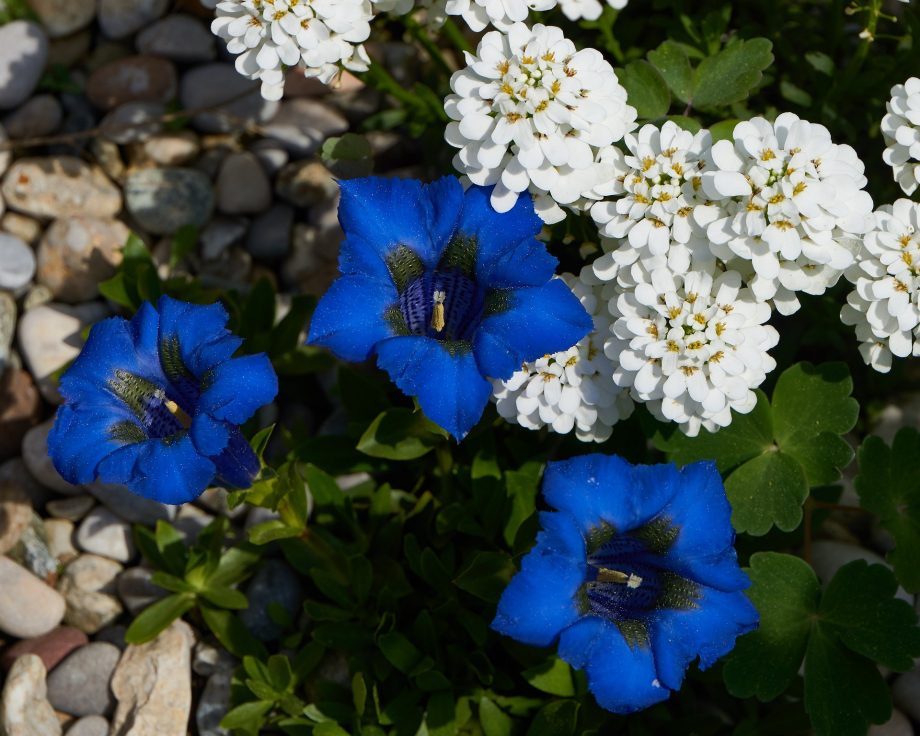
These need not be only traditional alpines. They can also be succulents, perennials and bulbs that prefer drier conditions, as well as other plants. Your choice of flowers and other plants must suit the chosen position.
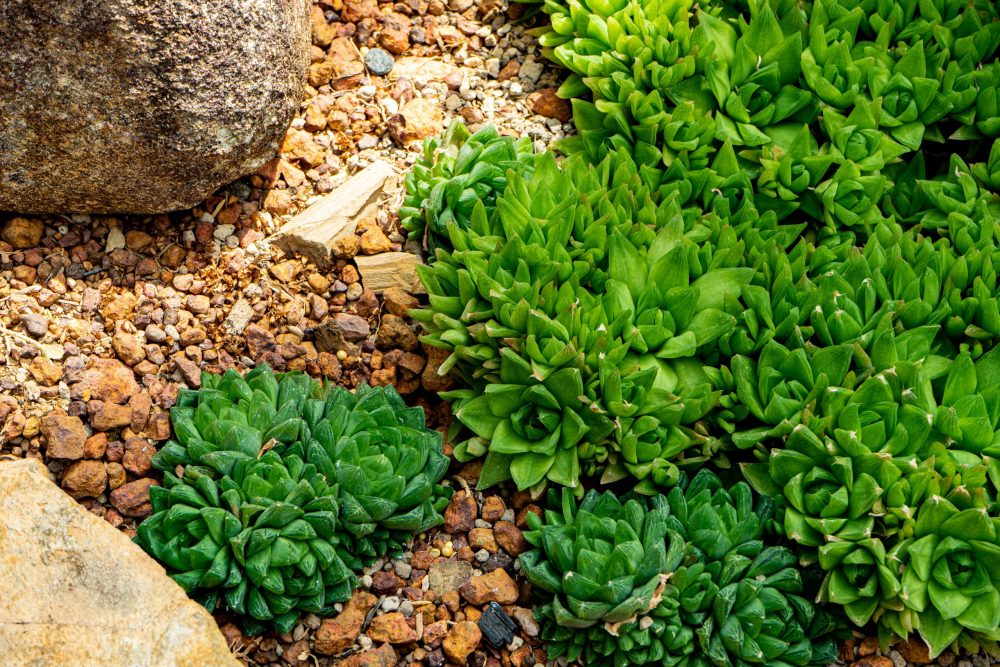
Drought-loving flowers belong on a rockery that gets sun all day, ideally sheltered from the wind by the house, a garden building or the lie of the land. But there are also rockeries in the shade (under trees or on the north side of the garden), and for these you need plants that do not need as much sun but want more moisture instead.
Although the aim when building a rockery is to make it look as natural as possible, it is sometimes worth adding garden decorations made of materials that resemble stone. Ideally, these should be features that match the overall look of the rockery or complement it and make it more interesting.
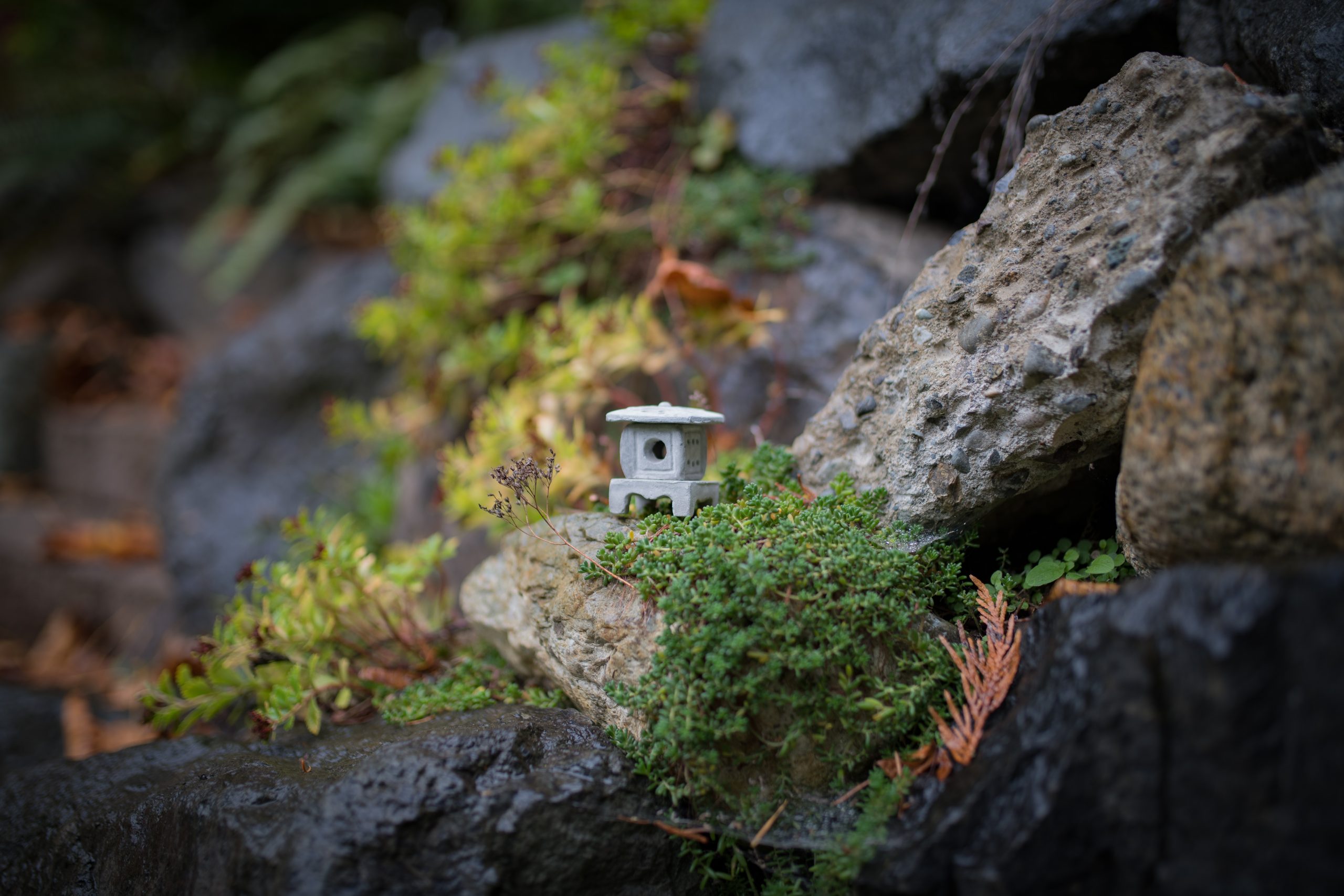
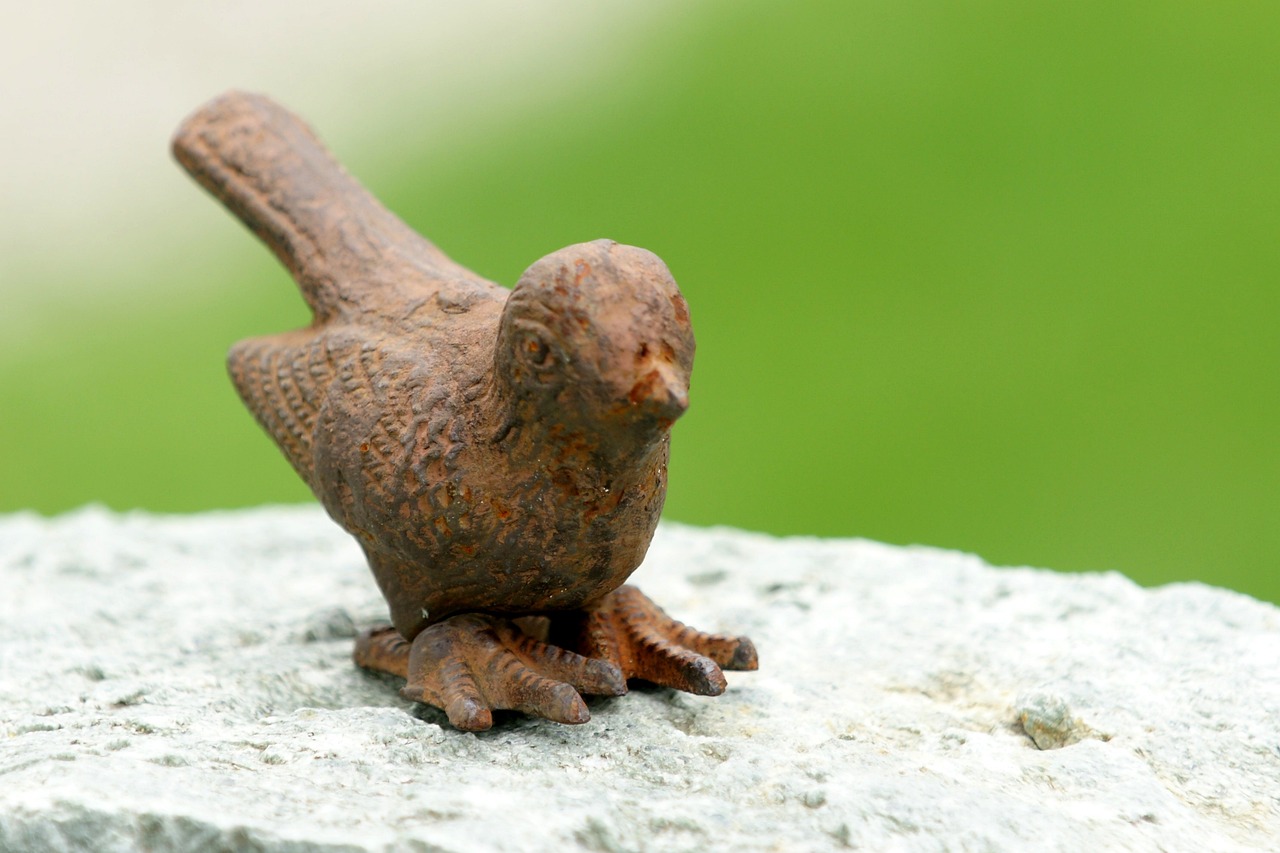
It is best to choose decorations that fit naturally among the plants, or that the plants can be planted straight into. You can also use a decoration to add a missing water feature, such as a bird bath. You can then decorate it with stoneware bird figures.
If you have no practical experience with rockeries yet, ask for advice on which plants need roughly the same conditions and the same amount of care. For beginners, a smaller rockery with a simpler choice of plants is recommended. Only once you have gained experience can you enlarge it or add a water feature, higher sections, larger plants and so on.
Placing a rockery near trees can cause one more problem: fallen leaves, which are hard to clear from between the stones and plants. The same problem occurs under a larch. So if you do put a rockery under trees, other conifers are a better choice.
Does a rockery belong on flat ground or on a slope?
A skilled gardener can manage either. If your garden is on completely flat ground, you should first bring in soil and build up a rise. It does not have to be the size of Sněžka; a gentle rise is enough, and the stones will do the rest.
For a rockery on flat ground, flat stones have become quite popular recently, for example pieces of slate, limestone or gneiss… Gaps form between these stones, and the plants are planted into them. That is why this type is sometimes called a crevice garden.
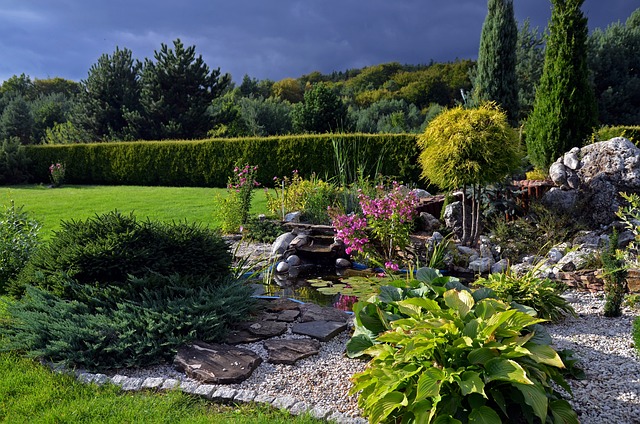
If you have a rockery on a slope, you do not need to reshape the ground much. Just choose stones that fit naturally into the slope. A rockery on a hill or on a steep slope, on the other hand, may need support. This can be a small terrace, a dry stone wall, a stone fence and so on.
All the features should always be made of the same type of stone so that it looks natural. In addition, not every plant tolerates every type of stone. The choice of stones and soil should always suit the chosen plants, and the environment will then be acidic, neutral or alkaline. Combining acidic rock with alkaline soil will not succeed.
Mini rockery
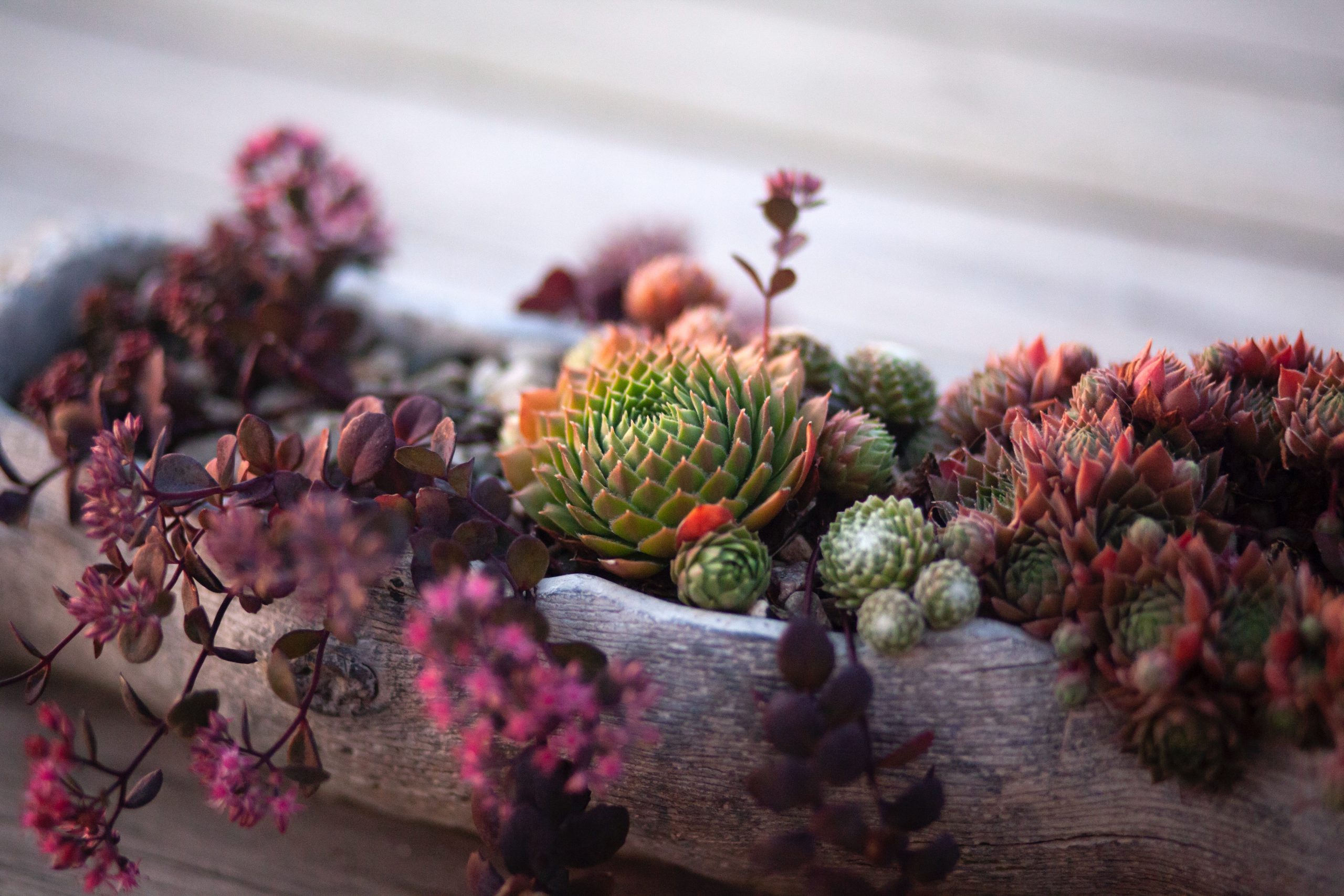
Even with a really tiny garden you do not have to give up on a rockery. The answer is a mini rockery placed in a suitable container. This can be an old stone trough, a large flowerpot, a large wooden planter or, in a rustic-style garden, even an old wooden washtub. In the container, you use small stones and plants to create the illusion of a mountain landscape. With a little exaggeration, you could call it a rockery bonsai: everything is there, just on a smaller scale.
When to start your rockery
It is best to prepare the base of the rockery in autumn so that the soil and stones have time to settle. Sometimes heavy snow can shift some stones into a slightly different but even more stable position. In spring you can then walk on it naturally and start planting.
If you did not manage it in autumn, you can also build a rockery in spring. You just need to take even more care when positioning the larger stones in particular and make sure the rockery is really stable. The advantage, on the other hand, is that spring weather, with its frequent changes between rain, sometimes snow, and sunshine, quickly gives the stones a patina and removes the look of perfection, which does not suit a rockery.
What you will need for a rockery
We will start with a simpler rockery without a water feature. For this we will mainly need soil, stones, plants and possibly decorations, but the first step is preparing the base.
Base
To avoid problems with weeds in future, you need to clear the rockery site thoroughly of all turf and weed it. Also remove the soil down to the depth of the planned drainage layer. Sieve the soil to get rid of all plant remains. Then spread it out in the shape you want for your rockery, only lower by the depth of the drainage layer. If the rockery is on a slope, the shaping simply adds to the natural terrain. In the past, drainage was recommended for every rockery, but as water is becoming scarcer everywhere in the Czech Republic, it is not essential.
As a general rule, the gentler the slope and the wetter the site, the deeper the drainage layer should be, even up to 50 cm. On a very dry, sloping site, on the other hand, you can do without drainage or make do with just a very thin layer. Gravel is used for drainage, and a single grade is usually enough. The soil should not form clods; if it is not loose enough, add sand. Alpines are happy with sandy loam, but if you have decided to put other plants on the rockery, such as perennials, it is a good idea to add peat or a little compost.
It is a good idea to lay geotextile over the drainage layer. It provides another natural barrier against weeds, and it also serves to separate the gravel drainage layer from the decorative stones on the rockery. Geotextile also helps you control where plants will grow on the rockery. The geotextile for the rockery must extend beyond the drainage layer on all sides. Growing medium is placed on top of the drainage, at least partly. You can add the rest once the stones are in place. You can edge the rockery either with a so-called invisible edging or with a continuous row of stones, which will stop soil and gravel from being washed off the rockery in heavy downpours. A continuous row does not mean a perfectly straight line, only that there should be no gaps between the stones. In fact, an irregular line will look more natural.
Stones
The stones for a rockery should always be of one type. If you already have some stones in your garden, they should be of the same rock. Mixing everything you find on trips on one rockery is not a good idea. If you want to buy stones, it is best to buy them from a quarry near where you live. There you can get stones of different sizes from one deposit, perhaps even in different colours, but ones that go well together. In addition, a base made from such stones is uniform for the plants in terms of acidity too. The stony part should make up at least half of the rockery’s area.
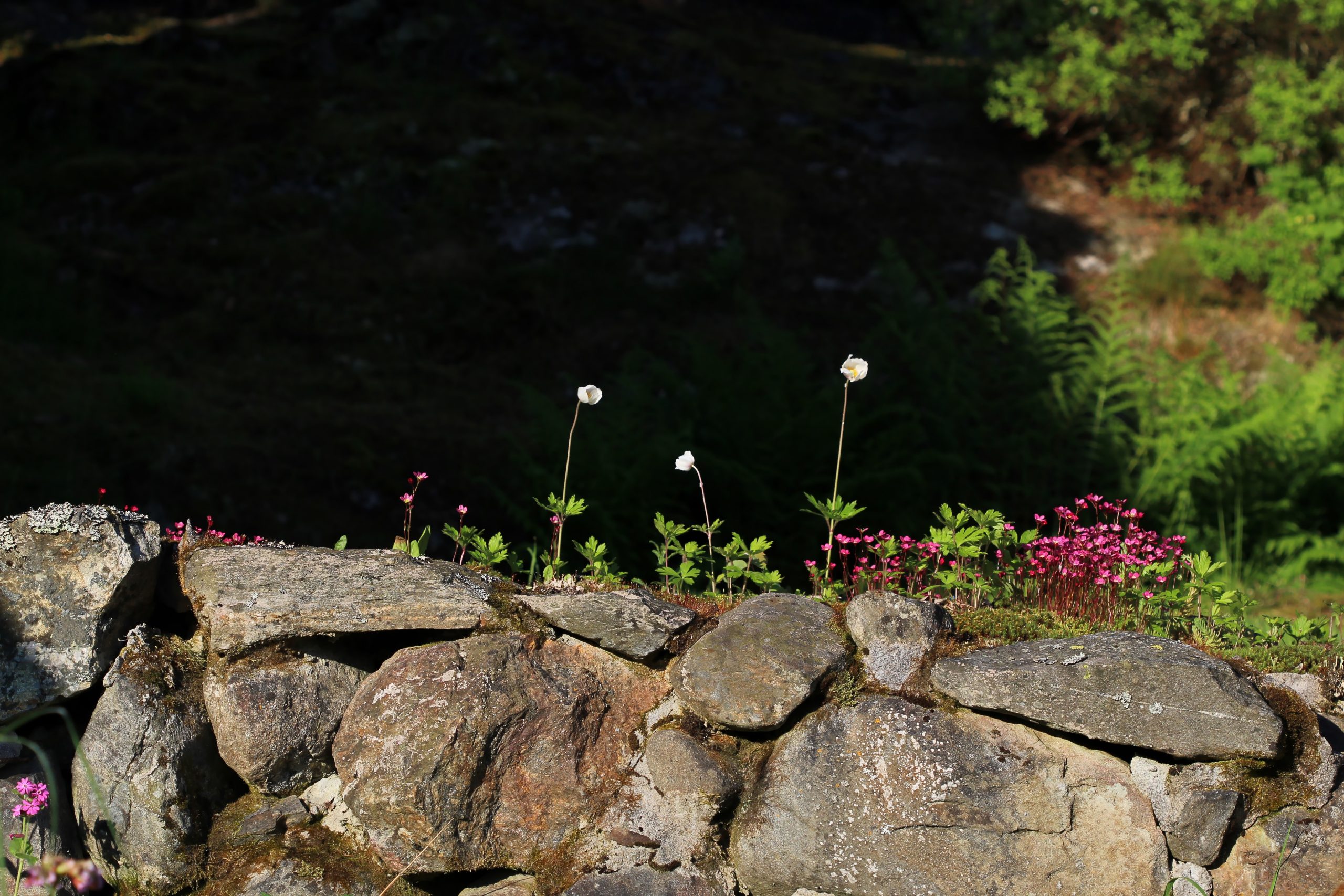
When it comes to placing the stones, do not try to create bizarre shapes or stand them on end. In nature, most stones lie flat, and in the mountains the largest boulders are always found at the foot, not at the top. It should be the same on your rockery. The arrangement should never be regular. In nature, too, symmetry is very rare. Once the large stones are in place, fill the spaces between them with soil and decorative stones. Finish the look with groups of smaller stones.
Pay attention to the gaps: they must be big enough for the plants you have chosen. It is better to leave more space between the stones and then fill it with smaller stones or gravel than to have to dig stones out again later to make enough room for the plants.
The bigger the stone, the more firmly it should be anchored in the base so that it does not move and also so that it seems to grow out of the soil or gravel. Let naturalness be your motto. This also applies to paths, which a larger rockery cannot do without. A path should look like a mountain trail that winds between the rocks in the mountains, with smaller and larger stones or gravel on it. A path on a rockery should give the same impression. If you built your rockery in autumn, check how it looks and adjust the stones if needed. Leave a spring rockery for at least a few days before you start planting.
Plants
Plants are also part of modern rockeries. Every rockery is unique, and however hard you try, you will find it difficult to make a perfect copy of a friend’s rockery. You should start with the larger plants: shrubs and small trees for the rockery. Dwarf woody plants also look good on a rockery, and in the Czech Republic the most popular are pines and junipers.
Cut a cross-shaped opening in the geotextile where you want the plant, and set the plant deep enough in the substrate. The rest is up to your imagination and preferences. It is a good idea to combine green and flowering plants, and plants that stay in their spot with others that spread across the surface. Ornamental grasses also look great.
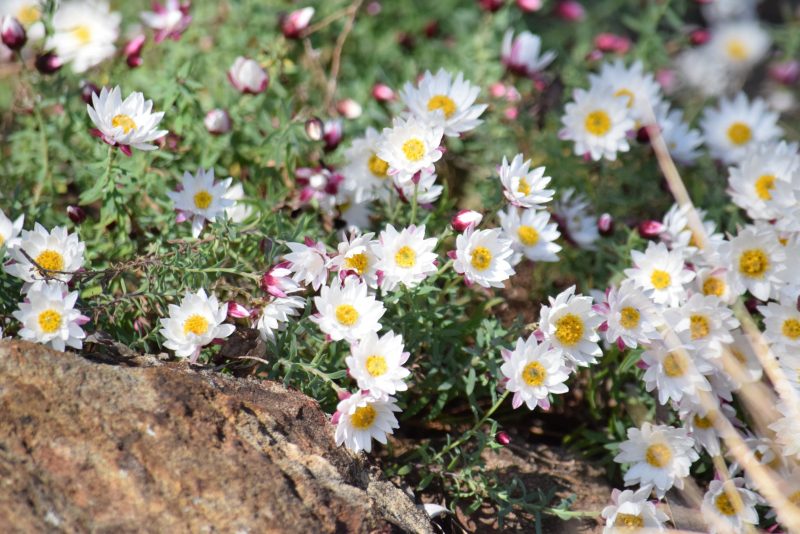
Over time, every gardener finds out which plants thrive best in their own rockery. Flowers suitable for a rockery can be perennials, alpines, rock plants, ground-cover rockery plants and so on. At first, try rockery plants recommended by more experienced rock gardeners, for example:
Sunny spots
- South African ice plant (Delosperma), creeping phlox, saxifrage, wild thyme, houseleek, dwarf iris, evening primrose, stonecrop, speedwell, mouse-ear chickweed, mountain alyssum
Spots in partial shade
- yellow corydalis, snowbells (alpine and Carpathian), hosta, dog’s-tooth violet, primrose, sea thrift
Dry spots
- lamb’s ear, spring pheasant’s eye, rock pink, fescue, houseleek, prickly pear
Every plant needs different care and a different amount of water. Over time, you will find out whether you have chosen the right ones for your rockery, and if you got it wrong, you can simply swap them for others.
A rockery may become a lifelong passion for you. Whether you have decided to start with a mini rockery, a small rockery or go straight for the biggest one possible, may it bring you nothing but joy and lovely views of flowering rocky corners.
Also take a look at our article on blackberries or tips for pickling cucumbers.
Leave a Reply