
Ceramic tiles, 10 advantages and disadvantages
Ceramic tiles are one of the most popular floor coverings thanks to their versatility, durability and easy maintenance. Many manufacturers offer ceramic tiles in a range of colours, shades, patterns and sizes. In this article, we look at the advantages and disadvantages of ceramic tiles.
Advantages of ceramic tiles
Ceramic tiles offer many advantages that make them one of the most popular floor coverings. The second most popular covering is floating flooring. Tiles are generally a very long-lasting covering, well suited to commercial spaces, kitchens and hallways.
Durability
This is undoubtedly their biggest advantage. Durability also means a longer lifespan than other coverings. The tiles themselves do not scuff or wear through, and they can withstand heavy loads. This is a huge advantage for people with pets, small children or solid wood furniture that they often move around. Ceramic tiles keep their colour. Because they are so tough, they will not be damaged if a sharp object or a pot is dropped on them. This makes them ideal for kitchens.
Easy maintenance
Ceramic tiles need no special care. Simply wash them with warm water and a cleaning product. You can also use a steam cleaner, which will not damage the surface of the tiles. There is no need to worry if you spill a glass of water on the floor either. Tiles do not absorb moisture or warp. This makes them an excellent choice for anyone who prefers low-maintenance surfaces and easy cleaning.
Price
You will find products in various price ranges. However, bear in mind that tiles are a long-term investment. We do not recommend cutting corners on tiles. A very low price comes at the cost of low quality. Cheap tiles do not last long. They are not very durable, so they are easily damaged and can crack.
As ceramic tiles are one of the most common floor coverings, you can find good-quality tiles at a relatively low price. It is best to choose the middle ground and, above all, buy from reputable tile retailers.
Good thermal conductivity
Many people are wary of tiles because they seem cold. In fact, ceramic tiles have good thermal conductivity. This means they warm up quickly and conduct heat well. That is why they are ideal for underfloor heating.
Tip: In the bathroom, install underfloor heating under the tiles in the shower area. Showering will be much more pleasant.
Versatility
Ceramic tiles are among the most versatile floor coverings, as they suit any room in the house. They are also suitable for balconies, terraces, outdoor pool surrounds, commercial spaces and garages. We should not forget about appearance either. Ceramic tiles should match the overall style of the home, which is easy to achieve thanks to the wide choice of designs and colours.
Disadvantages of ceramic tiles
Like all other floor coverings, ceramic tiles also have a few disadvantages.
Reaction to room temperature
Ceramics react readily to changes in temperature. This means that when a room is cold, the tiles cool down quickly, which may not be pleasant when walking barefoot. However, if you have a well-insulated house that stays cool even in hot summer weather, a cool floor can be very pleasant.
Difficult replacement of a damaged tile
If a single tile is damaged, replacing it can be difficult. This is not only because of the work involved, but also because of the difficulty of finding a single matching tile. Ideally, keep at least one spare pack in reserve. Also bear in mind that not every batch is exactly the same shade. The difference may be slight, but it can become visible once a new tile has been fitted.
Grout maintenance
Grout joints need regular care to keep them looking like new. They tend to trap dirt and limescale. Maintaining them is fairly demanding because there are so many joints. Dark beige or grey grout is the best choice. White grout is very hard to maintain and shows all the dirt. It also tends to turn yellow.
Tiles can crack
The skill of the tiler also plays a role here. It is important that the adhesive is applied evenly under the ceramic tiles. This is the only way to stop a tile cracking because of an air pocket. Many tilers try to save adhesive by applying it only to the centre of the tile. The edges stay dry and crack under load.
More demanding installation
Laying tiles takes more time (and effort). Mixing the adhesive, cutting the tiles, grouting and then washing off the joints takes much more time and more steps than laying floating flooring or vinyl. You also need more tools. If you decide to lay tiles yourself, you will need a tile cutter, a saw with a diamond blade, hole cutters, diamond core drill bits and much more.
Large-format ceramic tiles
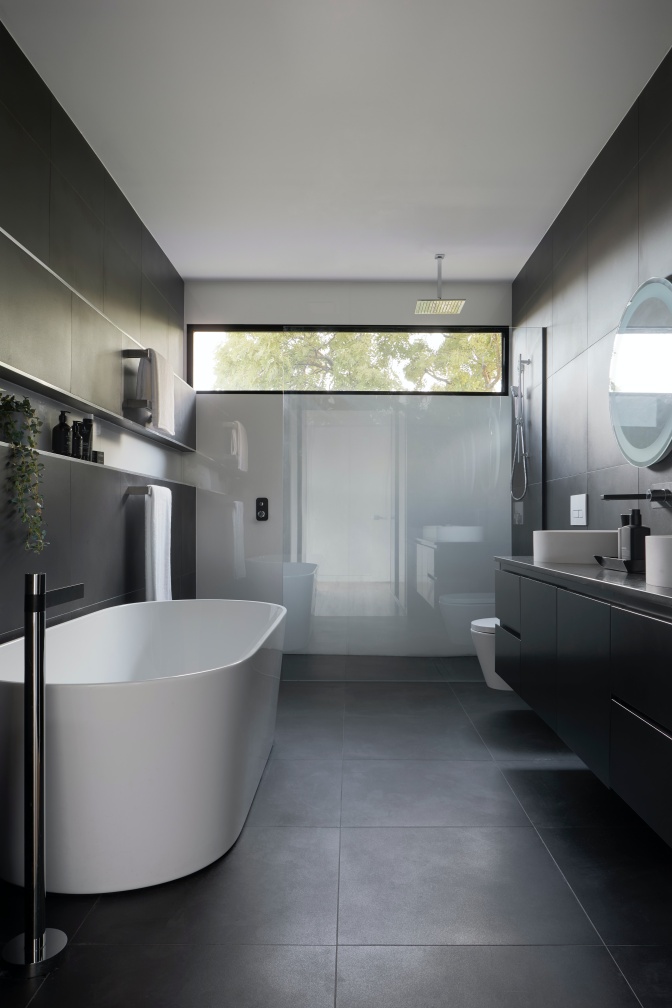
Large-format tiles are very popular and suit large rooms and bathrooms. Popular sizes are 60 x 60 cm, 80 x 80 cm and 60 x 120 cm. The advantage of large-format tiles is that their texture stands out better. They look elegant and luxurious. They are attractive and make a room look bigger. The minimal number of joints makes them easier to maintain. The disadvantages are more demanding installation and higher cost. The biggest trend of recent years is tiles that imitate natural materials, especially wood and stone.
How to choose ceramic tiles
Do not rush your choice of tiles. Besides colour and texture, also consider other factors such as slip resistance, water absorption, wear resistance and frost resistance. Good-quality ceramic tiles can last for decades.
Slip resistance of ceramic tiles
Tiles glazed with special anti-slip glazes provide greater safety. They are suitable for interiors where there is a risk of slipping (bathrooms). Products are marked with the letters A, B and C. The letter A indicates tiles with basic increased slip resistance. The letter C indicates the highest achievable slip resistance for safe barefoot walking.
Slip resistance in areas where people walk in shoes (hallways, staircases, entrances and balconies) is divided into classes R9 to R13. R9 indicates the lowest level of increased slip resistance.
Wear resistance
This property is also called “abrasion resistance”. It helps us estimate how long the tiles will last. We need to consider how much foot traffic there will be and where the tiles will be laid. For example, in an entrance hall, tiles can be damaged by small stones, sand and other dirt from outside.
Tiles are divided into classes PEI 1 to PEI 5. The higher the PEI class, the more durable the tile. For bathrooms and toilets, we can use PEI 2 tiles. For living rooms, hallways and kitchens, PEI 3 tiles are a better choice. For areas with heavier foot traffic, such as the entrance hall mentioned above or a terrace, PEI 4 or PEI 5 tiles are ideal. In general, high abrasion resistance ensures a long lifespan for tiles.
Water absorption and frost resistance
Water absorption and frost resistance are two very important factors when choosing tiles, especially when choosing tiles for outdoor use. If we are choosing tiles for indoor use, we can choose any type regardless of water absorption. Tile water absorption is given as a percentage. Tiles with water absorption higher than 10% can be used in any room. Ceramic materials are divided into two categories: indoor only, or both indoor and outdoor.
Basic types of wall and floor tiles
Porous wall tiles
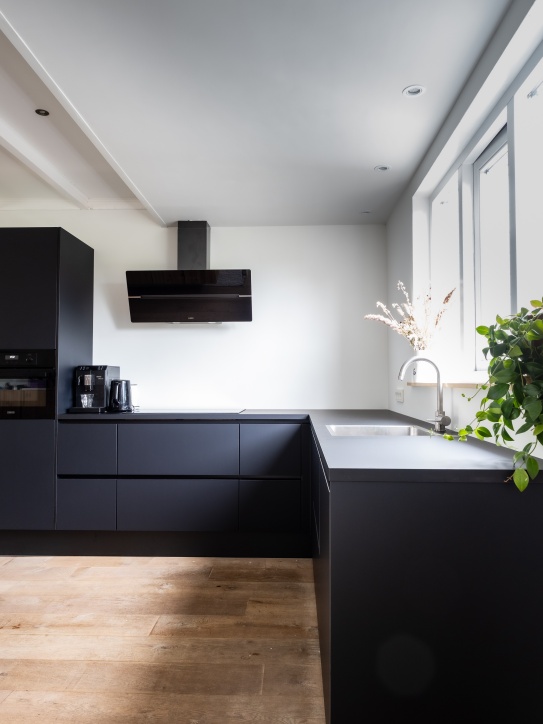
They are dry-pressed and fired at temperatures above 1,000°C. They absorb water easily. These products are intended exclusively for indoor wall tiling. The surface of the tiles is glazed. This makes them very scratch-resistant. They repel dirt and resist cleaning and disinfecting products well. They are very easy to clean. They are most often used as wall tiles in kitchens and bathrooms.
Glazed tiles
Their surface is covered with a layer of coloured glass (glaze). This gives them important aesthetic features such as colour, gloss, shade and pattern. They are mainly intended for indoor use. The glaze makes the tiles very easy to clean. It is highly resistant to cleaning and disinfecting products. They are used as flooring in bathrooms, kitchens, toilets and other parts of residential and commercial spaces. Glazed tiles can be glossy, semi-gloss, matt or semi-matt. In general, the darker the glaze, the less resistant it is to wear.
Vitrified glazed and unglazed tiles
Vitrified unglazed tiles are almost uniform throughout their entire thickness. This means the tile body is coloured all the way through. They have no pronounced shades, decorations or images. They are suitable for working environments with heavy traffic. Because they have no glaze, any damage will not be very noticeable. They have low water absorption and greater hardness. This makes them suitable for high-traffic areas and outdoor use.
Vitrified glazed tiles are a versatile and widely used type of tile. Their surface can be glossy, matt or a combination of glossy and matt. Vitrified glazed tiles come in a wide range of sizes, patterns and shades. They can be used as floor and wall tiles, both indoors and outdoors. They also have low water absorption and greater hardness.
We also recommend our article on 10 reasons to invest in property, or how to buy a building plot at a good price.
Leave a Reply