
8 tips for choosing a garden shed
Do you lack a suitable place in your garden to store all your tools, garden machinery or outdoor furniture? In short, you need a bigger shed. Your only option is to look at one of the prefabricated garden sheds. Believe us, though: whether you are a beginner or an experienced gardener, you will need to think carefully about which garden shed to choose. There is a huge range of sheds on the market, so you will surely find our article useful, as we offer you up to 8 of the most inspiring tips.
1. Be clear about what you need a garden shed for
Have you already thought about why you want such a shed? Would you like to keep garden machinery and furniture or tools in it, or even turn the space into a small workshop for repairing motorbikes? Choose a suitable size based on your plans, otherwise you will be frustrated by a space that is too small, or too big.
Do you already know where you will place your garden shed? The ideal spot is somewhere it will not often face strong gusts of wind. It is also not recommended to place the shed under trees, where falling branches, bird droppings or resin could damage it.
If you are also interested in the paperwork, we will “please” you with the Building Act (stavební zákon). Under Section 79, you do not need to notify the authorities of a structure with a built-up area of up to 25 m² and a height of up to 5 metres. However, it must be at least 2 metres from the plot boundaries. In some areas, building may be restricted or even banned by a municipal decree. It is best to check not only with the building authority but also with the municipal office.
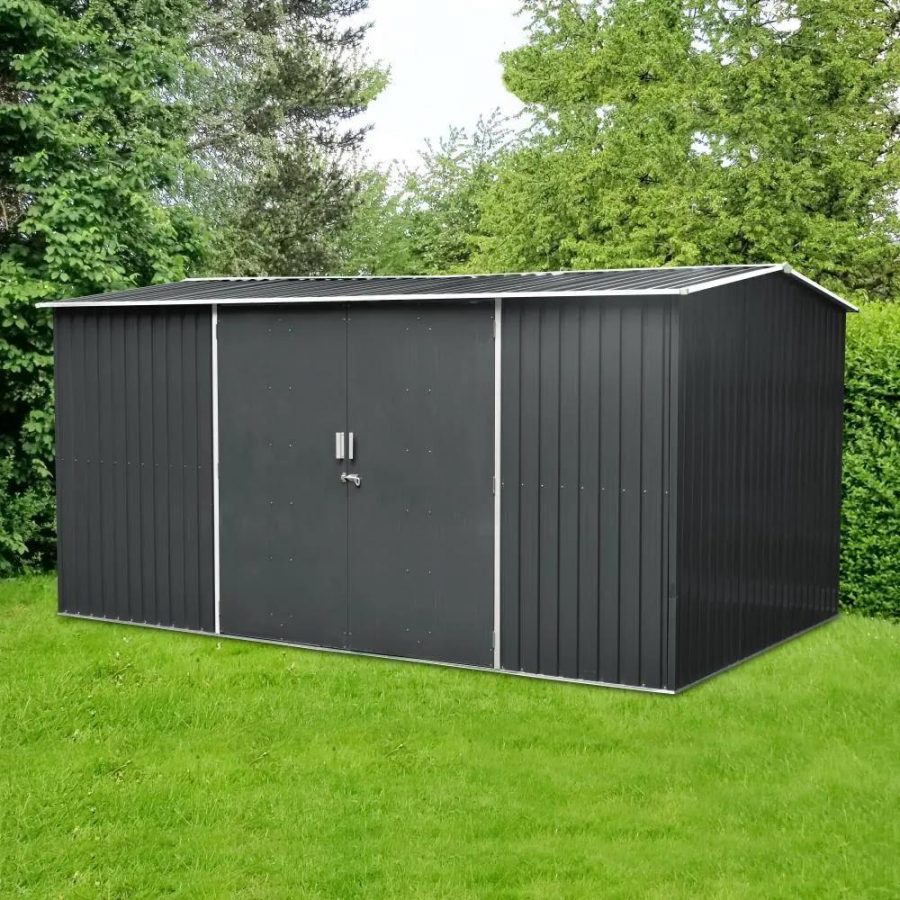
2. What about the base?
The most important thing is to build your shed on a good base. Remember that the surface should be firm and level. It should rise 10 to 20 cm above the surrounding ground. If you skimp on the base, the shed may start to shift, and you will have to rebuild it at great cost and effort. So the advice is simple: do not cut corners. The most suitable bases include:
- Concrete slab: it should be 10 to 15 cm thick, and you also need to allow for internal steel reinforcement. It should sit on a gravel bed at frost-free depth. You will especially appreciate how durable this type of base is. The downside is that it will stay there for ever.
- Interlocking paving: this is perfect as a base for smaller structures. It is also cheaper, but again the main downside is that your shed will be fixed in place.
- Self-supporting frame: this is the gentlest and most practical option for a base. Its clear advantage is that moving the shed is not such a big job.
3. What about the floor?
Garden sheds are usually sold with a floor, but if you like one without, be aware that you will have to add a floor yourself, which takes a lot of work. A garden shed must not stand on gravel, stones or grass. Water would wash away the ground beneath it, wasting both your work and your money. Don’t worry, you can have fun with the floor too. You can choose from several types of material:
- concrete
- wood
- paving
4. What materials are garden sheds made from?
Garden sheds are sold flat-packed, and each one has its own assembly method. You can build sheds from panel blocks or from machined and milled planks that fit together like a log cabin.
5. The type of window matters too
You can also choose from various types of window. Garden sheds come with turn-and-tilt windows or with fixed windows that can neither be opened nor tilted.
- Turn and turn-and-tilt function – single or double windows can be fully opened or tilted.
- Single glazing – windows and doors are fitted with panes of real glass.
- Insulated glazing – both doors and windows are insulated with double glazing
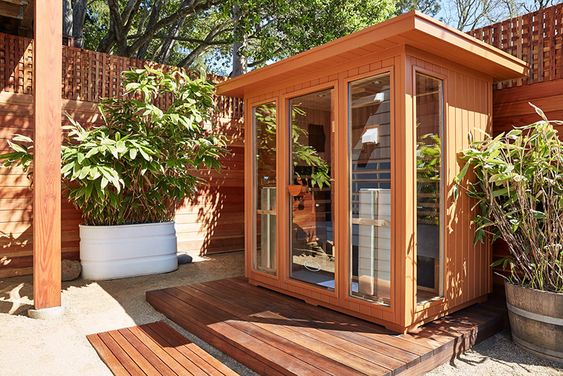
6. Choosing a roof
On garden sheds with a flat or mono-pitch roof, rainwater stays on the roof longer than on sheds with pitched roofs. You should therefore give a flat roof permanent protection against the weather. Covering the roof with a membrane is particularly recommended (for example torch-on felt, a special membrane or similar products).
Even on pitched roofs, standard roofing felt is not sufficient as the first covering. Depending on the weather, you need to check its condition and sealing regularly. If necessary, the roof must be re-covered with roofing material. On sheds with flat and mono-pitch roofs, it is recommended to replace the roofing felt with torch-on felt after about 2 months.
The shed comes with only a basic layer of felt, which is intended as an underlay for the roof covering. Of course, you can leave just this layer on the roof, but the felt needs to be covered to make it last longer. The best material for your garden shed, however, is shingles.
7. Other shed accessories
If you plan to use rainwater in your garden, gutters and a water butt or barrel will certainly come in handy. A very popular addition to wooden and metal garden sheds is undoubtedly a side extension or lean-to, where you can store wood for barbecues and also park bicycles.
8. What else to buy for your garden shed
- Paint and varnish, sheds are sold untreated, so a good coat of paint will certainly be useful.
- Wood protection, don’t forget to treat the wood with preservative, which protects it and prevents natural decay.
- Mortise lock, a common door lock used mainly indoors for room doors, but also for garden sheds.
We hope our article has made things easier for you. You can also take a look at our other articles. You may find our tips on choosing a lawnmower useful, or our guide to how many hours you should sleep.
Leave a Reply