
How does solar PV with battery storage work?
Photovoltaics is a modern route to so-called energy independence, which means you no longer depend on electricity suppliers. Have you ever dreamed of being able to switch on a light or boil water for tea even after the power company has told you there will be no electricity for several days? Until recently, this was unthinkable. Today, it is common. At least for those who have panels on the roof and a battery storage system installed alongside them.
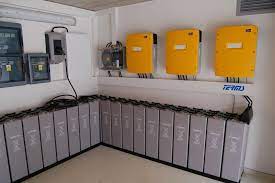
A battery is an electricity accumulator
The battery works as an energy accumulator, something like a tank that stores electricity for use when the photovoltaic system is not producing power because it is damp and overcast outside and the sun is not shining, or because it is night and dark. As soon as bad weather or night sets in and the system stops producing power, the battery switches on and starts supplying household appliances and switches.
How photovoltaics with batteries works
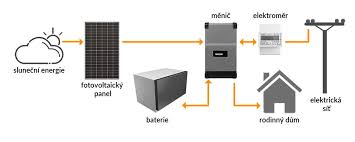
A photovoltaic system with battery storage works in a fairly simple way, even if the name alone is a tongue-twister. The system is based on direct current, which flows from the solar panels to an inverter. The inverter converts it into alternating current, which can power various household appliances.
The inverter is also connected to the battery storage, where “surplus energy” is stored and “waits” until you use it later. Most importantly, the electricity is used directly in the home and does not go into any distribution grid, from which the energy provider would “redistribute” it to individual consumers at a hefty mark-up. This way, you produce, store and use the energy yourself.
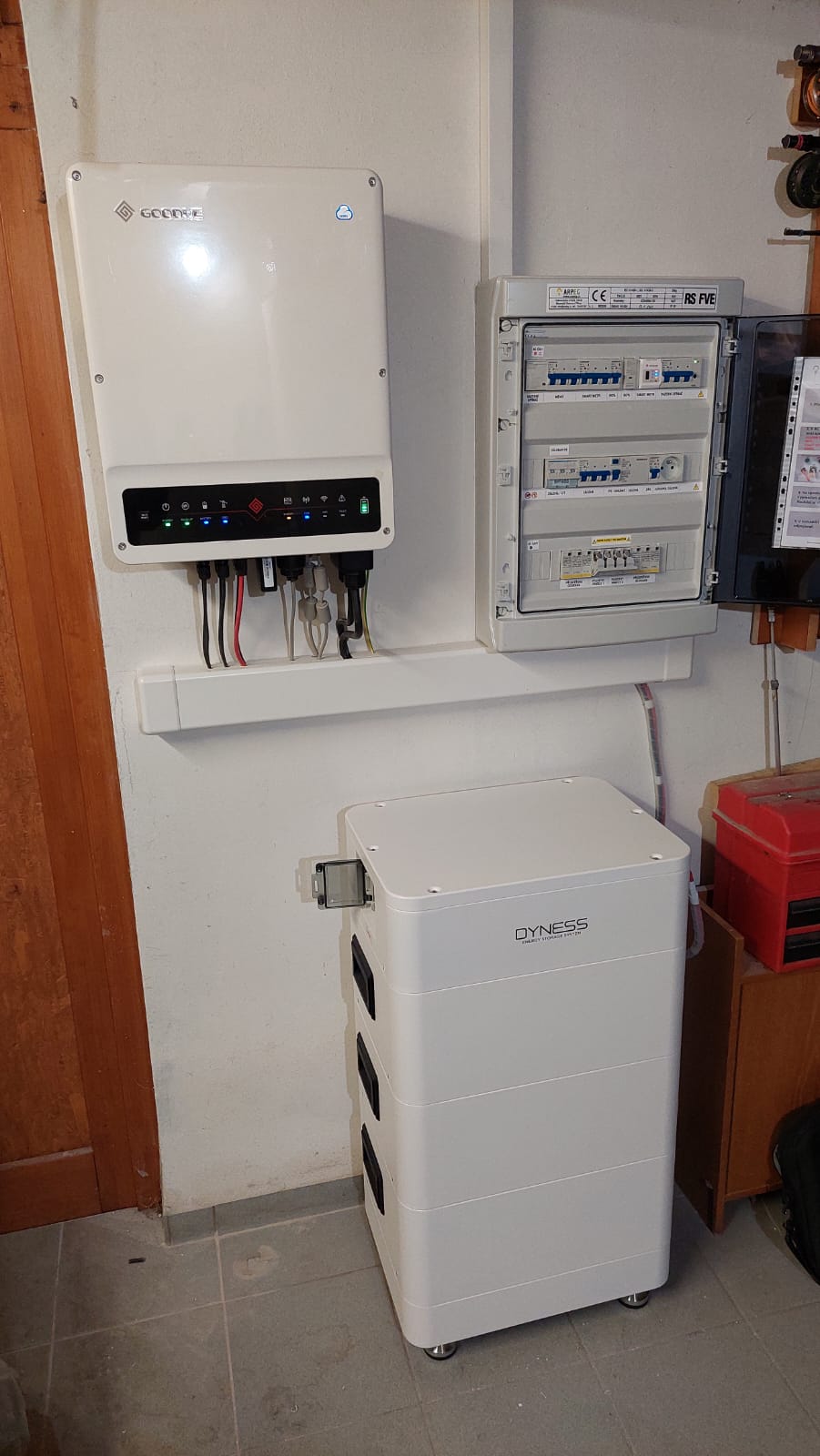
What does battery storage look like?
Battery storage for electricity looks like a large cabinet containing individual battery cells. These are either housed in a box (cabinet) or stand on their own, in which case you need to be careful where you place them. Always install the inverter and batteries somewhere that does not freeze.
The vast majority of users place the batteries in a garage, cellar, hallway or as close as possible to the circuit breakers to which the whole system is connected. Some people put their battery storage in the loft or leave it outside the house, but this is not recommended because of fluctuating outdoor temperatures.
Benefits of photovoltaics with battery storage
Buying solar panels with batteries is a large one-off expense (How much does photovoltaics really cost?), but in the long term it is a sensible step. With grants from the New Green Savings programme (Nová zelená úsporám, NZÚ), you can get up to a 60% discount on installing the panels and connecting battery storage. The result is the chance to use electricity only when you actually need it.
Other benefits of photovoltaic systems with batteries include:
- Independence from producing electricity at a particular time of day. You do not have to draw it only during the day, but also in the afternoon and evening.
- The system comes with a mobile app where you choose where (to which household appliance) the electricity should go.
- Power cuts will not affect you. The battery accumulator always holds enough electricity for lighting and powering basic appliances.
- In the app, you can freely set where the electricity goes: for immediate use, into the accumulator for later use, or to charge an electric car if you own one.
- The battery uses 100% of the energy produced without waste, which significantly helps protect the environment.
- In the long term, it saves a lot of money. Try calculating the heat loss of a family house and you will see how much money you “throw out of the window” every year.
What does electricity production with photovoltaics without a battery look like?
Many people have infrared panels installed WITHOUT battery storage as a first step before photovoltaics with batteries. The reason? Saving money, of course. Also saving space, because a standard battery accumulator takes up quite a lot of room. Cabling naturally runs from the batteries to the panels, which people may find unsightly, so they prefer to choose photovoltaics without batteries.
The “problem” lies in the efficiency of this battery-free system. Electricity is produced only during the brightest part of the day, when the sun is shining fully. It is intended for immediate use, because there is nowhere to store it. As soon as household consumption is lower than production, the surplus is sent to the shared distribution grid and, in plain terms, “redistributed” among other consumers.
Leave a Reply