
Growing and planting tulips. When, how and why?
Tulips are among the most widely grown spring bulbs in Czech gardens. So what makes them so appealing? They flower beautifully, need little care and brighten up any garden. If you plant tulip bulbs at the right time, much of the work is already done. And if you have a garden shed, you can easily create a space to store them.
The short answer. Plant tulips in autumn, ideally in October, or even in November as long as the ground has not frozen. Set the bulbs about 15 to 20 cm deep and roughly 15 cm apart, in a sunny spot with free-draining soil. After flowering, cut off only the spent flower and let the leaves turn yellow, because the bulb draws its strength for the following year from them.
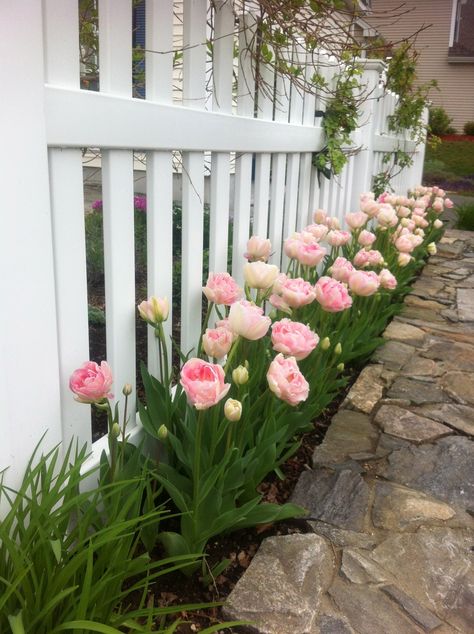
A brief history of tulips
Before we get to planting, here is a little about their history. Tulips come from an area stretching from southern Europe and North Africa to Central Asia. According to a 2026 review study in the journal Plants, most species grow in the mountains of Central Asia, in the Tian Shan and the Pamir-Alay. Gardeners simply divide them into two groups:
- Botanical
- Garden tulips
According to the British Royal Horticultural Society (RHS), botanical tulips are wild species and closely related varieties, which usually have smaller flowers and shorter stems. Garden tulips are bred varieties for beds, window boxes and parks. You will find a more detailed division into 15 groups below.
Tulips range from about 10 to 80 cm in height, and their flowers come in almost every colour. You can plant them in a large garden, where they stand out beautifully in spring, as well as in smaller gardens or front gardens, where every centimetre counts.
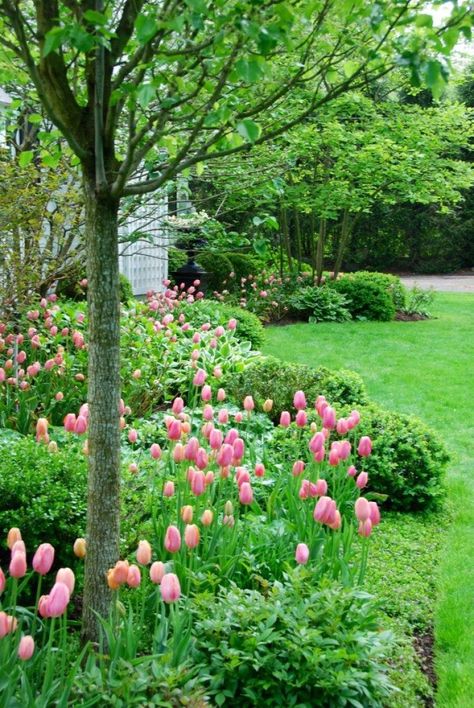
The best time to plant
You may have heard that tulips can also be planted in spring. Do not plant dry bulbs in spring, though. From our own experience, we advise against it. So when should they go into the ground? According to Iowa State University, the best time is October, when the bulbs have time to root before the ground freezes. You can also plant in November if the weather is fine and the ground has not yet frozen, but the bulbs will have less time to root.
The RHS gives September to November as the period for planting dry bulbs, when the plant is dormant. After that, tulips need cold. For forcing bulbs, Iowa State University allows 12 to 15 weeks at roughly 4 to 7 °C for tulips, and only then does the bulb send up a flower. In a bed, winter provides the cold for them.
Can tulips be planted in spring?
Dry bulbs planted in spring do not get enough cold, so they usually do not flower, or flower only weakly. Tulips that you buy in spring already sprouting in a pot are a different matter. They have been through the cold period at the grower’s, and according to the RHS they will flower within a few weeks.
Do not keep bulbs you did not manage to plant in autumn somewhere warm until spring. If the ground has not frozen, plant them straight away. If it has already frozen, plant them in a pot and let them overwinter somewhere cold, as we describe in the next section.
Try a pot
Tulips also look good in an old pot. Just remember that it is better to plant them close together in larger numbers, in clusters, in a spot that gets plenty of sun and where water does not sit for long. When choosing, we recommend going for fewer varieties but larger quantities.
How to grow tulips in a pot
The pot must have at least one drainage hole in the base and enough room for the roots. The University of New Hampshire (UNH Extension) recommends a container at least 20 cm deep for large bulbs. The RHS advises mixing three parts peat-free multi-purpose compost with one part grit so that water drains well.
Put a few centimetres of compost in the bottom, space the bulbs on it pointed end up, about a finger’s width apart, and cover them with the rest of the mix. According to the RHS, firm the compost lightly, leave it about 2.5 cm below the rim, water the container thoroughly and stand it in a sheltered spot. Plant at the same time as in a bed, that is, in October.
Over winter, bulbs in a pot need cold, but not water standing in the bottom. UNH Extension suggests a cool cellar or an unheated garage, where the temperature stays roughly between 2 and 10 °C. According to UNH, frost will not harm the bulbs, but a ceramic pot may crack. To protect against squirrels and rodents, the RHS advises covering the pot with mesh.
After flowering, look after an outdoor pot just as you would a bed: cut off the spent flower, let the leaves turn yellow and feed. If you want to keep the bulbs in the container for another year, the RHS recommends a loam-based compost. For tips on arranging plants in a small space, see our article how to furnish a small balcony or terrace.
Forcing indoors is a special case. According to Iowa State University, a container at least twice as deep as the bulbs is enough, with the tips of the bulbs level with the rim. It is usually not worth keeping forced tulips after flowering, as according to the same source they generally do not flower again once planted outdoors.
What tools do you need?
A spade and a small trowel are more than enough. Planting tulips needs no special gadgets. You might just want to get some coarse grit or gravel and compost.
Grit or gravel is useful where water tends to sit for a long time. Put it in the bottom of the planting hole so that the bulbs do not sit in the wet, which is also what the RHS does when trialling tulip varieties. As for compost, never use fresh manure. It is always better to use compost that is at least a year old.
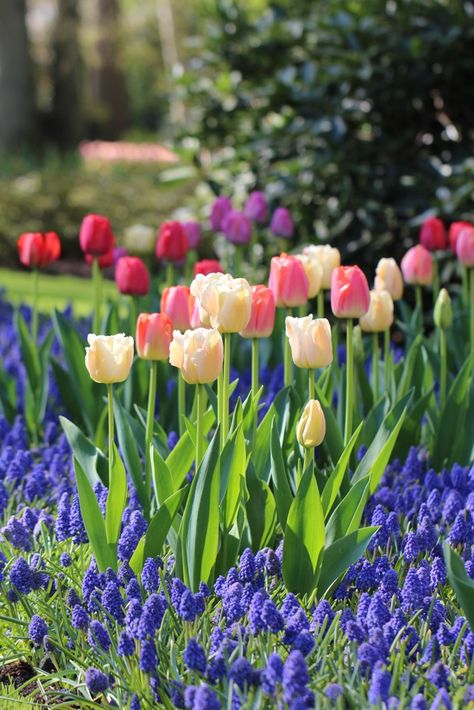
How to extend the tulip season
If you want tulips in flower for as long as possible, combine early, mid-season and late-flowering groups. The season opens with, for example, single early and Kaufmanniana tulips, while Triumph tulips and Darwin hybrids flower in mid-spring. Late spring belongs to lily-flowered and single late tulips, which now also include the former Darwin tulips.
According to Iowa State University, Triumph tulips grow to roughly 25 to 40 cm and Darwin hybrids up to 75 cm. The former Mendel group is no longer listed separately. You will find a full overview of the groups in the next section.
What groups are tulips divided into?
Tulips are divided into 15 groups according to flower shape, origin and flowering time. The international register of their names is kept by the Dutch bulb growers’ association KAVB, which is the international registration authority for the genus Tulipa. Bulb catalogues also follow this classification. Iowa State University arranges the groups by flowering time as follows.
- Early flowering. Single early, double early, and Kaufmann (Kaufmanniana), Foster (Fosteriana) and Greig (Greigii) tulips. They grow to roughly 15 to 45 cm.
- Mid-season flowering. Triumph and Darwin hybrids, which grow up to 75 cm.
- Late flowering. Single late, lily-flowered, fringed, viridiflora, parrot and double late.
- Variable flowering time. Rembrandt tulips and other species.
The last four groups, that is, Kaufmann, Foster and Greig tulips and other species, are usually called botanical tulips in the Czech Republic. They are wild species and varieties derived from them. Iowa State University writes that the species are among the longest-lived tulips and spread by themselves in favourable conditions.
Thanks to their low height, botanical tulips suit the front of beds and rock gardens. We describe how to create one in our article how to make a rock garden. According to the RHS, you can leave them undisturbed in the ground or in a container, where they often multiply on their own.
Rembrandt tulips, with their striped and flamed flowers, are a special case. Their markings were originally caused by tulip breaking virus, which both the RHS and Iowa State University mention, so the original Rembrandt tulips are no longer sold. According to the Amsterdam Tulip Museum, today’s varieties in this group are stable mutations of healthy plants.
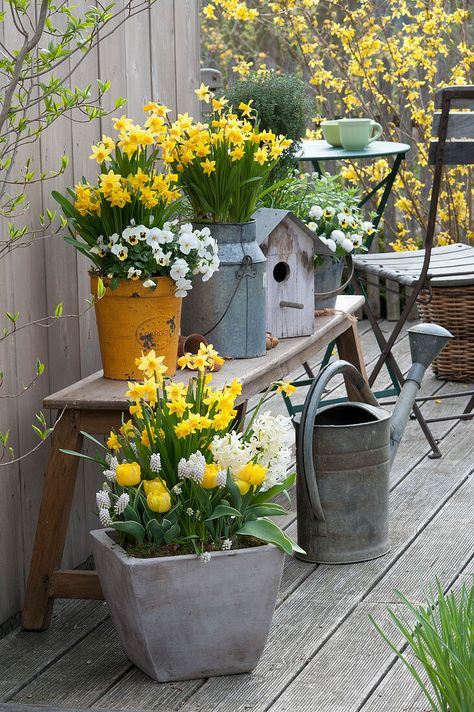
Let’s get started
First dig over the beds to a depth of at least 20 to 30 cm so that the soil beneath the plants is well aerated. If your soil is heavy or wet, put a layer of coarse grit or gravel in the bottom of the planting hole and add a little compost.
Plant the bulbs pointed end up, at the depth and spacing described in the next section. Once the tulips are in place, cover them with the soil you dug out. We recommend marking the spot so that in spring you know where your tulips are flowering and where, say, the garlic is.
How deep should you plant tulips?
Depth determines whether a tulip will flower in the following years too. The RHS advises planting bulbs at a depth of two to three times their height and at least twice their width apart. Iowa State University gives a depth of 15 to 20 cm and spacing of about 15 cm for tulips.
Place the bulb in the hole pointed end up, with the flat base, from which the roots grow, facing down. According to the RHS, shallowly planted bulbs break up into smaller bulbs that do not flower. For repeat flowering, it is therefore better to go for the upper limit, that is, three times the height of the bulb.
How to protect bulbs from voles
Freshly planted bulbs attract rodents. Among the animals that dig up and nibble tulips, Iowa State University lists voles, mice and rabbits, and the RHS also warns about squirrels. A physical barrier works well.
UNH Extension advises making a basket from galvanised mesh with holes of about 13 mm, placing the bulbs in it roots down and burying the whole basket at the correct depth. Mesh laid on the surface of the bed after planting and held in place with pegs or bricks also helps to stop digging, as Iowa State University recommends.
Do not add bone meal to the planting holes. According to UNH Extension, it attracts rodents, which then dig up the bulbs. Where voles cause damage every year, combine tulips with bulbs that, according to UNH, animals tend to avoid, such as daffodils, grape hyacinths or ornamental onions. We describe how to grow it in the article how to grow ornamental onions.

What to do with tulips after flowering?
As soon as a tulip has finished flowering, cut off the flower together with the seed head. The RHS advises cutting the stem just above the leaves so that the plant does not put energy into producing seeds. Leave the leaves in place, however, until they turn yellow on their own. Iowa State University points out that you should let them die back naturally, because the bulb draws reserves for the following year from them.
If the dying leaves in the bed bother you, plant annuals between the tulips to hide them later on. You will find out how in the article how to plant and grow annuals. What to do next with the bulbs depends on whether you leave them in the ground or dig them up.
To dig up or not to dig up?
You may have heard somewhere that you should dig up your tulips. It depends on your circumstances. You can safely leave them in the ground, but only if after flowering you cut off just the flower with its stem and let all the leaves turn yellow. The leaves will die back anyway, but in the meantime the bulb will take the nutrients it needs for the following year.
If, however, you choose the method that we use every year, you will be pleased. We rotate our bulbs. This means that after flowering, once the leaves have turned yellow, we dig them up and in autumn move them somewhere else. The advantage is that you can also buy new bulbs and plant them all together. Just remember that you should not return to the original spot for at least 3 years.
The main reason is to prevent a fungal disease caused by the fungus Botrytis tulipae, known in English as tulip fire. It shows up as brown spots and twisted leaves. The RHS advises not planting tulips for at least three years in a spot where it has appeared. According to the RHS, there is no chemical treatment available to home gardeners.
When to dig up tulip bulbs?
Do not dig them up straight after flowering. The RHS advises lifting the bulbs once the leaves have turned yellow, roughly six weeks after flowering. Until then the bulb is storing reserves, and if dug up earlier it would be weaker the following year.
Clean the soil off the lifted bulbs and inspect them. The RHS advises discarding bulbs with small black growths on the outer scales or with signs of rot, as they can spread the fungal disease mentioned above. Store the healthy ones in crates, net bags or paper bags in a dark, well-ventilated place at a temperature of 18 to 20 °C, and replant them in autumn.
Feeding tulips
In autumn, before planting, prepare some compost-rich soil. According to the RHS, tulips prefer neutral to alkaline soil, and in acidic soil with a pH below 6 it advises adding lime.
If you want the bulbs to flower again the following year, the RHS recommends feeding every week from March, when tulips are growing, with a high-potassium liquid fertiliser of the kind used for tomatoes. Stop feeding as soon as the leaves start to turn yellow and die back.
Why are my tulips not flowering?
The most common reason is that the bulb has become weak. Iowa State University states that most modern varieties flower well for only three to four years, and the RHS adds that bedding tulips left in the ground often fail to flower as early as the second year. According to Iowa State University, a weak bulb then produces large, drooping leaves but no flower.
- Shallow planting. According to the RHS, bulbs planted too shallowly split into small bulblets that do not flower. Next time, plant them at a depth of at least three times their height.
- Leaves removed too early. The bulb builds up its reserves for the following year from the leaves. If you cut them down while they are green, only leaves will appear next spring.
- Too little sun. Iowa State University recommends a spot that gets direct sunlight for at least six hours a day.
- Wet soil. According to Iowa State University, tulips need well-drained soil. In a wet spot, put grit or gravel at the bottom of the planting hole, as described above.
- Lack of cold. Bulbs planted in spring or stored somewhere warm over winter do not get enough cold. For forcing, Iowa State University allows 12 to 15 weeks of it.
- Spent flowers not removed. The seed head takes energy from the bulb, so cut it off after flowering.
If you want tulips that keep flowering for several years, choose the groups that, according to the RHS and Iowa State University, come back more reliably. These are Darwin hybrids, Kaufmanniana and Fosteriana tulips, and botanical species. With the others, expect to top them up with new bulbs after a few years.
Are tulips poisonous to cats and dogs?
Yes. The American ASPCA, which runs a database of plants that are poisonous to animals, lists tulips as poisonous to dogs, cats and horses. They contain the substances tulipalin A and B, which are most concentrated in the bulb.
According to the ASPCA, eating them can cause vomiting, diarrhoea, excessive drooling and lethargy. If your dog or cat chews tulips or eats a bulb and shows these symptoms, contact a vet.
The greatest risk comes during autumn planting and in summer, when lifted bulbs are drying. A dog that likes digging can easily get to them, so store bulbs out of reach of animals and cover a freshly planted bed with mesh. You will find other plants worth being careful with in the article on poisonous trees, plants and shrubs.
Take care yourself too. The RHS warns that handling bulbs can cause a skin allergy and that all parts of the plant can cause stomach upset if eaten. The American National Capital Poison Center describes a painful rash on the fingertips and around the nails in people who work with tulips, known as tulip fingers, and advises wearing nitrile rather than latex gloves.
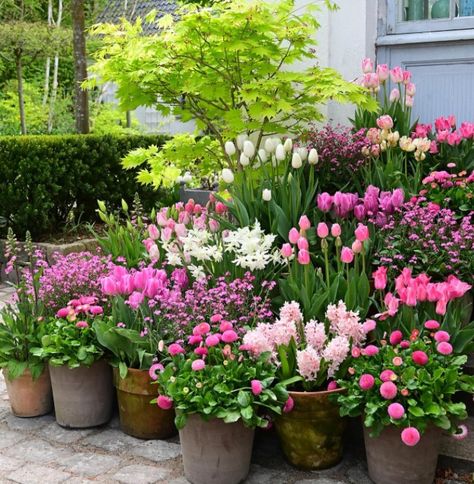
Planting tulips can easily become a habit that repeats every autumn and is hard to give up. While you wait for yours to flower, look for inspiration at places such as the botanical garden in Průhonice.
Leave a Reply