
How to grow a weeping fig (Ficus benjamina)
One of the most popular houseplants is Ficus benjamina. Why is that? There are several reasons, but mainly it is down to its appearance and how undemanding it is to grow. In fact, it could even be called an indoor bonsai. There are many varieties, and it can grow up to 2 metres tall, although this depends on where you put it.
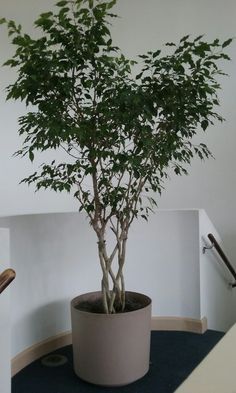
Growing a ficus
As we have already mentioned, growing it is not difficult, but you need to know where to place it. Remember that it needs plenty of sunlight, but not direct light, as that could harm it. This interesting plant loves warmth. In summer it is happy if your indoor temperature stays around 24 degrees, but in winter it must not drop below 15 degrees. This leads to another warning: it does not like temperature fluctuations, and it is also sensitive to draughts.

Make a note in your productivity planner that when you water your Ficus benjamina, you should let the water stand first. It does not like water that is too cold.
Treat this interesting plant to a misting from time to time.
The plant also needs misting, but be careful not to overwater it. Otherwise its leaves may start to drop. If the substrate is very moist and the saucer is empty, it means you are looking after it well. Take care in winter, when you should keep watering to a minimum. It also likes feeding, but choose a fertiliser designed for houseplants.
The plant is not fussy about its substrate. We recommend planting Ficus benjamina in a substrate made for growing ficus plants. This is a light, free-draining peat-based substrate. Instead of a substrate, you can use hydroponics. Ficus benjamina is well suited to hydroponics and copes with hydroponic conditions very well.
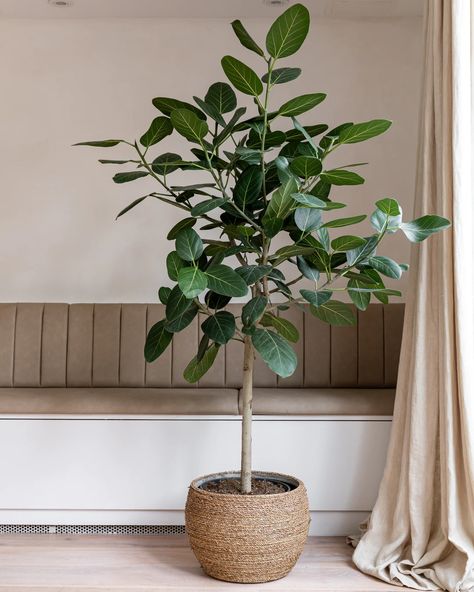
Propagating a ficus from cuttings
Propagating Ficus benjamina is very easy. Make a cutting with a slanted cut. Soak its end in lukewarm water for 2 hours to stop the milky sap from leaking. Then take it out of the water and dip it in rooting gel. Finally, plant the cutting in soil. The ideal temperature for rooting cuttings is between 24 and 29 degrees. The advantage is that you can get several cuttings from a single shoot.

Repotting
Ficus benjamina does not like being repotted. So only repot the plant when it is unavoidable. You can tell when this is because the roots start growing out of the pot. The best time to repot a ficus is in early spring. During this period the plant grows quickly and is more likely to cope with repotting. Choose a new pot 2 to 3 cm larger than the original one.
Why has your ficus lost its leaves?
This does happen from time to time. There can be several reasons:
- low temperature
- draughts
- too little light
- lack of nutrients
- change of environment
- drying out
However, pests can also cause problems, mainly spider mites and thrips. We must not forget scale insects or aphids either, which can be dealt with even by an ordinary homemade spray.
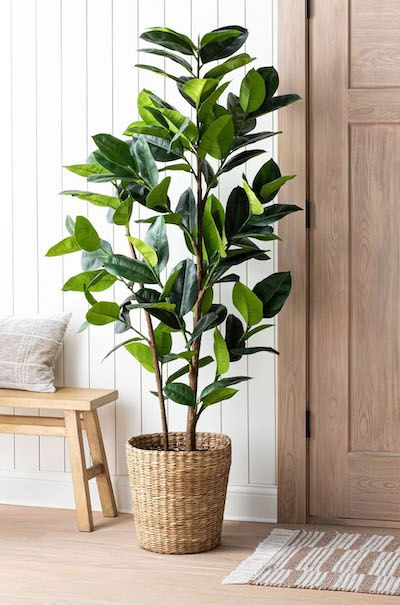
Ficus benjamina is a large houseplant, so you could put it next to your home office desk, for example. It will look original, and you may even feel as if you are in a jungle.
Leave a Reply