
Botanical watercolour, how to get started and why there is no need to be afraid of it
There is nothing like discovering a new hobby. Especially when it brings us joy and fulfilment, there is nothing more to think about. Quite the opposite. Once you learn to paint with acrylics, it is only a small step to watercolour, and from there even closer to botanical watercolour. What is the difference between botanical art and botanical illustration? And why learn botanical watercolour at all? You will find out in the following paragraphs.
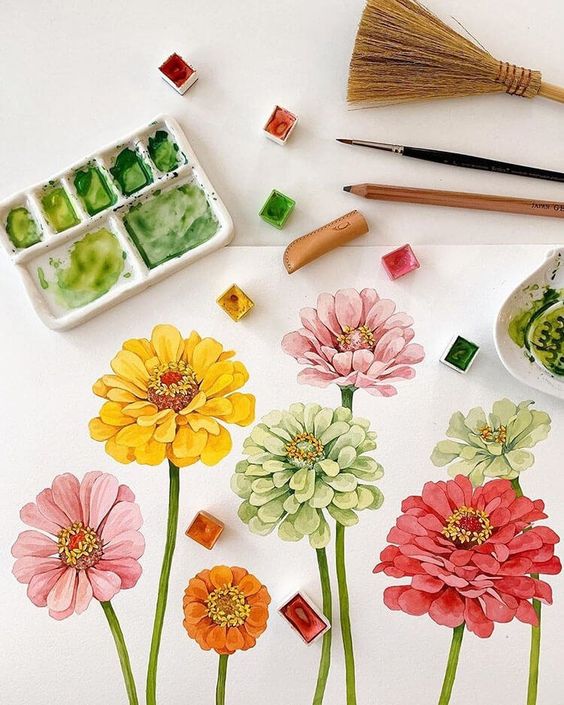
What is botanical watercolour?
Watercolour is a painting and drawing technique. The name comes from the Latin word aqua (water), so the most important thing you will need really is water. Watercolour painting was already well known in ancient Egypt. Artists used water-soluble paints to illustrate the Book of the Dead on papyrus, and they also used watercolour to decorate sarcophagi.
As the name suggests, botanical watercolour focuses on botany: flowers, trees and shrubs, in short, on nature. This gives it several advantages:
- Paint outdoors!
- You can set up a painting spot quickly.
- You will start to notice nature differently than usual. In more detail.
- You will paint flowers and plants.
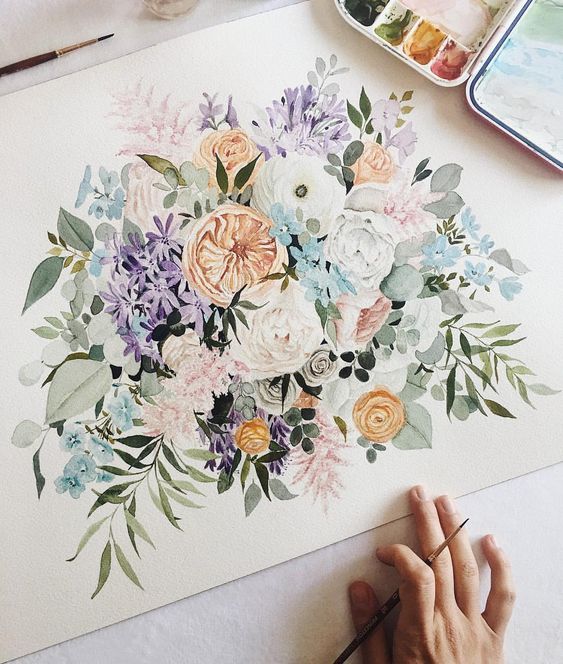
For inspiration, you can head to Tuscany, which has the most beautiful gardens, or to Casa Batlló in Spain.
What is the difference between botanical illustration and botanical art?
It may not seem so, but there are certainly differences within botanical watercolour too. Especially in the terms, so here is an explanation:
Botanical illustration
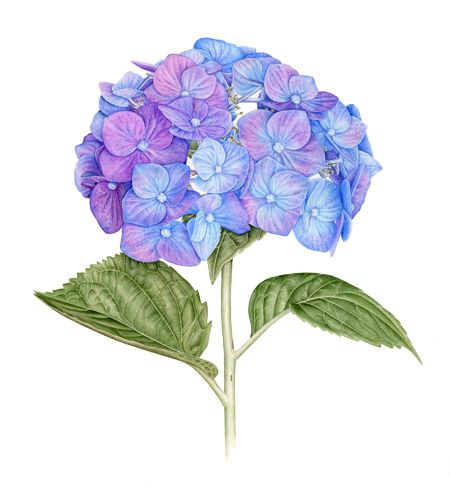
You are sure to know botanical illustration, perhaps you remember it from school, when you needed herbariums. The main aim of botanical illustration is that you must accurately capture all the distinguishing features of a flower, tree or shrub at an exact scale. It is also better to use larger paper for botanical illustration. Most botanical illustrators not only paint on large canvases but also work for a long time and in really great detail. In botanical illustration it is important to be patient, and perhaps even a perfectionist, for your work to turn out well. So you have guessed right: it is mainly scientific illustration.
Our best-known and also most talented Czech botanical illustrator is, for example, Pavlína Kourková. Her art is particularly popular in Japan.
Botanical art
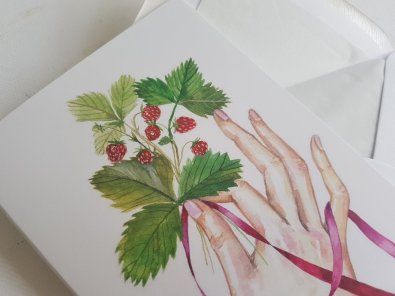
In botanical illustration you must follow the model exactly, but in botanical art it is the other way round. You can paint more freely and experiment with technique and scale. In short, don’t be afraid to use more imagination when painting. Your picture will be far more lively. One much-admired botanical painter is Jitka Zajíčková.
Which brushes to use?
With the right brush, we paint botanical watercolour delicately. If you want to paint with watercolours, use paints that are thicker and not so diluted with water. That is also why it pays to buy good-quality brushes. The brush should be made of hair, wide and above all round. Over the years I have grown fond of the da Vinci brand. I have several of them, in various sizes and widths. Believe me, different types will be especially useful when working on details.
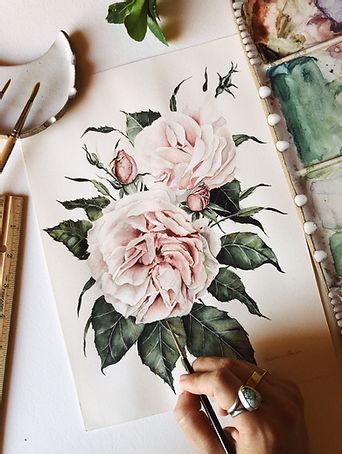
When painting large areas, get a bigger, wide brush so that painting is easy.
Which paper can we choose?
In watercolour, paper really is the most important material. Bad paper will not only make your work harder but also threaten the durability of your piece. Good-quality watercolour papers are made from bleached linen fibres or cotton, in white or a very slightly yellowish colour. Definitely avoid cold white paper.
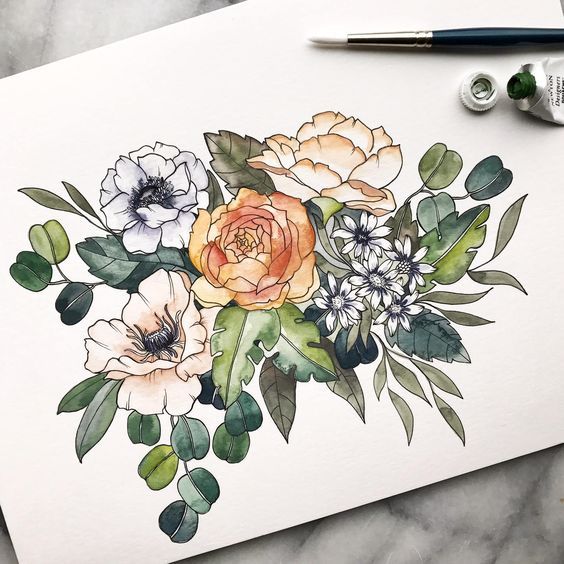
The paper must not swell, otherwise your colours would start to run together. It must not soak up water or be greasy.
Choose your paints carefully
You have guessed right. For your painting to be vibrant and delicate, choose only good-quality watercolour paints. As the name suggests, watercolour paints can be diluted with water. But don’t confuse them with children’s watercolours, that is something else too!
Watercolour paints for botanical illustration very often come in solid cakes, technically called pans. You can buy a whole set or buy them individually, it is entirely up to you. Truly good-quality watercolour paints contain the best pigments and binder. They usually contain gum arabic mixed with honey.
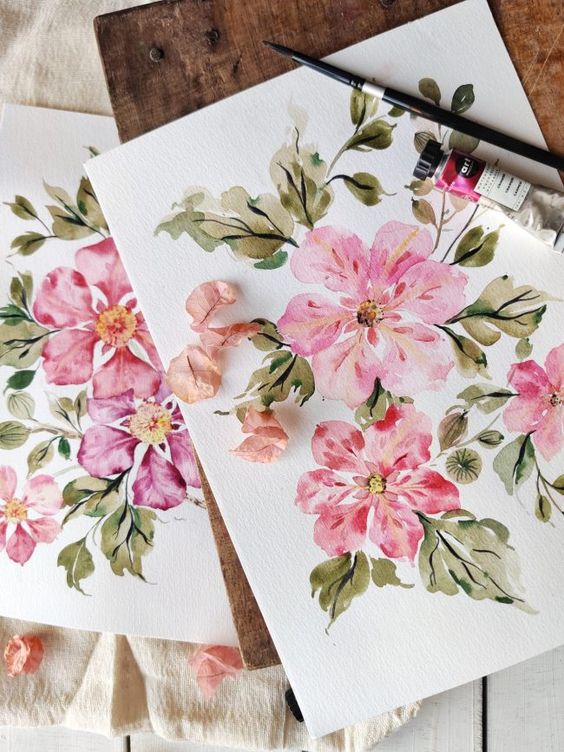
Before applying them to your pre-drawn paper, ALWAYS test them on a separate sheet of card so that you get the right shade.
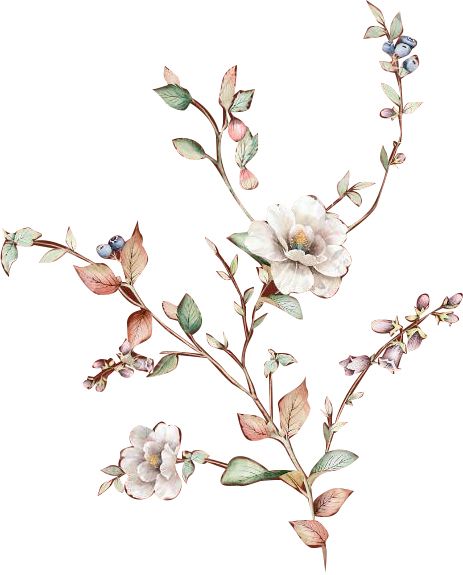
Botanical watercolour is not difficult. You could even choose a travel watercolour set, and then you can paint botanicals at Kuks Hospital (hospitál Kuks), for example, which has such a beautiful herb garden.
When you have finished reading our article on botanical watercolour, have a look at our other articles, for example how to grow rhododendrons or what a meal box diet is.
Leave a Reply