
5 tips for building a shipping container home
There are plenty of reasons to take the plunge and live in shipping containers. It might be your longing for adventure, a modest and undemanding lifestyle, self-sufficiency or affordability. What you should think about, however, is what you will need for such a build.
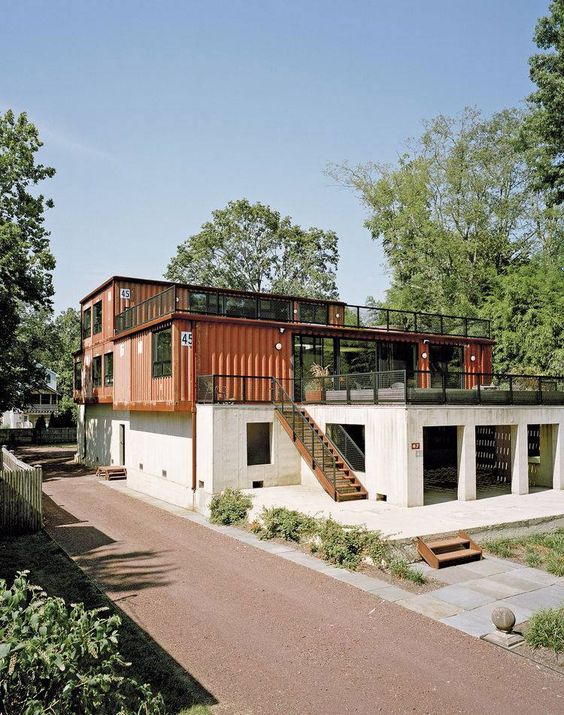
It is estimated that there are around 170 million containers in existence. Leaving aside whether they are sitting on land waiting for cargo or are out of service, quality is the bigger problem. It is not easy to get a guarantee that the container or containers you have set your heart on have made only one ocean crossing. They may have spent several years at sea, which has most likely taken a heavy toll on their lifespan.
1. How long does a container house last?
Roughly 25 years, by most estimates. A lot depends on whether your container sailed the seas or was used mainly on land. And it is not easy to find one that has been waiting for you in a covered warehouse the whole time. That is why the simplest option would be to have a newly built container delivered straight from the factory. Bear in mind, though, that this is not a cheap option.
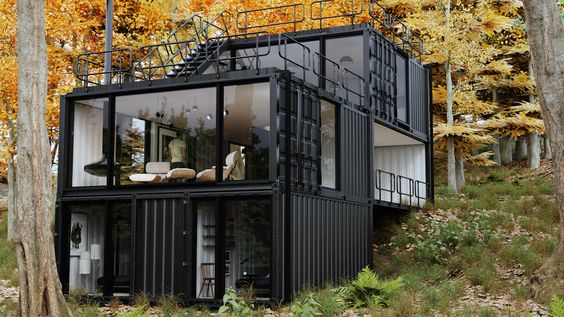
2. Container sizes and height
The basic and most affordable classic is the six-metre container (external length 6,058 mm, internal 5,867 mm) with an internal height of 2,385 millimetres. There are also HC (high cube) versions, with a ceiling height of 2.9 metres. Both types are very popular because they can also be used as a workshop, storage space, a garage for motorcycles and bikes, or a detached extension to a house or cottage.
The variety of shapes is reflected in the price. Excluding VAT, prices usually start at 40,000 CZK (about 1,800 USD) for the simplest versions, but they can climb to 200,000 CZK (about 9,200 USD) for non-standard or exceptionally well-preserved or unused models. Cutting corners does not pay off, and you often need to see the product in person.
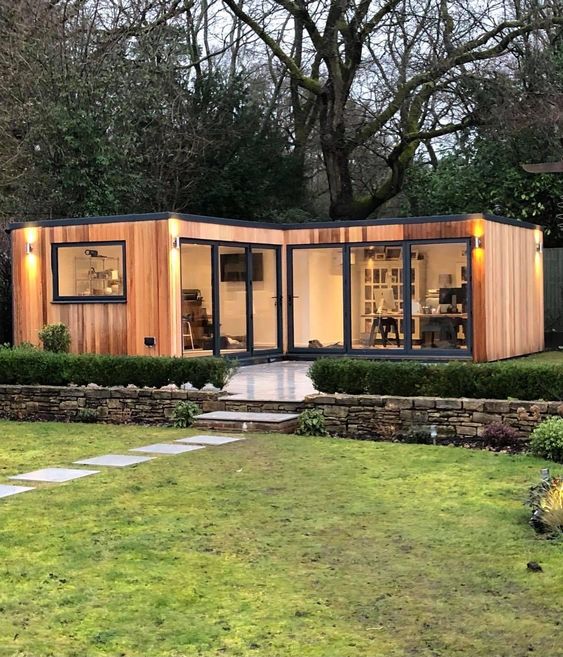
3. Do not forget the cost of delivery
Directly at the source, meaning at a large container depot on the coast, buying a retired container will be cheaper. However, you must factor in transport. And a piece that you have shipped from Hamburg to Česká Lípa will certainly not work out cheaper for you. Moreover, you should immediately count on a handling fee for a crane. A twenty-foot (six-metre) or forty-foot (twelve-metre) shipping container is no lightweight, and with a weight of 2.2 to 3.9 tonnes, you simply cannot move it by hand.
Choosing a carrier and a container, however, comes somewhere in the middle of the whole process of setting up an alternative home. First, you need to secure and prepare the plot and obtain the relevant permits. You cannot set up a container to live in just anywhere (for example, in a protected landscape area, or CHKO), and any utility connections must be completed before the giant box arrives.
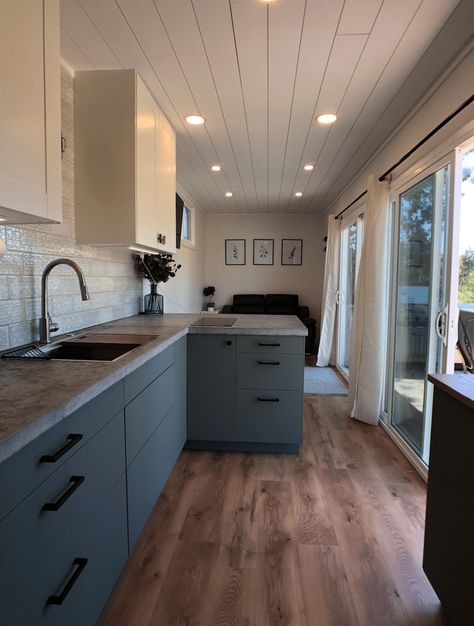
4. Modular or mobile
When it comes to living in them, containers are talked about in superlatives, as a brilliant example of modular and mobile housing, because (in theory) you can put them anywhere. But the same is true of houses, isn’t it? As for all the fuss about container mobility: once you have set one up and adapted it to a particular location, it will no longer suit another. If you build an interconnected living puzzle out of containers, your chances of moving are practically over. So there is no fundamental difference compared with other modular buildings.
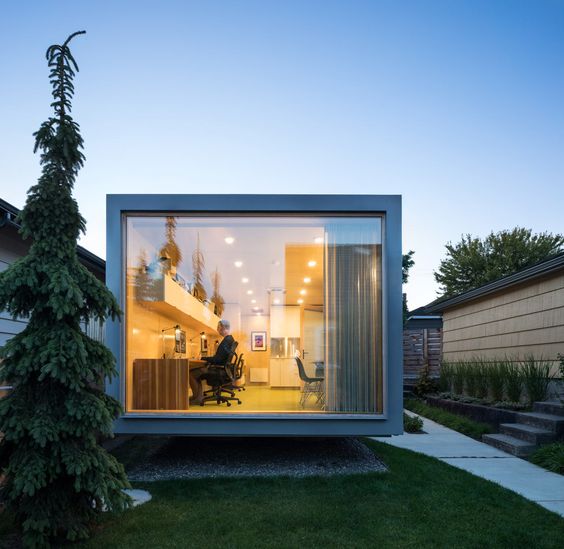
5. A container house is for ever
Power lines and utility connections are tailored to the specific site. Containers are hard to drill into. So moving things around inside later is hardly an option. The interior will never change significantly. Your home will always look the same. This does not always suit the restless nature of people drawn to alternative living. Incidentally, of the hundreds of successful container homes and projects that the world’s media love to write about, how many are still lived in by their original owners or buyers? Very few.
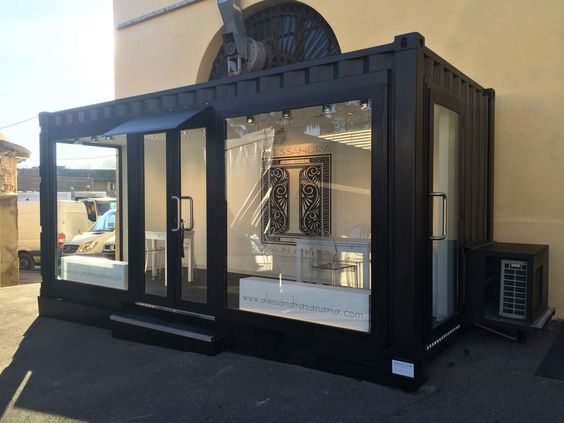
Living in containers is, of course, an interesting alternative form of housing, as the growing interest shows. You just need to avoid getting carried away by the trend and weigh up all the options carefully. One of those options is living in a shepherd’s hut, for example. You should be happy with your home for the rest of your life.
And what to plant around your container? Try growing rhododendrons. Or build a swimming pool or make your office a nicer place.
USD amounts are approximate, converted at the Czech National Bank rate of 21.75 CZK per USD on 9 October 2026.
Leave a Reply