
Try these old-fashioned remedies for mould on walls
Unpleasant mould on a wall is always a problem. It is especially annoying in older family houses, where it tends to be a never-ending battle. Unfortunately, the solution is rarely simple either. The most effective methods, such as remediating damp masonry, installing new damp-proofing or adding insulation, cannot be done without a building contractor and higher costs. Even so, there are a few home remedies that should make your fight against mould at least a little easier.
The short answer. You can remove a smaller patch of mould, up to roughly 1 m², yourself. Wear gloves and a respirator, wash the wall with detergent or treat it with an anti-mould product, leave it to work according to the instructions and dry the area thoroughly. Never mix chlorine products with vinegar or ammonia. If you do not also deal with the cause, that is, damp and a cold wall, the mould will return to the same spot.
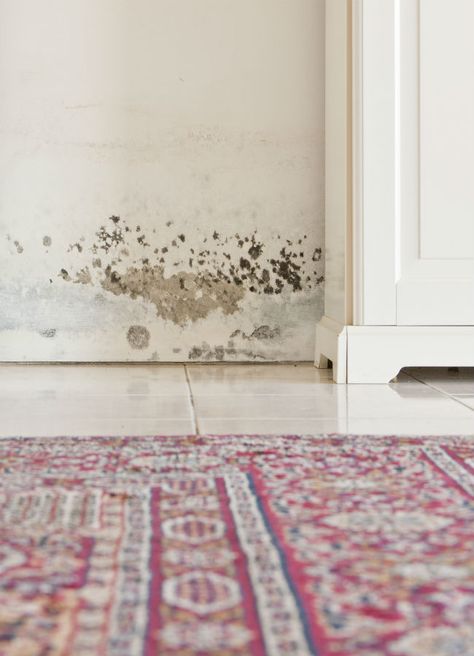
Where it appears most often
Mould on a wall is not fussy. It likes places where the conditions suit it. It thrives when the relative humidity in a room stays above 60%, for a long time, which is nothing unusual in houses close to rivers and streams, for example. Next to a cold wall the humidity is even higher, and once it reaches 80% at the wall surface, there is a risk of mould growth according to the ČSN 73 0540-2 standard. It grows inconspicuously. It often first gives itself away with a musty smell, and it can grow out of sight behind furniture or inside the wall, so you only see it after some time. As we have already mentioned, old houses are more susceptible. This is because they lack adequate insulation, so they have spots that mould very quickly takes a liking to.
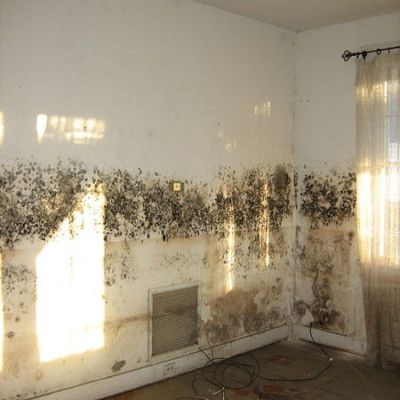
What causes it
Household activities. This means cooking, showering, doing the laundry, in short any activity in which water evaporates.
Plants and aquariums. Plants and aquariums release water into the air.
Poor ventilation. Remember that proper ventilation is the best defence against mould.
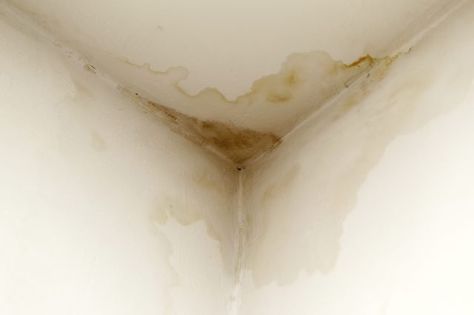
Thermal bridges. These are places where more heat escapes from the house than through the surrounding structure, so the wall is colder on the inside and moisture condenses on it. A typical example is the area around a badly fitted or poorly sealed window.
Why does mould appear in corners, by windows and behind wardrobes?
Mould rarely grows in the middle of a warm wall. It appears where the wall surface is coldest. Warm air in a room carries water vapour, and when it meets a cold surface, it cools down. The temperature at which water starts to condense out of it is called the dew point.
Drops of water on the wall are not even needed for mould to grow. As we mentioned, the thermal protection of buildings standard ČSN 73 0540-2 counts on the risk of mould as soon as the relative air humidity directly at the inner surface of the wall reaches 80%, as Jiří Šála explains the standard on the TZB-info portal. For windows, the standard monitors the 100% limit, which means condensation on the glass and frame.
The most vulnerable places are therefore corners on external walls, where two cooled walls meet, the areas around windows, and walls behind wardrobes or beds. Behind furniture the wall is colder than the rest of the room and you cannot ventilate the damp air away from there. If the window reveals are going mouldy, retrofitting insulation to the reveals often helps.
The risk increases during the heating season. In November 2022, Bohumil Kotlík of the National Institute of Public Health (Státní zdravotní ústav) warned that when the temperature in a room is lowered significantly, condensation of airborne moisture increases, and with it the growth of mould on walls. Turning the heating down to a minimum therefore does not pay off in a flat prone to mould.
Health risks
Never underestimate the effects of mould. You may think you are immune to various allergies and do not suffer from asthma, but health problems can appear over time. A particularly vulnerable group are people with serious lung diseases and patients with cancer. The problems show up mainly as breathing difficulties, worsening asthma, allergies and irritation of the eyes, nose and throat. In people with weakened immunity, for example during cancer treatment, mould can even cause a serious lung infection.
Is mould on a wall dangerous?
The World Health Organization provides the answer. According to its 2009 guidelines on dampness and mould in indoor environments, there is sufficient epidemiological evidence that people in damp or mouldy buildings have a higher risk of respiratory symptoms, respiratory infections and worsening asthma. In a press release on the guidelines, the WHO stated that their risk of respiratory problems and asthma is up to 75% higher.
In its statement on mould, the National Institute of Public Health (Státní zdravotní ústav) adds that 20 to 30% of atopic people, meaning those prone to allergies, are allergic to mould. The substances that mould releases as it grows also irritate the mucous membranes. Parents of young children, allergy sufferers and people with weakened immunity should be especially careful.
The WHO did not set a safe limit, because in its view the relationship between damp, mould and health cannot be precisely quantified. It therefore recommends preventing mould and removing it when it appears. If you have health problems that you link to mould in your home, consult a doctor.
You cannot tell how dangerous mould is from its colour. The US Centers for Disease Control and Prevention (CDC) states that all moulds should be treated the same way in terms of both health risks and removal, whether you see a white coating or black spots. Only a laboratory analysis of a sample can identify the type of mould, and according to the National Institute of Public Health (Státní zdravotní ústav) this is used to assess the health risks.
How to get rid of mould on a wall
There are plenty of home remedies for getting rid of mould. On the market you will find a wide range of chemical and natural products. Whichever you use, handle it in a way that does not make you ill.
The basic home remedy is, above all, ventilate! Do it often and briefly. Ventilate the bathroom, the kitchen and any rooms where you dry laundry or herbs such as sea buckthorn. It is also a good idea to place furniture slightly away from the wall. This helps air circulate and prevents mould from forming. If mould is already on the wall, try one of the following helpers.
Chlorine products
Products containing sodium hypochlorite, commonly known as bleach, are also sold as disinfectant sprays formulated to fight mould. However, the US Environmental Protection Agency (EPA) does not recommend chlorine bleach as a routine part of mould removal. In its view, mould needs to be removed, not just killed, because even dead mould triggers allergies.
On smooth surfaces, water with detergent is therefore enough. Use chlorine products only as directed on the label, ventilate while you work and protect your hands and eyes, as manufacturers’ safety data sheets advise. Never mix them with vinegar or ammonia. We explain why below.
Spray made from tea tree oil
You can buy it at a chemist’s. You can also use it in cosmetics. The method is simple: mix two teaspoons of tea tree oil with 500 ml of water and spray the walls.
In the Adelaide study, which we describe below in the section on vinegar, tea tree oil suppressed the growth of the tested moulds better than vinegar, alcohol and two industrial disinfectants. Chlorine products were not tested. Moreover, it involved undiluted oil in a laboratory on a growth medium, so the effectiveness of a diluted spray on plaster has not been verified.
Shake the bottle before each use, as oil does not mix with water. Do not spray it where there are children, cats or other pets, and store the bottle out of their reach. According to the US organisation ASPCA, concentrated forms of tea tree oil can harm pets in amounts as small as seven or eight drops.
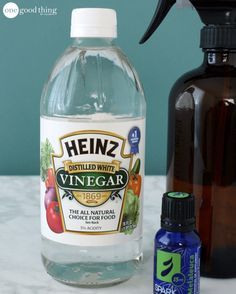
Vinegar
This is one of the most popular home remedies. Vinegar contains acetic acid, a weak acid that genuinely works against some moulds and bacteria.
It is not enough for all of them, though. This was shown by a study from the University of Adelaide in Australia, published in 2015 by Rogawansamy, Gaskin, Taylor and Pisaniello in the International Journal of Environmental Research and Public Health. Ordinary vinegar with 4 to 4.2% acetic acid stopped the growth of the mould Penicillium chrysogenum, but had no effect on Aspergillus fumigatus. Undiluted tea tree oil performed best of all the products tested, suppressing the growth of both moulds.
This was a test on growth media in a laboratory, not on plaster, so treat the result as a rough guide. If the mould keeps coming back after vinegar, the problem is not the product but the damp. Look for its cause and see the section When home remedies are no longer enough.
Grapefruit seed extract
The home remedy is to mix 20 drops of the extract with 500 ml of water and spray the affected area. Grapefruit seed extract is sold as a natural remedy against mould and bacteria, but according to research its effect does not come from the grapefruit.
In 1999, von Woedtke and colleagues found in the journal Pharmazie a marked antimicrobial effect only in commercial extracts that contained the synthetic preservative benzethonium chloride. An extract prepared directly from the seeds was not effective. In 2001, Takeoka and colleagues also confirmed the presence of benzethonium chloride in commercial extracts in the Journal of Agricultural and Food Chemistry. A natural effect of grapefruit on mould has therefore not been proven.
Baking soda
Another popular home remedy. Mix 2 teaspoons of baking soda with 500 ml of water and spray the area. Results vary depending on the surface and the type of mould.
Do not combine vinegar and baking soda. The mixture fizzes, but the acid and the base neutralise each other, so together they are no stronger than each one on its own.
Hydrogen peroxide
Hydrogen peroxide, usually a 3% solution from the pharmacy, is also often recommended for mould. However, there is no comparative evidence of how well it works on walls, so do not expect miracles.
Peroxide bleaches, so it can leave pale patches on coloured surfaces. Wear gloves and goggles, and do not mix it with chlorine-based products or other cleaners.
Baking powder
It is admittedly best in a dessert, but if you have no other option, mix it with water and scrub the stain. It contains baking soda, so do not mix it with vinegar, as they would neutralise each other.
Special paints and coatings
There are many coatings on the market that are used to protect against mould or even to remove existing mould. They are used as a protective layer on walls. However, only apply them to a cleaned and thoroughly dried wall, as a coating will not help over live mould.
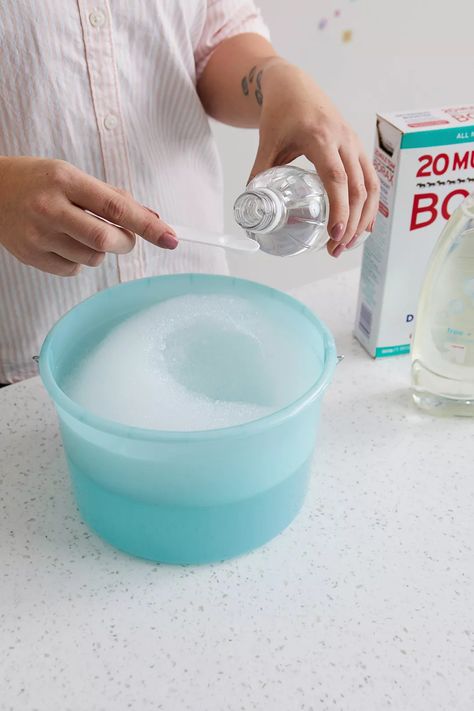
How do you remove mould from a wall?
Whichever product from the list above you choose, the procedure is similar. In its guide to mould and moisture in the home, the US EPA advises cleaning up mould as soon as possible and dealing with the source of the moisture at the same time.
- Find the cause. Is water leaking in, is damp rising from the ground, or is it condensation on a cold wall?
- Protect yourself. Wear gloves, sealed goggles without ventilation holes and a respirator so that you do not breathe in spores. Ventilate the room while you work.
- Smooth surfaces such as tiles or washable paint should be scrubbed with water and detergent or treated with an anti-mould product according to the manufacturer’s instructions.
- Treat plaster and plasterboard with a disinfectant with a fungicidal effect, as recommended for affected areas by the National Institute of Public Health (Státní zdravotní ústav).
- Let the area dry. It only makes sense to paint a dry, cleaned wall, ideally with paint containing an anti-mould additive.
- Wash or throw away cloths and sponges after the job so that you do not spread spores around the home.
On absorbent materials, every kind of cleaning has its limits. The EPA warns that mould can grow into pores and crevices, from which it is difficult or even impossible to remove. It is therefore sometimes more sensible to replace affected plasterboard, wallpaper or a section of plaster.
Science has no clear answer to the question of which product works best. In a 2019 review for the New Zealand Ministry of Health, Peter Cressey of the New Zealand institute ESR noted that there is very little scientific evidence behind advice on mould removal. According to him, some evidence supports a combination of chlorine bleach and detergent, but the study results are not consistent. He described the EPA approach as the safest for health, that is, removing affected material where possible instead of relying on chemicals.
What not to mix and what does not work on mould
Never mix sodium hypochlorite, the active ingredient in chlorine-based anti-mould products, with other cleaning products. Products containing it carry a hazard statement on the label warning that dangerous chlorine gas may be released if used together with other products. Safety data sheets for hypochlorite explicitly warn against mixing it with acids, and vinegar is an acid too. The EPA points out that toxic fumes are also produced with ammonia, which some cleaners contain.
Do not use them in quick succession on the same spot either. If you want to try vinegar after a chlorine-based product, first rinse the wall with water and let it dry. The same applies to an anti-mould spray and any other cleaner you happen to have to hand.
What definitely does not work is painting over mould. The EPA warns that paint applied to a mouldy surface is likely to peel, and advises removing the mould and drying the wall first. In the Adelaide study mentioned above, even 70% alcohol did not work on the tested moulds, so alcohol alone is not enough for a wall.
When are home remedies no longer enough?
Cleaning at home makes sense for smaller, fresh patches. The US EPA states that you can handle an area smaller than roughly 10 square feet, or about 1 m², yourself in most cases. For a larger area, or mould that quickly returns after cleaning, call in a specialist company.
Also contact a specialist if the wall is damp even in summer or the damp is spreading from below. The National Institute of Public Health points out that with construction defects, water usually gets into walls over a long period, often in small amounts, and the defect must be fixed to solve the problem. This is when masonry remediation, damp proofing or insulation come into play, the more expensive methods we mention in the introduction.
A specialist company can also carry out disinfection on a larger scale. According to the SZÚ, it is also possible to take samples, identify which moulds are growing in the home and estimate the health risks based on their type.
How do you stop mould coming back?
Mould needs water, and you can take that away from it. The National Institute of Public Health (Státní zdravotní ústav) recommends a temperature of 20 to 22 °C and a relative humidity of 35 to 50% on its indoor environment website. Bohumil Kotlík from the National Institute of Public Health (Státní zdravotní ústav) stated an optimum of 45 to 55% for the Czech News Agency (Česká tisková kancelář) in 2022. The US EPA gives 60% as the upper limit. How to measure humidity at home and what values apply in different seasons is discussed in the article on optimal humidity in the flat.
Ventilate briefly and intensively, always straight after cooking, showering and drying laundry. In winter, do not let any room cool down completely, not even the bedroom or a room you are not currently using, because moisture condenses on cold walls first.
Move wardrobes and beds on external walls a little away from the wall so that air can circulate behind them. If something spills or leaks, dry the area as soon as possible. According to the EPA, mould will not grow in most cases if damp materials dry within 24 to 48 hours.
Mould in a rented flat, who pays?
In a rental, it depends on where the mould comes from. Section 2257 of the Civil Code (občanský zákoník) requires the landlord to keep the flat fit for use, while the tenant carries out and pays only for routine maintenance and minor repairs. Government Regulation No. 308/2015 Coll. (nařízení vlády č. 308/2015 Sb.) explicitly counts painting and plaster repairs as routine maintenance.
If the mould is caused by a construction defect, such as leaks, damp masonry or a thermal bridge around a badly fitted window, removing it is the landlord’s responsibility. If it arises mainly because the flat is poorly ventilated and heated, the tenant may be to blame. The WHO guidelines mentioned above divide it in a similar way. According to them, the building owner is responsible for construction and maintenance free of excessive moisture, and the occupants for how they handle water, heating and ventilation at home.
Under Section 2264, you must report mould that prevents normal living to the landlord without undue delay, ideally in writing and with photos. Under Section 2265, the landlord must remove it within a reasonable time. If they do not and the defect is substantial, you can remove it yourself and claim reimbursement of reasonable costs, or a rent reduction. Anyone who does not report the defect in time is not entitled to reimbursement of costs.
You can prevent disputes by recording and photographing the condition of the walls in the handover report when you move in. If you and the landlord disagree about the cause, a report from a construction expert can help by determining whether it is a building defect or a result of how the flat is used.
Whether you choose a home remedy or a shop-bought product, mould will only disappear for good if you take away its moisture. Find the cause, ventilate, heat evenly and deal with patches straight away while they are small.
Leave a Reply