
Top 10 famous buildings of the world
They are iconic, interesting, simply amazing. Notable buildings of the world are different for every country. For some, they are Egyptian monuments, for us Karlštejn or Český Krumlov. The advantage is that everyone recognises them at first glance, as they have become symbols of a certain place or era. Besides, in some destinations you can also do very well and do business.
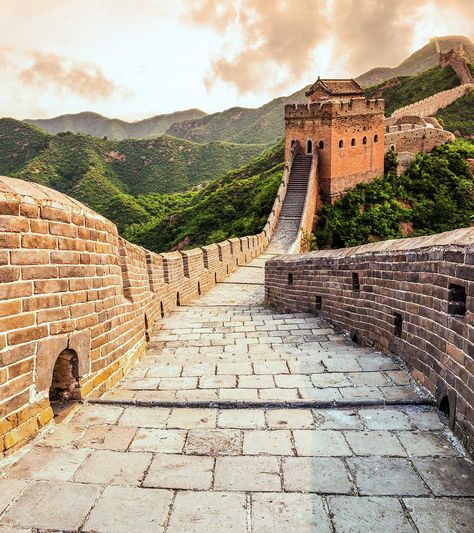
1. The Great Wall of China
If you travel to China, you will most likely visit a true historical gem. The Great Wall of China certainly ranks among the world’s landmark buildings. It was built from the late 15th to the 16th century and incorporated sections of wall that had already stood there for about 2,000 years. Its current length is 6,350 km, and its silhouette winds through the mountains between China and Mongolia. Believe us, it will amaze you too. It also symbolises the enormous effort that went mainly into defence systems. If you prefer fewer tourists, visit the section from Simatai to Jinshanling. At the most famous part of the wall in Badaling it is packed with people.
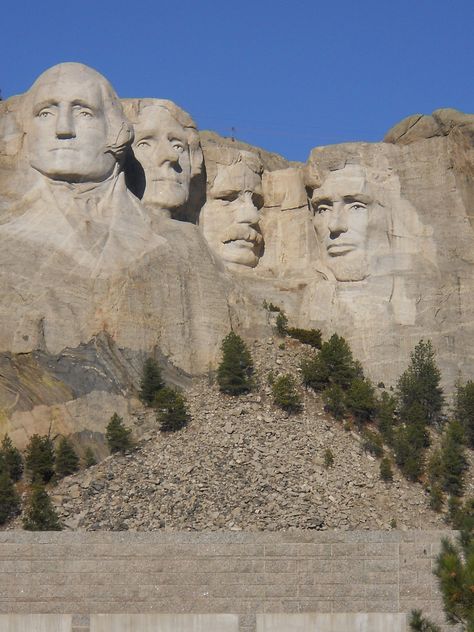
2. Mount Rushmore, USA
In South Dakota, in an area known as the Black Hills, stands this monument. The 18 m high faces of four American presidents (Washington, Jefferson, Lincoln and Roosevelt) were carved into the rock face. This unmissable monument was planned by Doane Robinson, who intended it to feature figures from American folklore. However, the sculptor Gutzon Borglum, who had also been a pupil of Rodin, decided otherwise. Between 1927 and 1941 he set about carving these giant portraits. And success came very quickly.
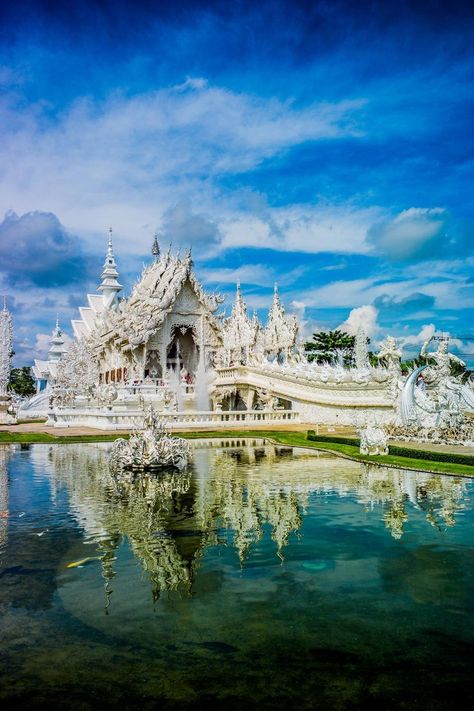
3. White Temple, Thailand
The White Temple, or Wat Rong Khun, is one of the most beautiful buildings, impressing visitors with its originality and architectural design. It is a religious complex located in the city of Chiang Rai. Every year thousands of tourists come here to see this exceptional building. Its main feature is its white, almost snow-white colour, which represents the purity of the Buddha. Pieces of glass added to the render symbolise the wisdom of the Enlightened One. Its creator is Chalermchai Kositpipat, who only began the building in 1997 and is still working on it today. Interestingly, he funds the construction solely from money raised by selling his paintings. The question is whether paintings can be hung without nails… He firmly turns down offers from sponsors so that he is not influenced by them.
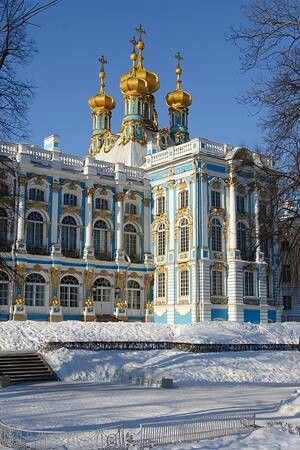
4. Catherine Palace, Russia
For some it is kitsch, for others an interesting and lavish building. The palace was built in the Baroque style with a blue façade. Later, by decree of Empress Elizabeth Petrovna, it was rebuilt and took on its present appearance. In the northern part stands a five-domed palace church crowned with gilded cupolas. In the southern wing there is a tower with a gilded dome and a star. In total, 100 kilograms of pure gold were used. Tourists come mainly to see the replica of the Amber Room, which disappeared somewhere during heavy fighting in the war and still attracts treasure hunters, dreamers and historians alike.
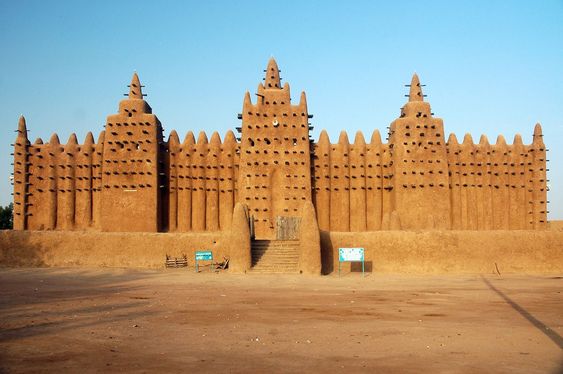
5. Great Mosque, Mali
You will find this imposing building in Djenné, and it is the finest example of the Sudano-Sahelian style. It is also the largest building made of sand in the world. However, it is not the original building, as it was reconstructed in 1906. It partly respects the layout and character of the original building, but European influences were also applied. Every year a festival is held at the mosque with the aim of repairing the damage left on the building by the rains. Among other things, the building is also on the UNESCO World Heritage List.
6. Petra, Jordan
It was built in 400 BC. At that time the Nabataeans lived here, and Petra became the capital of their kingdom. In its day, up to 30,000 people lived here. The ancient city, carved into pinkish-red rock, is approached through the famous sandstone canyon called the Siq, almost 2 kilometres long. You may have seen it in an Indiana Jones film. But it offers much more. If you enjoy exploring old tombs and temples, this is the place for you. You can very easily soak up the history of this ancient site. The site also includes the first theatre, which held up to 3,000 spectators.
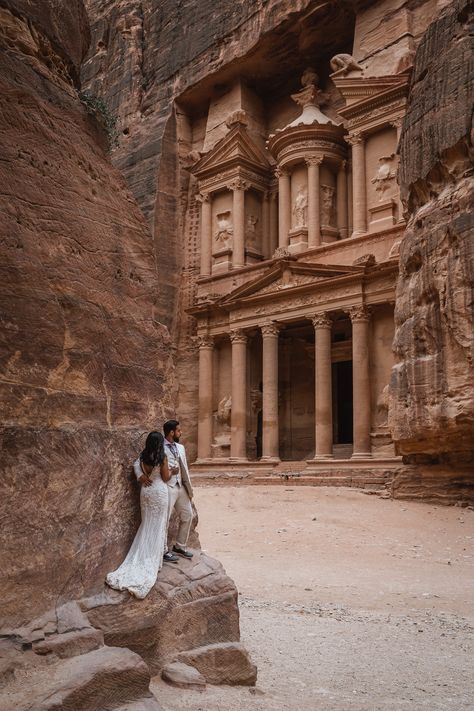
Over the years the theatre was altered by the Romans, who unfortunately demolished several important tombs in the process. However, so as not to just criticise the Romans, they managed to create colonnaded streets with a marketplace and a royal palace. The colonnade ends with a gate that separated the commercial part of the city from the sacred temples. As a point of interest, the first European to see it was the Swiss explorer and traveller Johann Ludwig Burckhardt, who travelled disguised as an Arab. Travellers of old had to resort to tricks like this.
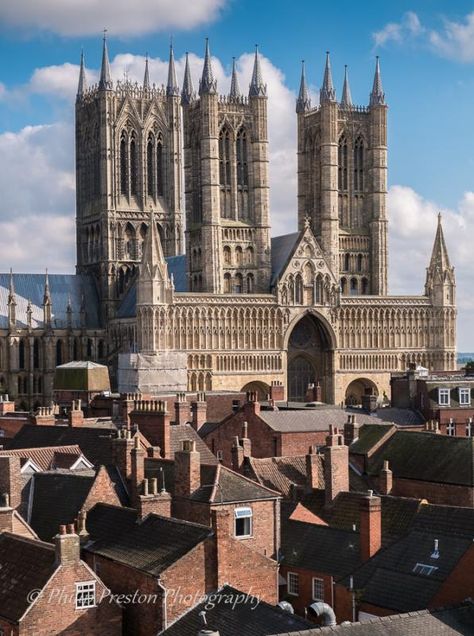
7. Lincoln Cathedral, England
Although it is only the third largest cathedral in Britain, many call it the most valuable architectural gem. And why is it so perfect? It has three towers that look out over the surrounding plains, and in 1311, when they were completed, they surpassed even the Great Pyramid of Giza. Construction began on the orders of King William I in 1072. Unfortunately, it did not escape fire either, and the building was even destroyed by an earthquake in 1185. As a point of interest, statues of Edward I and his wife Eleanor, whose remains are kept here, were installed in front of the cathedral. The cathedral also holds a copy of the Magna Carta Libertatum, or the Great Charter of Freedoms, from 1215.
8. Shah Mosque, Iran
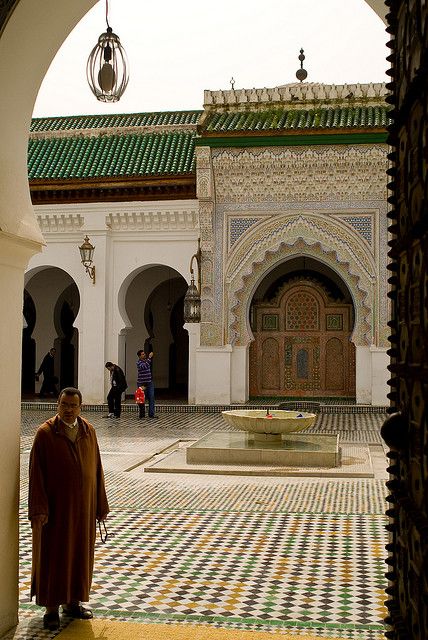
One of the finest mosques is considered to be the one in Iran, right in the royal city of Isfahan. With its glittering mosaics in seven colours and artistic calligraphic inscriptions in Arabic, it is one of the most important Islamic buildings in the world and the centrepiece of Iran’s growing tourism. The 4 iwans, or entrance portals, which are a typical feature of the Persian architectural style, should not be overlooked either. The massive dome also produces an interesting acoustic effect.
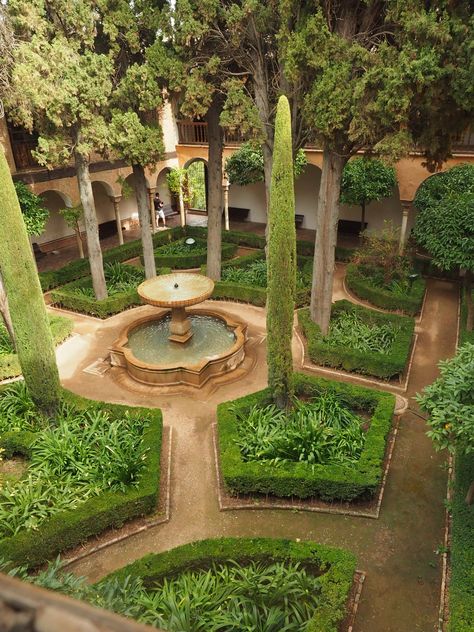
9. Alhambra, Spain
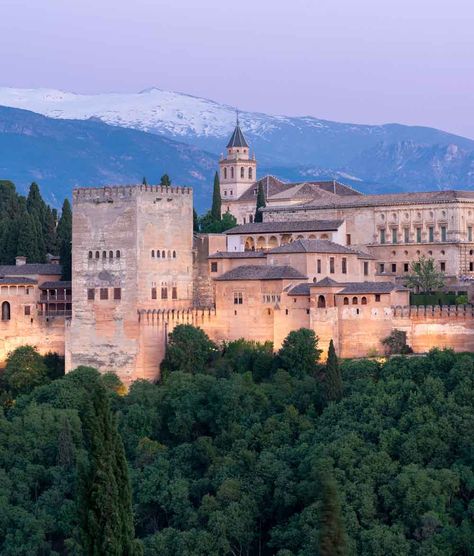
It is a medieval complex of palaces and fortresses in the Moorish style, and it certainly ranks among the world’s landmark buildings. You will find it in Spain. In Arabic, Alhambra means red, which is probably related to the fired bricks made from high-quality gravel and clay. It resembles many medieval Christian fortresses in its division into 3 parts: the castle, the palace and the residential annexes for the subjects. The oldest part, the Alcazaba, was built on an isolated, steep spur that divides the plateau in the north-west, but only its massive outer walls, towers and ramparts remain. The Moorish palace contains the Court of the Myrtles, where you will find a pool lined with marble. It is full of goldfish and surrounded by myrtles. The Alhambra is also on the UNESCO World Heritage List.
10. Colosseum, Rome
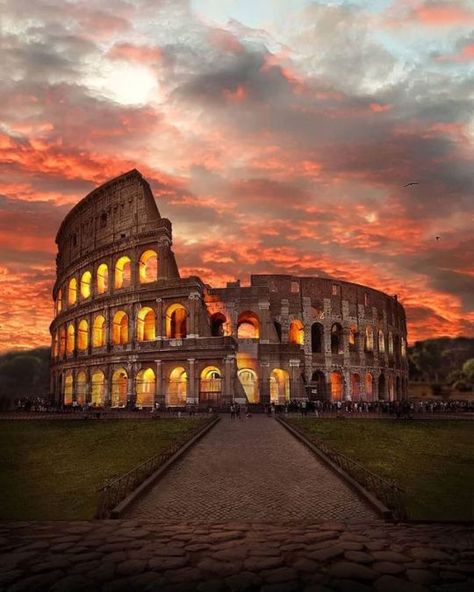
The largest oval amphitheatre, standing in the very centre of Rome. Its construction began during the reign of Vespasian and was completed under Emperor Titus. Originally the Colosseum could hold up to 50,000 spectators and was often used for gladiator fights and naval battles. Today it is one of the most visited monuments. On the upper floor you will find a museum dedicated to Eros.
The world’s landmark buildings include a whole range of monuments, and unfortunately some did not make it into our article. What we do know for sure is that in their uniqueness they come close to the tallest buildings in the world, which are just as impressive.
Leave a Reply