
How do solar charging stations for electric cars work?
The number of electric cars sold rises steeply every year. One of their biggest advantages is certainly zero-emission driving, which means cleaner air and less impact on climate change. Solar charging stations are now mostly taken for granted, especially if you have one at your own home. Just like a shared room for a boy and a girl, charging stations have their own rules. But are you sure you know how they work?
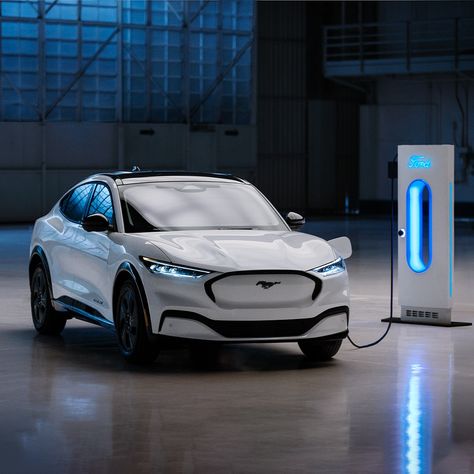
Charging an electric car
I recently read a book by Peter Wohlleben, in which he described his experience with an electric car. Peter lives in Germany, and once he and his wife needed to drive to a town on the other side of the country. He was not worried, as he thought he had an electric car. But he was wrong. Peter and his wife made it to the town, but on the way back they only got home with great difficulty. They switched off the air conditioning and the radio and adjusted their driving so that they would make it. And that was even though it was very cold outside. So why did they have such problems? Because they did not manage to charge their electric car in time. Peter mentioned this story in his book to point out that even this way of driving is not the best or the most brilliant. It still has some catching up to do. Personally, I think other factors matter too. For example, where can you charge your electric car ? Take a look at the map, which will certainly become denser over time.
You can charge at solar charging stations on the public network, at work or at home. So why not take advantage of it?
Public network: you will find them at supermarkets, in car parks or at petrol stations. The downside is that you may not always find a free spot. In addition, the price per kW is much higher than when charging at home.
At work: if your company has several cars, an electric car will certainly come in handy. Installing charging infrastructure can also be an attractive benefit for employees.
What is the difference between AC and DC charging?
- AC (alternating current): charging is slower, and alternating current flows into the electric car from the charging point, wallbox or socket. The car then has to convert it into direct current in its on-board charger. You will come across this system more often in homes. On the other hand, the advantage is that every electric car supports AC.
- DC (direct current): this uses direct current straight away, so charging sometimes takes as little as 30 minutes. It is ideal for journeys. Charge up quickly and you will soon be on your way again. DC may be exactly what Peter Wohlleben was missing.
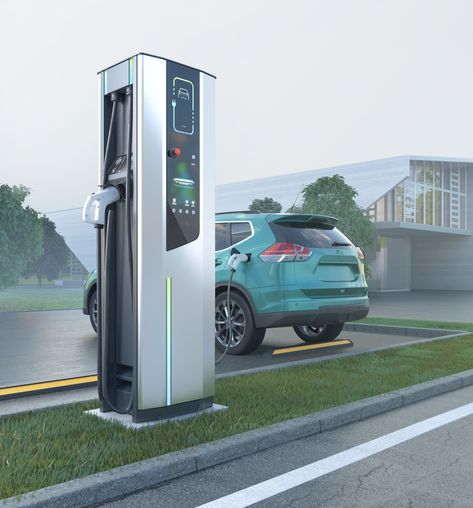
What is a wallbox and how does it work?
It is a home charging station that is ideal for your electric or hybrid car. And how do you use it? You connect it safely to the electric car and the whole process runs by itself. What are the other advantages?
- It is fast, up to 10 times faster than a household socket
- You will certainly appreciate the flexibility, as it is available to you at any time.
- Safety goes without saying. With a household socket, the cables can overheat and catch fire.
- For sustainability, you can use green electricity produced by your own solar panels to charge your electric car
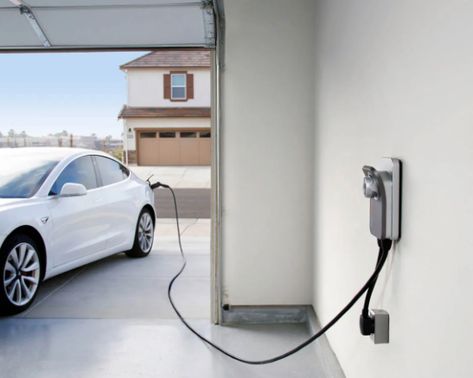
- A wallbox is usually mounted on the wall of the house, ideally near the garage. This provides safe, fast charging and plenty of convenience.
- You can also control it remotely.
Uneven energy
Photovoltaic panels produce uneven energy that is also highly variable. That is why it is not fed directly into the electric car’s battery. Every solar panel installation must also include an inverter, which converts the electricity so that it can be used in the home network.
A charging station combined with an energy management system predicts the ideal time for charging. This lets you use the energy you produce yourself, so you do not have to buy electricity from the grid.
So when you are looking to buy, for example, a bungalow on a slope, do not forget a suitable charging station. After all, with the right choice you will save on electricity too.
Leave a Reply