
How long does it take a heat pump to heat a swimming pool?
If you are choosing the right pool, do not forget the accessories you will need. Before you start planting around the pool, take a look at renewable energy too. A heat pump produces heat that is cheap and available all year round, so why not use it for your pool as well?
Some forms of renewable energy are not really suitable for a pool.
The truth is that some forms of renewable energy are not entirely cost-effective. Some do not work at night or deliver little output in winter. In addition, fuels such as wood are among the riskiest in terms of price. The reason is simple: the long-term effects of the bark beetle outbreak. Until the forests grow back, wood will be more expensive and in short supply.
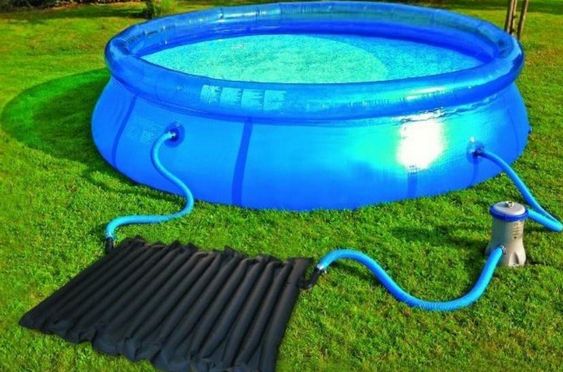
Choosing the right heating
Pools can be divided into two categories:
- Outdoor
- Indoor
Interestingly, outdoor pools lose the largest share of heat through evaporation from the water surface, which often accounts for up to 90% of total losses.
That is why the outdoor temperature and wind matter. With an open, uncovered surface in frost and wind, losses can exceed 1 kW per 1 m2 of water surface. Under normal conditions, a rough loss of 0.15 to 0.20 kW/m2 is assumed.
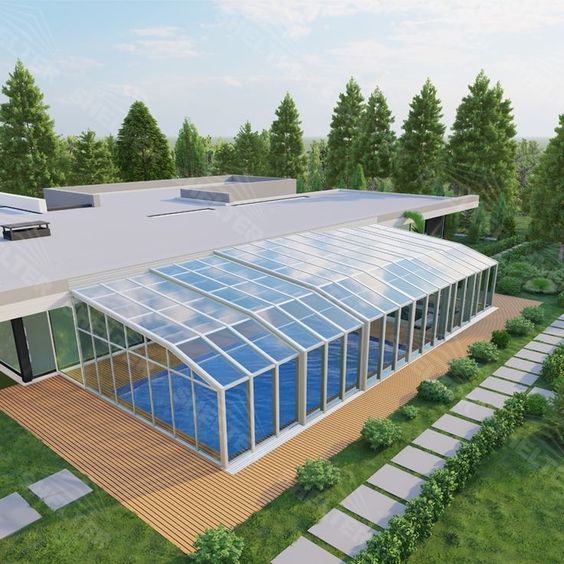
If you cover your outdoor pool well or put a roof over it, heat loss from the water surface will drop significantly.
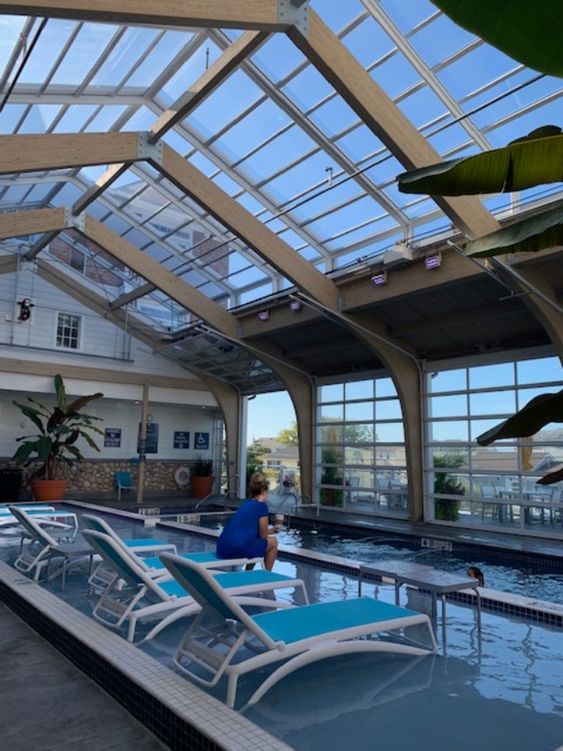
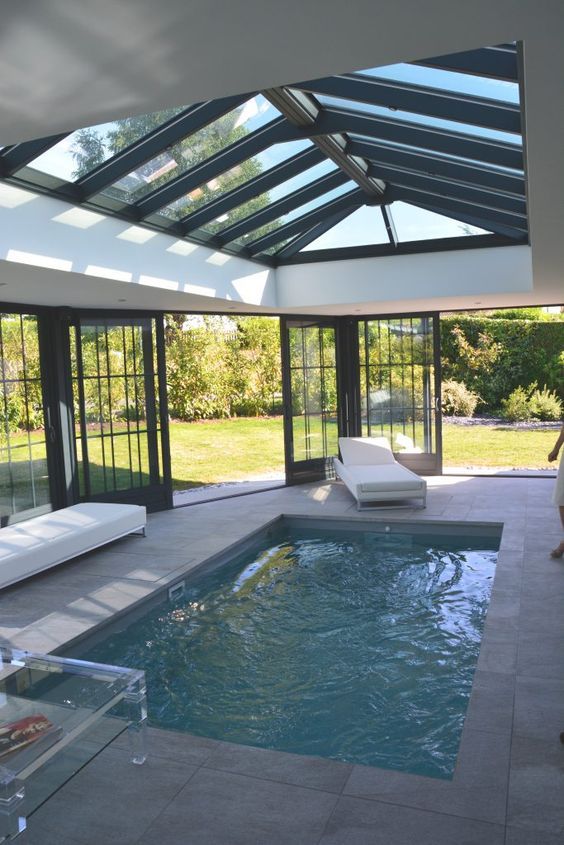
To choose the right heat pump for an indoor pool, you also need to include the heat loss of the pool hall. This depends on the temperature you want in the pool room.
How heat pumps work
Using a cycle of compression and expansion of a heat transfer fluid, your heat pump extracts heat from the air around the pool. A fan draws air into the evaporator, where heat is transferred to the heat transfer fluid. The fluid is then carried by the compressor, which compresses and heats it, to the coils of the heat exchanger, where it passes its heat to the pool water. From the heat exchanger, the cooled fluid flows to the expansion valve, where its pressure is reduced and it cools down sharply. The cooled fluid then flows back to the evaporator, where it is warmed by the flowing air. The whole process runs continuously and is monitored by pressure and temperature sensors.
Heat pumps for heating pool water and keeping it at temperature are designed exclusively for this purpose. Any other use is considered unsuitable.
What temperature can you reach in a pool?
The water temperature in a pool should not exceed 30 °C. Water this warm would not refresh you much on summer days, and it also creates conditions for heat-loving algae. Some pool components may also have temperature limits. That is why experts recommend not setting the thermostat higher than the 30 °C mentioned. A heat pump is most efficient at air temperatures of roughly 15 to 25 °C. Below +8 °C the unit has low efficiency, and above +35 °C it may overheat. So do not use the unit outside the range of 8 to 35 °C.
Where to place the heat pump
Choosing the right spot for the heat pump is very important. The basic requirement is that it has enough space around it. The rear and side walls should be at least 50 cm from the nearest obstacle (for example a house wall). The front of the heat pump with the fan should have at least 250 cm of free space in front of it, ideally in sunshine for as much of the day as possible. Place the pump itself in the shade, protected from direct sun, and under a small roof, protected from the weather. Install it at least 350 cm from the pool. It is also best if it does not face a road with car traffic and is not hidden among plants, so that it does not needlessly draw in dust, pollen or exhaust fumes.
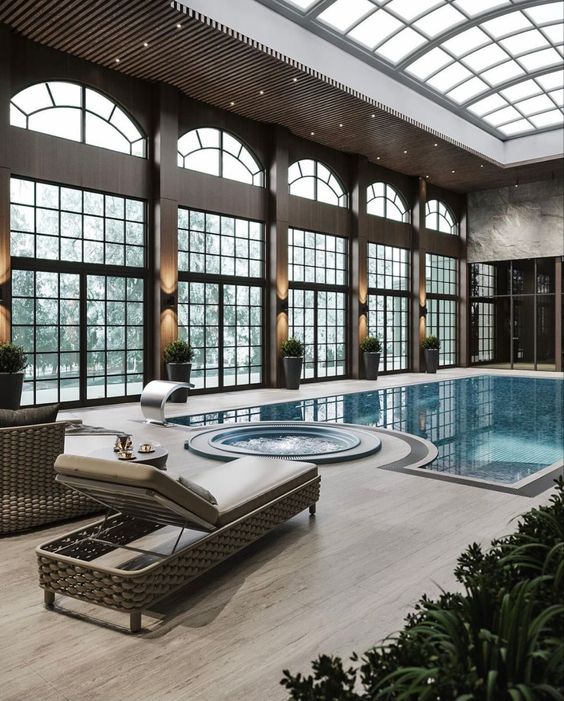
A heat pump warms the pool, so you can swim at a temperature that feels pleasant and comfortable even in the cooler months. And if you have young children, it will also help you fight childhood obesity effectively.
Leave a Reply