
What is heat recovery ventilation?
Proper ventilation is the foundation of every home. Modern houses have several advantages. Perhaps the most interesting and important is heat recovery, which older generations could only have dreamed of. So what exactly is it? And what are the benefits of such a convenience? Think positively and improve your health with heat recovery.
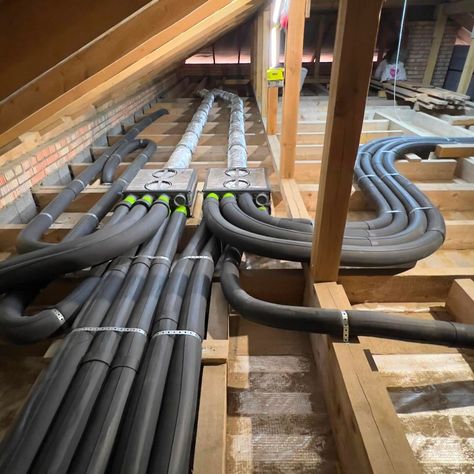
What do we mean by heat recovery?
It is the recovery of heat. Fresh air from outside passes through a heat recovery exchanger, which is located in the air handling unit. Warm exhaust air from the building enters from the other side. The two are kept apart by a system of channels so that odours do not leak back in. The channel walls then allow heat from the exhaust air to pass into the supply air, which is preheated as a result. The exchangers can transfer up to 90% of the heat.
How does heat recovery work in summer?
Summer weather is a different matter. Combined with a ground collector, a heat recovery unit can be used as natural air conditioning. Cool air at a temperature of around 15 degrees Celsius is blown into the living spaces by a fan.
Advantages and disadvantages of heat recovery
An essential part of a heat recovery unit is effective filtration, which traps dust, dirt and pollen. By contrast, conventional ventilation does not trap any dirt, which is why it is so unpleasant, especially for allergy sufferers. But what are the other pros and cons?
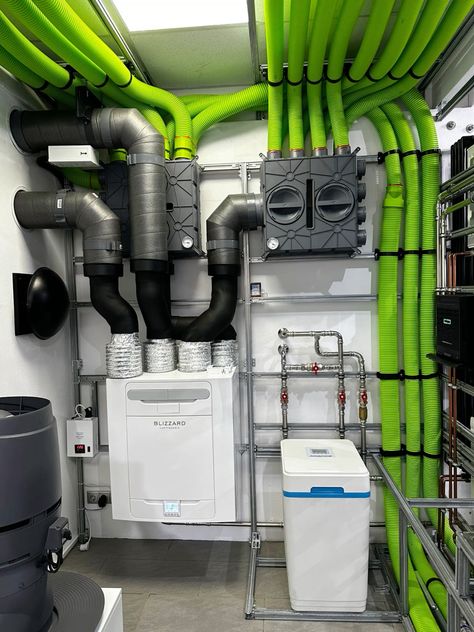
Advantages
- Better air quality
- You save on heating energy
- No draughts
- Humidity control
You can install heat recovery even in a freshly renovated log cabin, for example. Just consult experts in the field beforehand.
Disadvantages
- High purchase price
- Allow for maintenance costs
- It takes a while for the investment to pay off
- You can still open the windows, but it will no longer be as effective
Types of heat recovery
Passive heat recovery: stale air and fresh air are both passed through the exchanger. Before the exhaust air leaves, it transfers part of its thermal energy to the fresh supply. Bear in mind, however, that heat recovery is of practically no use in summer. Passive heat recovery only reduces heat loss in winter. It is a relatively inexpensive system.
Active system: exhaust air passes through the cold evaporator of a heat pump and, before leaving the house, transfers most of its thermal energy (including the condensation heat of water vapour) to the refrigerant. The refrigerant then passes this thermal energy on to the incoming air. Active heat recovery is also more expensive. In the summer months it can work as effective air conditioning.
Central ventilation system: this has one large central control unit, to which a network of ducts leads and where heat is recovered from the exhaust air. The heat recovery unit is usually located in a plant room, where the system takes care of everything. Bear in mind, however, that central heat recovery usually has to be included at the house design stage.
Decentralised ventilation system: this is a solution without a main unit. Its advantage is the price. You will especially appreciate it in the bedroom, where it provides clean air even at night.
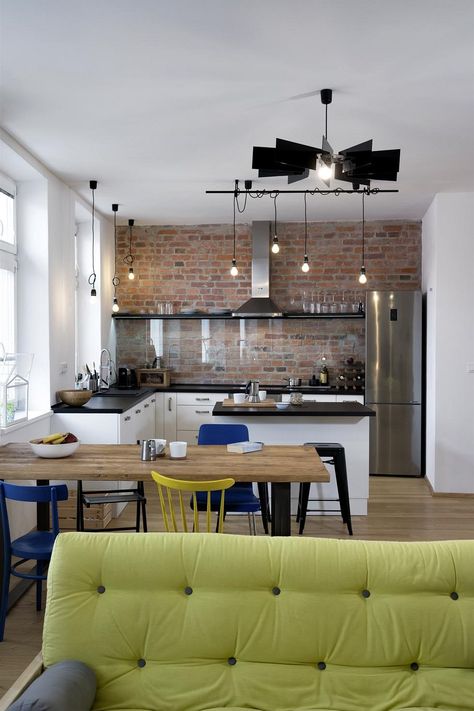
You can also have heat recovery installed in your bungalow on a slope, and you will find that over time you will be glad you did.
Leave a Reply