
Dracaena types and the best places to grow it
Do you like palms? Then you will like dracaena. It is grown as a houseplant, yet it needs no special care. It comes from the subtropical regions of Africa and Asia. There are several species, and some even look like shrubs.
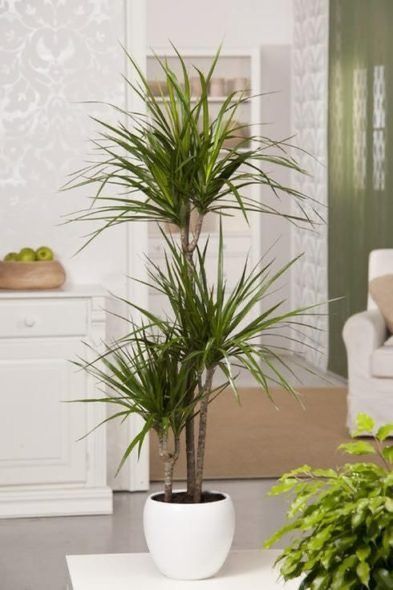
Where should you put it?
For it to grow well, you need to choose a suitable spot in advance. Dracaena likes a bright spot. However, do not place it in direct sunlight or in shade. It does best at room temperature: 20 to 25 °C in the summer months and around 15 to 20 °C over winter. Also make sure the room is not draughty, as it does not like draughts either. You could also try placing it by the pool. It is so undemanding that it should not suffer there in the summer months.
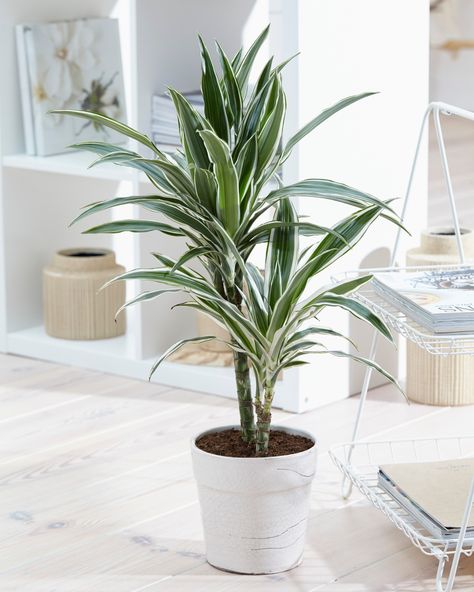
Watering dracaena
The region this plant comes from has fairly high air humidity, so it needs plenty of moisture, especially in the summer months. You can also use a spray bottle or wipe the leaves with a damp cloth. It also likes an occasional shower in lukewarm water. Water the plant 3 to 4 times a week, only very lightly, and never let the soil dry out.
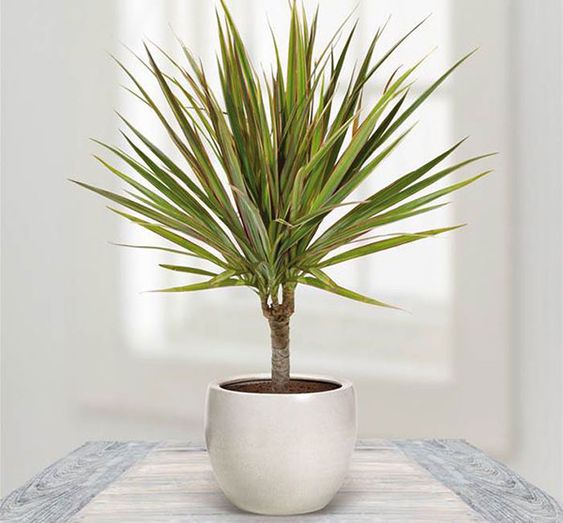
How do you repot dracaena?
If you have been growing it for many years, you do not need to repot it straight away. It is enough to replace the top layer of soil. For repotting, use a peat-based compost or a mix of compost, sand, peat and leaf mould.
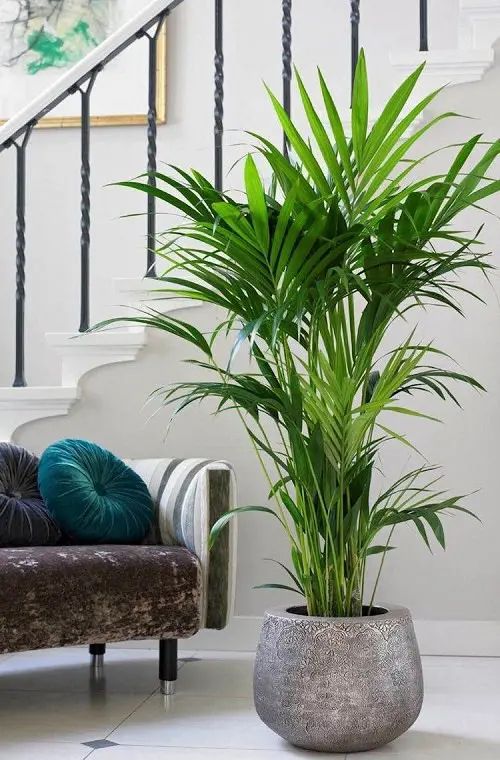
Species
Dracaena fragrans
This is the most commonly grown dracaena. It also suits flats that do not get much sun. It does well near a south- or east-facing window. Its typical feature is green and yellow stripes. If you look after it well, you will be rewarded with beautiful fragrant flowers.
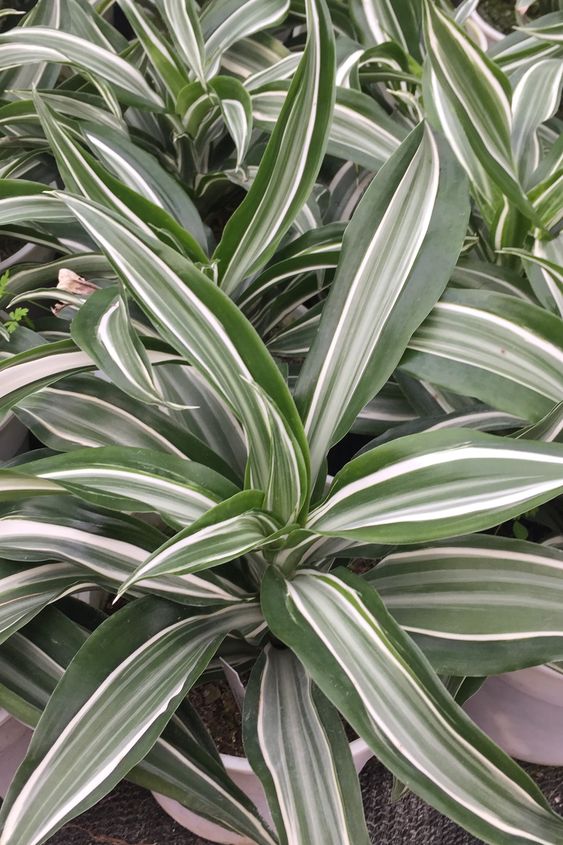
Dracaena deremensis
It grows in both sunny and lightly shaded spots. You can recognise it by the white stripe running along the full length of its leaves. It grows very slowly and reaches a height of 150 cm. During the growing season, you can feed it twice a month.
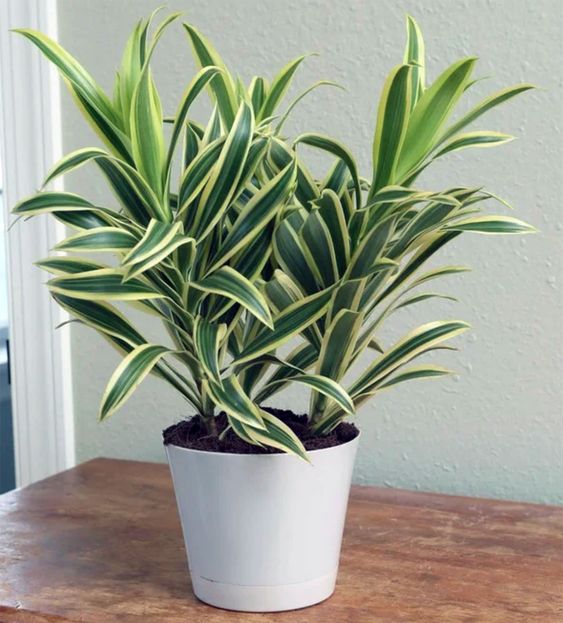
Dracaena marginata
This plant likes higher air humidity. It grows to a height of 150 cm. Its typical features are a long stem and a rosette of thin, lance-shaped leaves.
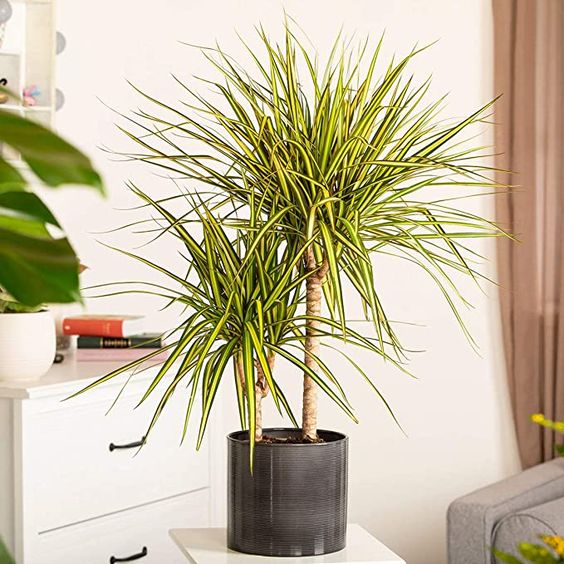
Dracaena godseffiana
This is a shrubby species with broad, oval leaves. It grows to a height of about 50 to 60 cm. Again, it needs regular watering. However, it also copes well with dry air.
Well, it is no pumpkin. This plant can actually be quite dangerous. In general, it is poisonous to small animals. That is why you need to keep a closer eye on your pets when they are near it.
Leave a Reply