
6 tips for combining conifers in the garden
Conifers will brighten up any garden, but you need to choose their combination carefully. Not all of them need the same amount of care, and if you work a lot, for example, you should not buy conifers that need intensive maintenance. You can choose from a huge range of so-called evergreens, or evergreen hedges, which bring the natural scenery to life and need little care.
Celebrate the versatility of conifers
Thanks to conifers, even a gloomy winter garden or front garden looks fresh and beautiful. Evergreen conifers are also useful in any garden design. They are unbeatable as protective screens, foundation planting, unusual backdrops for flower beds, or accents placed anywhere from the smallest rockeries to the edges of extensive woodland. Conifers also need minimal maintenance. Occasional trimming and removing dead or damaged branches is all they need.
Tip: When pruning conifers, sticky sap can build up on your skin. To remove it, use alcohol and baby wipes or a special cleaner, which you can get at a garden centre.
6 tips for combining conifers in the garden
You may be afraid to dive straight into conifers, but you will certainly be surprised that a few small trees scattered around the garden are enough to make it beautiful all year round. These 6 steps will help you make your garden more attractive with small conifers.
Tip 1, match conifers to the size of your garden
The first thing to consider when creating a planting rich in conifers is the size of the garden. Small gardens or steep rockeries are planted with small, slow-growing, dwarf or miniature trees, while larger gardens have room for medium-sized or large trees.
However, the size of the garden should never be the only deciding factor when choosing plants. Also consider the role the planting will play. Privacy screening needs large trees, even if the planting area is relatively small. On the other hand, a fully grown tree looks out of place even in the largest rockeries.
Gardeners advise:
- A large garden suits large evergreen trees (white pine, Norway spruce, silver fir), serving as a screen along the boundary and a backdrop for medium-sized conifers planted in front.
- A smaller garden suits a series of loose, raised beds planted with miniature and dwarf conifers, as well as ground-hugging perennials.
Tip 2, watch the silhouettes of conifers
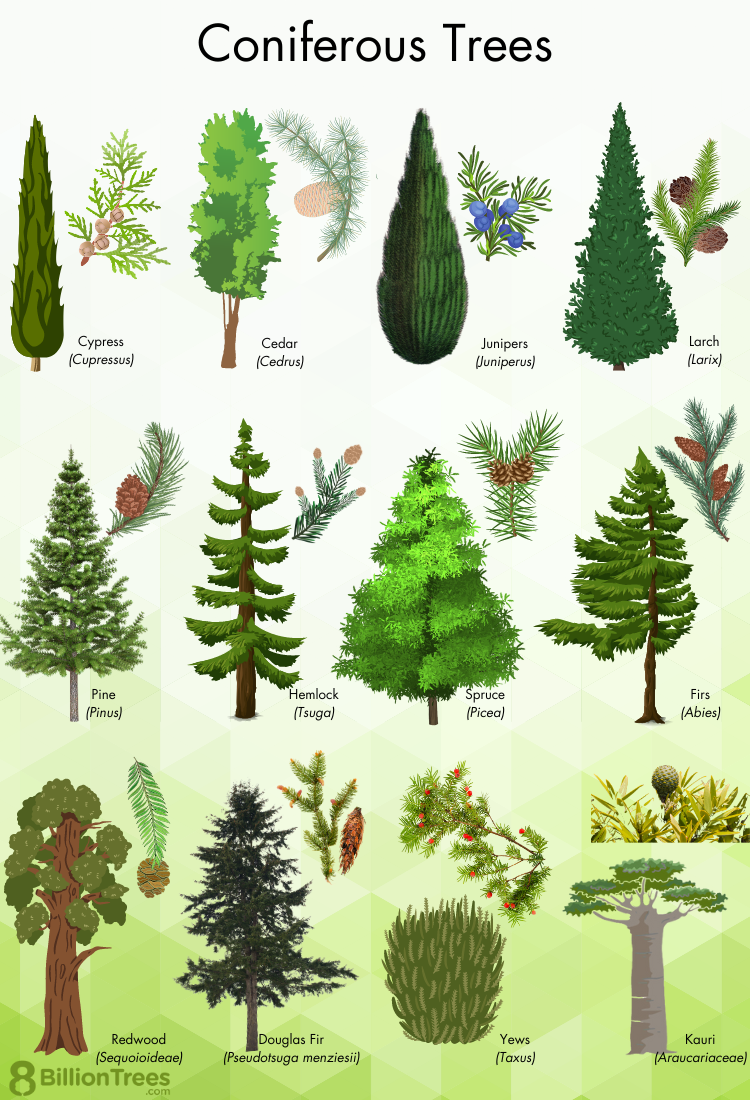
Once you have decided on the size of your conifers, it is time to think about how to combine them. The shapes of trees never change. A conifer shaped like a Christmas tree looks like a cone, whether it is 5 or 50 years old. The trick is to turn static forms into dynamic compositions and to place shapes side by side so that each tree’s individuality is emphasised by its nearest neighbours.
In fact, it is “just” a matter of combining shapes. Fortunately, almost all conifers have one of 4 basic shapes: flat, round, conical or columnar. So what about the silhouettes?
- If the plant’s lines are horizontal, it is a flat variety. An example is the juniper ‘Blue Carpet’.
- If they are upright and parallel, it is a column. An example is the juniper ‘Moonglow’.
- If the lines form an upside-down “V”, it is a cone-shaped variety. Christmas trees are a typical example.
- If the silhouette is made up of curved lines, it is a round or oval tree. An example is the blue spruce ‘Montgomery’.
Tip 3, create contrast
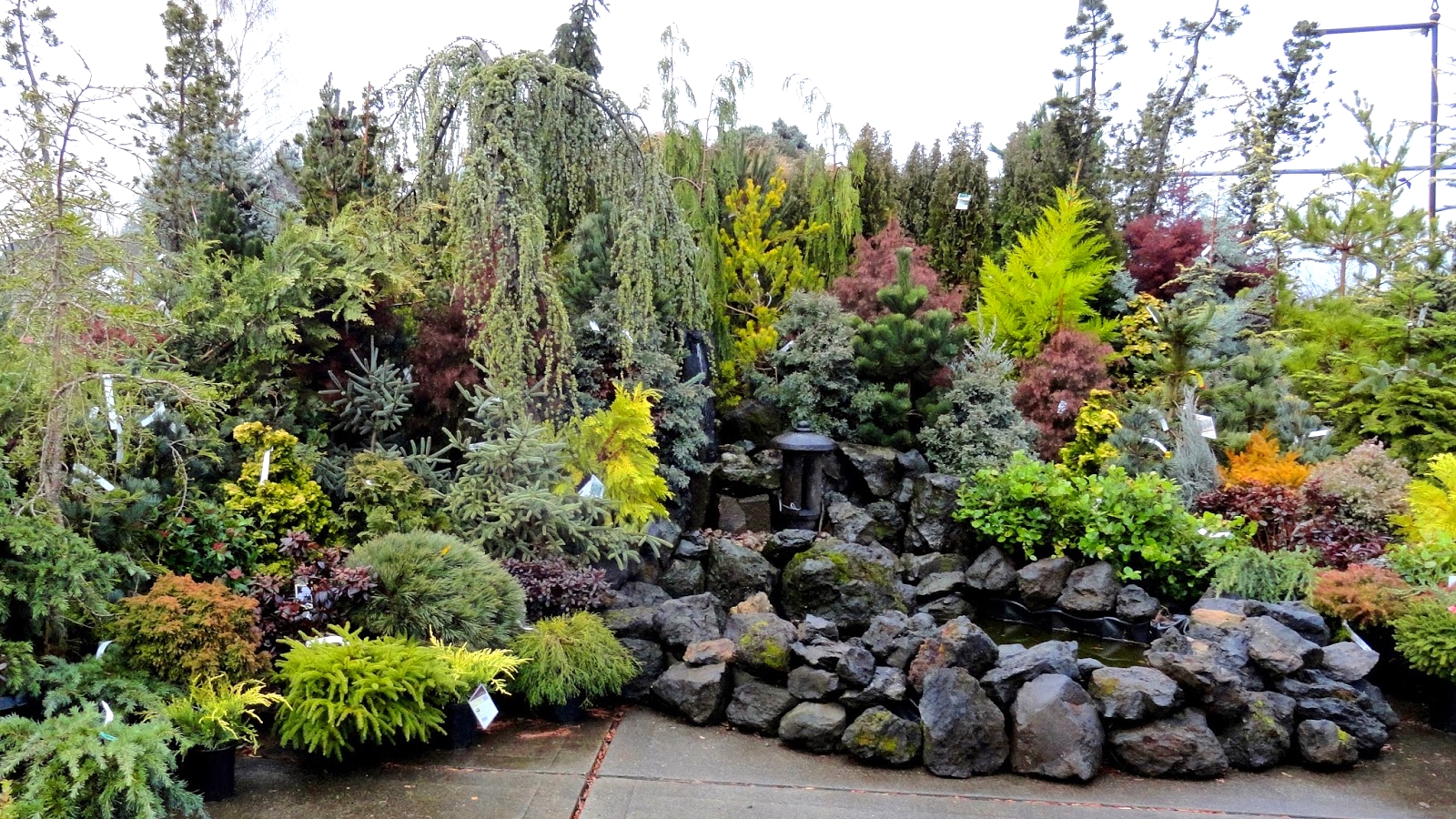
How do you create contrast and make a “living object” out of trees? The main design principle is seeking maximum contrast, which you get when you do not place 2 similar shapes next to each other. Make sure each conifer differs as much as possible from its neighbours.
You can also maximise contrast by changing the colour of each neighbouring conifer. Most varieties are available in 3 or 4 shades, from green and blue to yellow. Pay attention to the texture of the trees. Some, for example, are airy and open, while others are dense and compact.
Tip 4, put the brightest coloured trees in overlooked parts of the garden
Although conifers are mainly talked about for their potential to brighten up a winter garden, they are just as important in summer, especially in places with extreme heat where perennials suffer. In places that lack colour in the middle of a heatwave, plant colourful conifers. This will make sure the garden looks lively even during the main season, despite soaring temperatures.
Conifers have their most striking colour in full sun. Green naturally dominates, but there are also shades of yellow and gold, steel blue, white and even plum and mahogany. When deciding which conifers to plant, ALWAYS choose only 2 dominant colours, because repetition helps the garden blend together.
Tip 5, follow the rules set by professional garden designers
The basic rules of garden architects will help you find your way around designing interesting gardens.
- Rule 1: Every garden should have balanced numbers of perennials, annuals, trees/shrubs and conifers.
- Rule 2: A garden should contain roughly 25% conifers. The beds will look great and be low-maintenance, without looking like a botanical garden.
- Rule 3: Less than 10% conifers in a garden gives the impression that there are none at all.
Tip 6, do not be afraid to experiment, conifers survive almost anything
Conifers are among the hardiest and most tolerant plants, which you can plant even in inhospitable areas and still get a beautiful planting. Whatever site you have available (marshes, damp spots, steep sun-baked slopes, a sun-scorched strip along the driveway, or a shady woodland glade short of moisture), you can always be sure there is a conifer that will cope with it all.
Think of conifers as multi-purpose plants: they adapt brilliantly to any problematic terrain and at the same time make it more beautiful thanks to their remarkable form, colour and texture. Thujas, for example, survive almost anywhere (including heavy clipping), and Siberian cypress thrives in dry, shady spots.
Leave a Reply