
Tips and advice for the best children’s room
What should a child’s bedroom offer? It should have space for play, rest and study. But what furniture should go in it? And why? If you have a smaller room, you will mainly be fighting for every centimetre. But don’t despair, we will show you how best to deal with this kind of problem.
5 rules for the perfect room
- Definitely choose multifunctional furniture
- Go for light colours
- Plenty of lighting
- Install a mirror
- Decorations
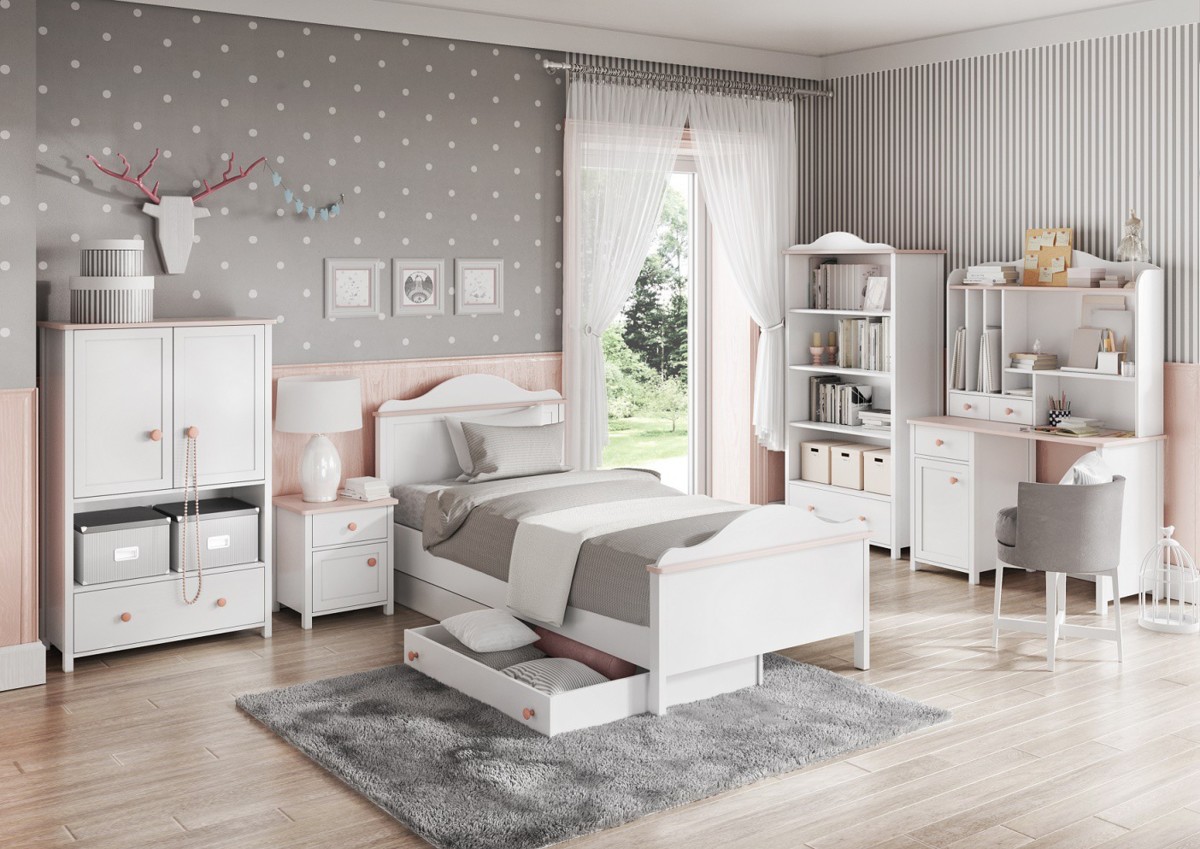
In the next section, we will look at these and other tips in a bit more detail.
1. The ideal colour
We all have our own style. Some people love dark colours, others prefer pure white. For a child’s room, however, light colours are the best choice. If you pick the right shade, the room can also feel airy. Such colours include, for example, various shades of white or beige, and pastel shades of pink, blue and green. Don’t be afraid to combine them. You can try painting with two colours, and you can mix in some grey as well.
Brown is definitely an unsuitable colour, as it is far too dull, especially for young children. Don’t forget about the floor either, which should be a little darker than the walls. Whatever you put in a child’s room, remember the well-known motto “less is more.”
2. What furniture to choose for a child’s room?
Even if times are pushing you to save money, try to do quite the opposite when it comes to children’s furniture. In the past, children’s rooms were often furnished with pieces taken from other rooms, which was a common mistake. So when furnishing a small child’s room, focus on choosing good-quality furniture that, above all, actually fits. One option is to have a furniture set made to measure. If you decide to furnish the room yourself, however, try to place all the large pieces of furniture against the walls. The centre of the room should stay free, mainly so that your child has somewhere to play.
A big advantage of some beds is that they have a built-in desk. If space allows, you can also place a desk separately, ideally by the window. Again, though, make the most of the space you have. Under the desk, you can put either a stool or an ordinary chair. Don’t be afraid to use unconventional folding furniture, especially in a small space. It can be kept under the bed, behind a wardrobe or leaning against a chest of drawers. Shelves running right up to the ceiling are also a very good solution. They hold a lot of things and are therefore ideal storage for small children’s rooms.
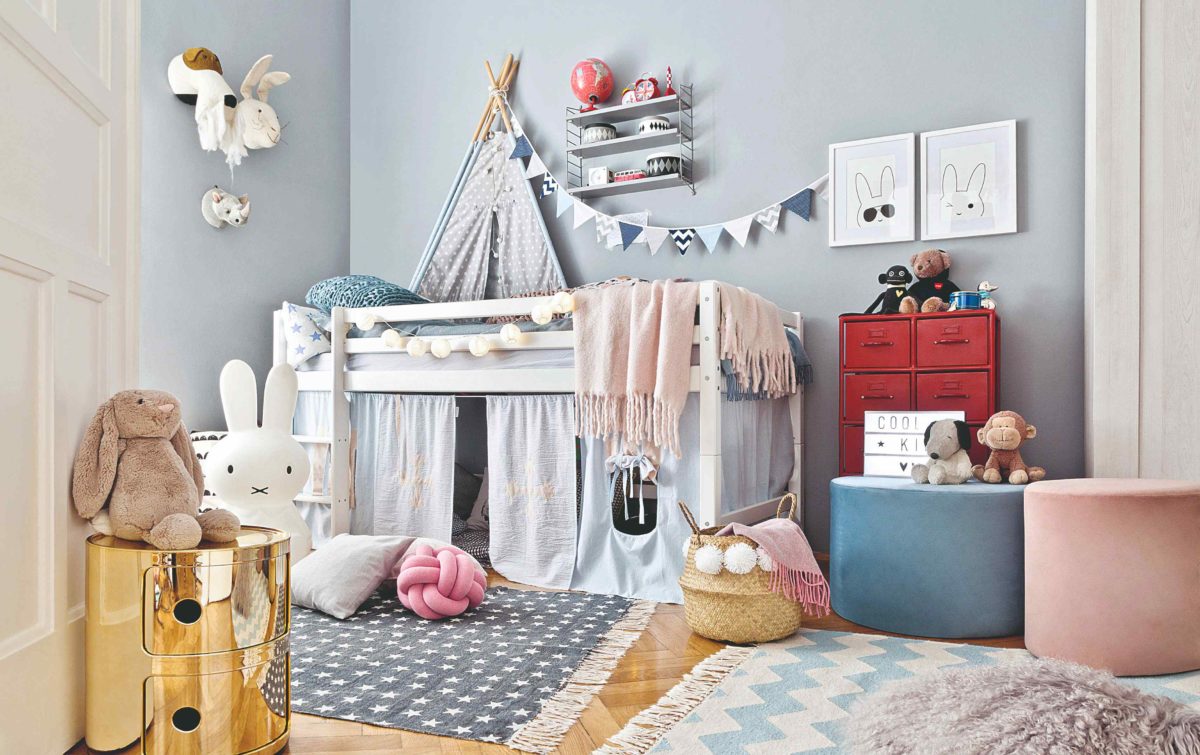
3. How to cope with a small space
As we have already mentioned, the key is choosing the right colours. And light, too. Colours combined with light can visually open up a room and make spending time there more pleasant. Remember that you will have to fit as much furniture as possible even into a small room, so try to create enough storage space. After all, toys, board games and building sets look tidier in closed drawers or boxes than out in the open. Choose white furniture or furniture made of light wood. Alternatively, you can choose a light wallpaper.
4. A girl’s room
A room for girls can be in the popular pink or in lilac. Delicacy is definitely the order of the day. You will delight a young lady with a comfortable bed, a small sofa for her friends and, above all, a large mirror. Every girl wants to dress up from an early age. The floor should have a rug where she can spend time with her dolls. Decorate a girl’s room like this with family photos, dreamcatchers and pretty pictures. Girls will love it.
5. A boy’s room
Leave boys space to roll around on the floor whenever they want to play soldiers or build roads for their cars. You can capture their interest with an eye-catching wallpaper that sparks their imagination. They can also use it in their games. Try a forest, jungle or sea theme. Finish everything off with textiles and accessories. Don’t be afraid to use superhero posters as well, as they will be especially popular.
6. A student’s room
Older children mainly want privacy. Having their own room and a door is enough for them. Even so, get them a bed, perhaps a wider one, given that they will soon be bringing their first love home. A large desk and a computer are a natural part of a room like this. But definitely let your child decide how to arrange the room, so they can say for themselves what they like and what they don’t. This also helps them form their own opinions.
7. Less is more
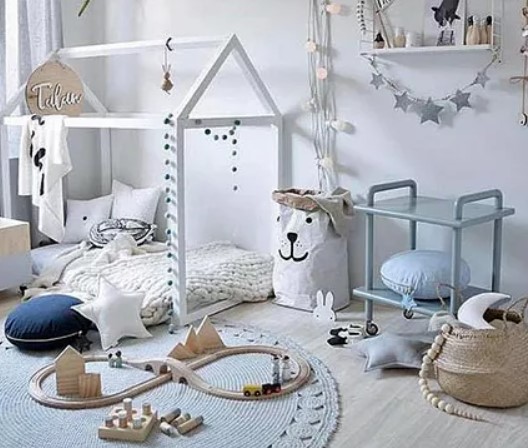
When it comes to children’s rooms, less is usually more. Simple decoration and a minimum of furniture create more space for play and a neutral space that you can easily adapt to the season and your child’s age.
This simple but adorable little room puts play first and offers plenty of free space. The floor-level bed in a house-shaped frame doubles as a play area, and open shelves allow favourite toys to serve as charming decorations.
8. A playful room
If you want to create a room your child will love, try focusing on what they enjoy most, and that is play, playing!
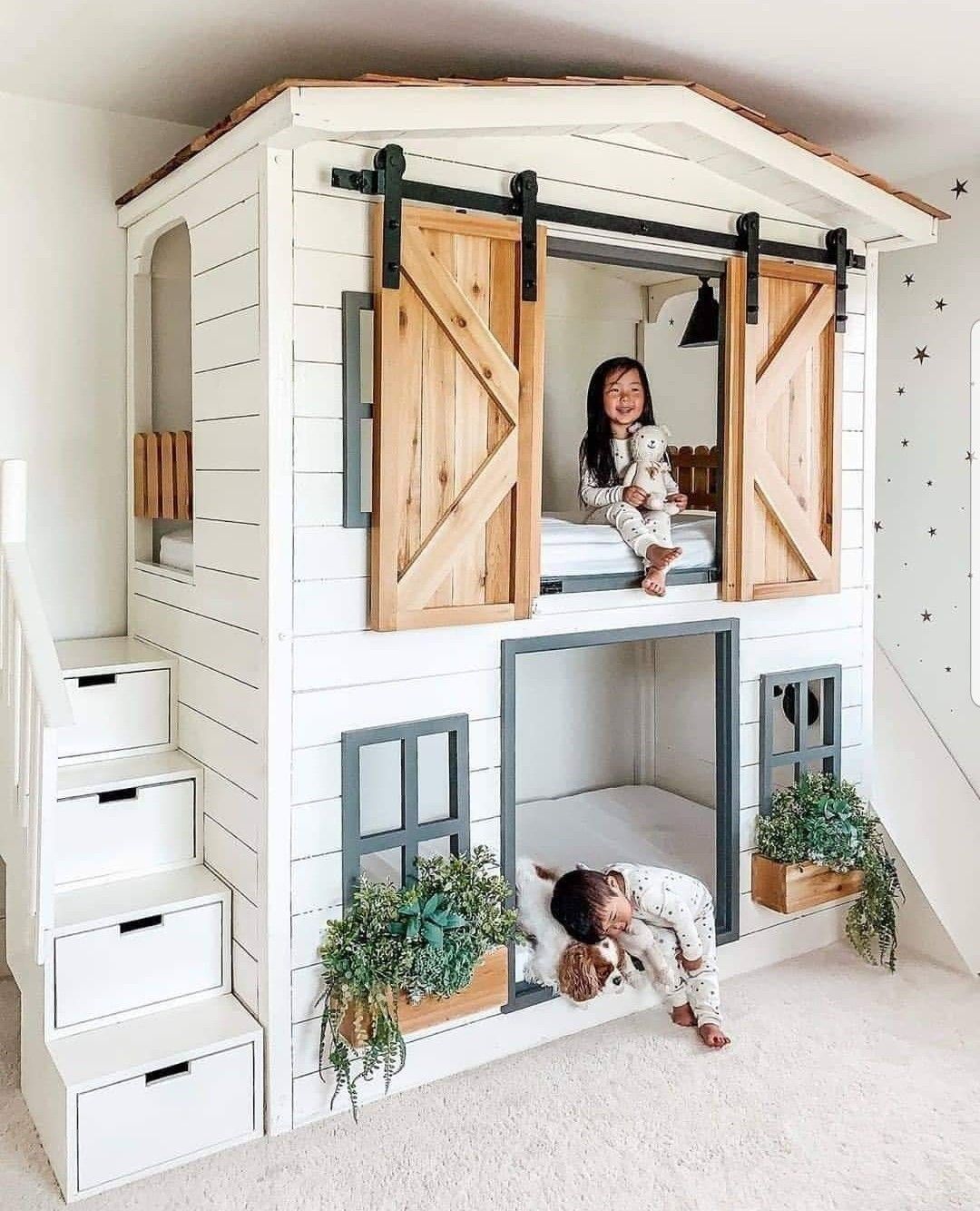
Want to add an element of fun to your design? Consider a chalkboard wall or an easy-to-update art board where your child can display their favourite creations. A built-in climbing wall, a slide on a bunk bed or a cargo net hung from the ceiling are also great choices, as they encourage play and help burn off all that excess energy every child has before bedtime.
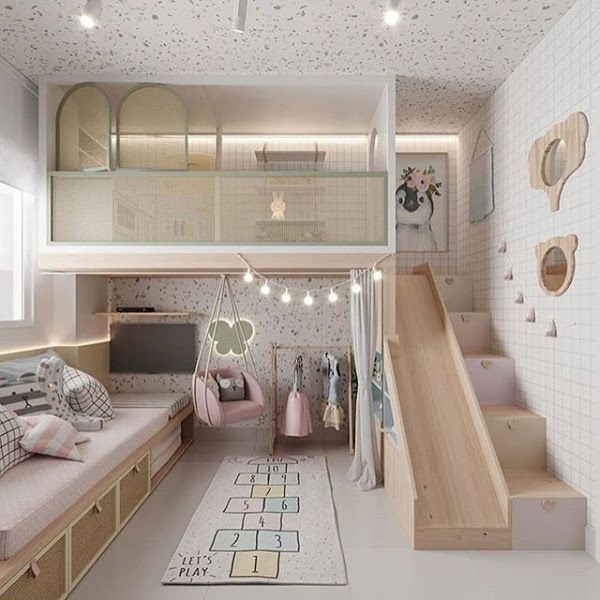
9. Textures
Wondering why the children’s rooms you see on Pinterest look so great? It is probably down to the careful use of patterns and textures.
These beautiful and often overlooked stepsisters of colour are a professional designer’s secret weapon and can transform a room from dull to stunning with just a few added elements.
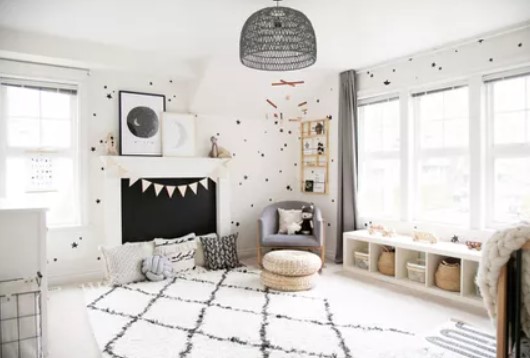
This beautiful black and white children’s room by Winter and Daisy is a perfect example, using a strong combination of rich layers of texture and a bold graphic pattern to create a balanced and visually interesting space without any colour at all.
After reading our article about children’s rooms, take a look at our article on living in a caravan, or on how to get rich.
Leave a Reply