
Suitable materials for edging a flower bed
Edging a flower bed or lawn is not only decorative but also practical. It is used to mark out areas and create a neat transition between a pavement, path, lawn or flower beds. What edging options are there?
Lawn edging and lawn kerbs
The simplest way to separate a flower bed from a lawn is with various edging stones, such as lawn edging strips and stone kerbs. Besides looking attractive, they above all make lawn care easier in the long term. Mowing along the edges becomes easier. Kerbs and edging strips are available in a wide range of designs. Depending on their height, they can be used on their own or together with bed posts, either as a walling element or to edge a raised bed.
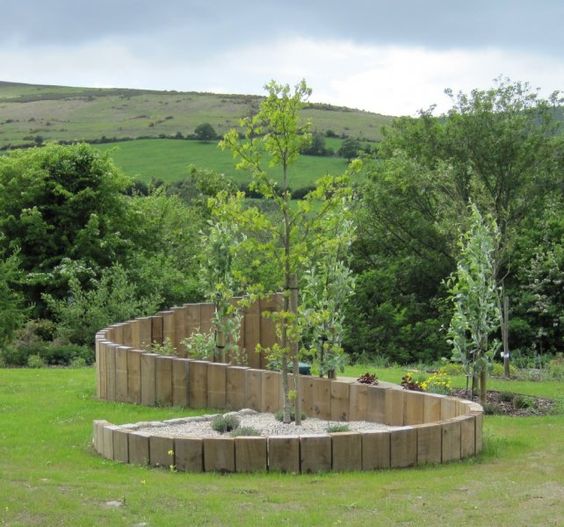
Palisades
Palisades visually separate a flower bed from its surroundings and so highlight its beauty. You can choose from several types: plastic, wooden or stone. The choice depends on your taste and DIY skills. You can buy them individually or in blocks, and the block form naturally has decisive advantages. They are quick and easy to use because the posts do not have to be put together one by one. Palisades can also be tied together with wire to form bed edging. Mini palisades are also popular.
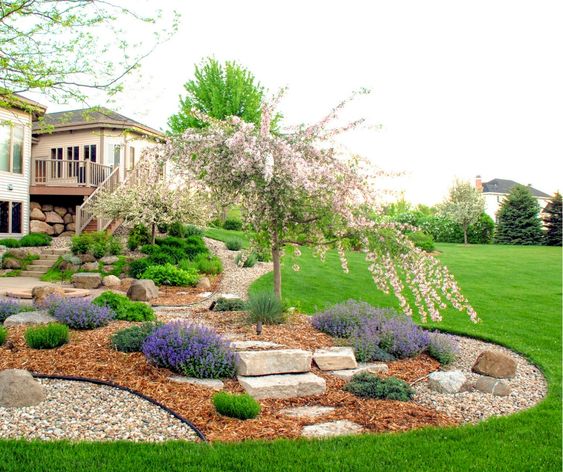
Mulching bark
You can also use bark to edge a flower bed. Mulching bark is finely chopped, unfermented tree bark. It is one of the organic bed coverings. Thanks to the mulch, tiny creatures settle in the area and increase soil fertility. After a while, the tree bark mulch starts to rot. This draws nitrogen out of the soil. To keep the balance, it is therefore recommended to mix the soil with horn shavings.
Mulching bark is not suitable for all plants. Hidden corners of the garden or places that are hard to reach can be covered with mulching bark. This greatly reduces the amount of maintenance needed. However, it is not ideal for vegetable and flower beds. You can also use mulching bark as a substrate for a terrarium.
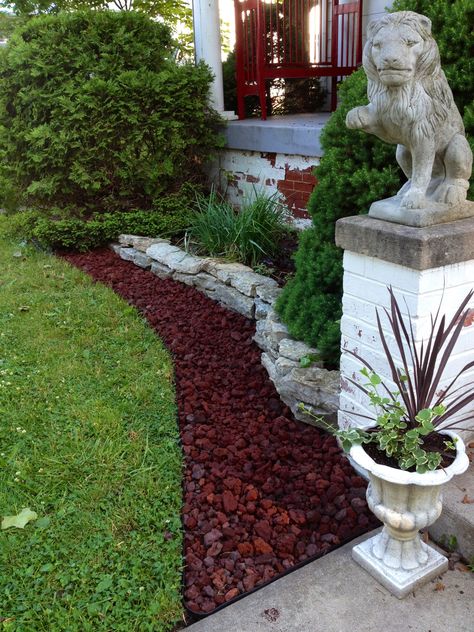
Lava mulch
Lava mulch is made from volcanic rock. It is a mineral alternative to standard bed coverings. Its high mineral content improves the soil structure, and the soil stays moist for longer. The granular structure of lava mulch keeps the bed resistant to trampling and reduces the risk of slug damage. Unlike organic bed coverings, lava mulch is completely odourless and does not rot. The bed therefore always looks good and there is no tiring upkeep. Lava mulch can be used anywhere, including as a surface for paths.
Stones
High-quality stones are made of genuine natural stone. These include mainly larger forms such as quarry stones, rocks, erratic boulders, spring stones, and natural stone slabs and paving. Smaller varieties are usually referred to as decorative gravel and crushed stone. Shops commonly sell stones and pebbles with naturally and artificially rounded shapes. You can choose from various colours. With natural stone, bear in mind that differences in colour cannot be ruled out, and pieces may chip off when the stones are moved.
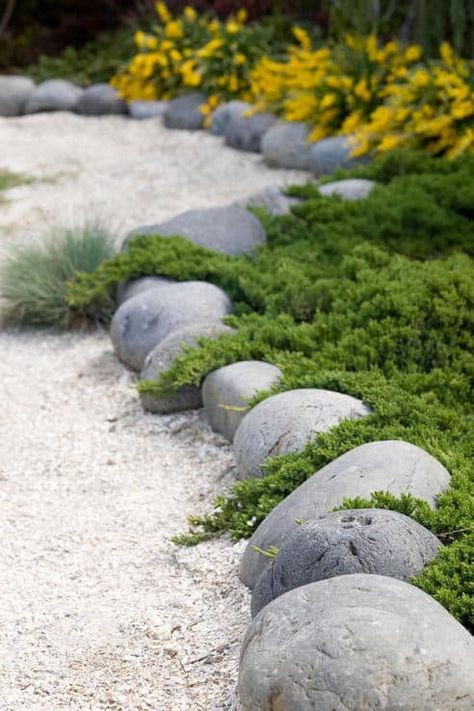
Decorative gravel and crushed stone
Ornamental gravel creates a striking effect in the garden. However, it needs to be laid in a certain way. First, dig out the area you want to cover with gravel or crushed stone to a depth of 20-30 cm. Carefully remove the weeds and mix the excavated soil with gravel sand. Put the mixture back in a layer about 25 cm high and cover the area with weed control fabric. Cut the fabric where the plants are to go and plant them. When everything is done, cover the fabric with a layer of gravel at least 5 cm thick. Crushed stone is particularly suitable for paths, driveways or parking areas, because angular stones can lock together and settle less under load than rounded gravel.
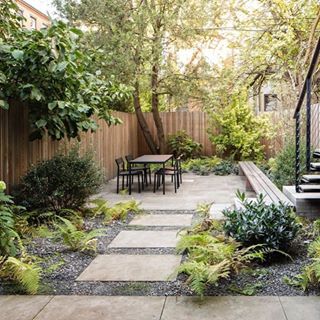
Gabions
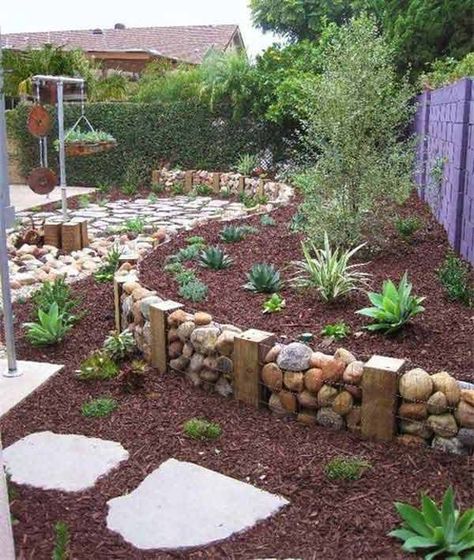
Gabions are wire baskets or cages that are simply filled with stones. They offer a practical and affordable option for fencing a property or for stylish garden features. Gabions can be put up quickly and easily. They consist of individual parts that are joined together with a few clips and without any tools. The wire is made of either stainless steel or a stainless alloy, which is very important for a long service life. The stones used to fill the mesh units should be frost-resistant and larger than the individual openings in the basket. Recycled building rubble is often used as the filling. And because no foundation is needed, the individual units can be rearranged at any time. In addition, if your garden is in a flood zone, gabions are the only suitable edging that will not cause problems during inspections by the river basin authority.
You have several options for edging a flower bed. But always go with what you like, because that is what will look good to you. Take a look at our other articles, for example how to paint botanical watercolours, a guide to anchoring a pallet fence, or tips for healthy snacks.
Leave a Reply