
Which adhesive to use for fibreglass mesh and how much you need
You may have come across it during the renovation of your 1970s house, or when you needed to repair a surface. What are we talking about? You need reinforcing mesh on every building project. It is a flat reinforcing element that helps you strengthen a surface. Essentially, it is a fibreglass mesh with different mesh sizes, which are given in millimetres. The mesh is embedded in a cement layer to increase its strength and, above all, its cohesion. Believe us, it will also come in handy if you decide to change your interior from Italian style to nautical style.

Choosing reinforcing mesh
If you are planning to repair interior plaster or façades, you need to level every surface on vertical structures. And you cannot do without reinforcing mesh . When choosing reinforcing mesh focus mainly on:
- bulk density, or grammage, which is linked to the strength of the material. It is definitely important. For standard interior use, a lighter mesh is enough, whereas for a façade it is exactly the opposite.
- mesh size affects the cohesion of the reinforcing layer
- material, the fabric is made from determines its physical properties, such as whether it will be strong and flexible. We must not forget resistance to chemicals either.
Applying reinforcing mesh
Reinforcing mesh is usually applied to larger areas and is combined with other elements used to reinforce corners and edges. Do you know how to go about it?
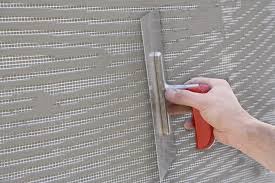
- create the primary reinforcing layer. A mortar-based adhesive is most suitable
- spread the mesh and smooth it out. But remember that the sheets must overlap.
- apply the top coat evenly so that the mesh is completely covered
To create the whole reinforcing layer, you therefore need to apply a sufficient amount of skim coat (adhesive). The primary base layer is usually around 5 mm thick, and the top coat is slightly thinner.
Total adhesive consumption is usually around 4 kg per m2.
The best adhesive for reinforcing mesh
The range of adhesives is really wide. In most cases, the choice is easier thanks to manufacturers’ recommendations. So which ones have we chosen for you?
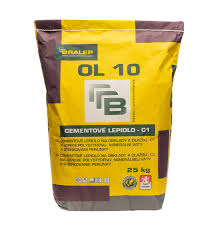
Standard construction adhesive: it is sold under the designation Z 301K and is also used for fixing wall tiles and floor tiles in a thin mortar bed on walls. However, you can use it both indoors and outdoors.
Flexible tile adhesive: it is usually labelled as C2T adhesive. We also recommend it, for example, when renovating a studio flat in a prefabricated block.
How to handle the adhesive?
Apply the adhesive to a substrate that is clean, dry and primed. It is best spread with a notched trowel. The stainless steel trowel should be large (480 mm), as this helps you level the surface better and makes the work faster. A small trowel (280 mm) is only used for hard-to-reach areas.
It is also important that the adhesive is not too runny, meaning it must not drip off the tool. On the other hand, an overly thick adhesive will also be difficult to work with.
There is a wide range of adhesives from many different brands on the market today, so staff in the shop should be able to advise you which one suits your needs. In some cases, it is also necessary to add a priming agent to the adhesive.
Finally, you need to skim the wall with one layer of adhesive or a thin-layer building compound. The surface should be completely flat and smooth. The next day, you can finish the wall with fine plaster.
One last tip: never place the mesh on the wall first and then coat it with adhesive. You may have seen some tradespeople do this, but believe us, it is poor-quality work. Renovating any old or newer house is a challenge, so do not let it put you off.
Leave a Reply